Showing posts with label revival. Show all posts

Thursday, October 03, 2019

Running to Jesus by Rose McCormick Brandon

One morning in 1741, Nathan Cole, a Connecticut farmer, heard from a neighbour that George Whitefield, an evangelist from England, would soon be speaking nearby. At this time, a cloud of spiritual hunger had descended on England and America. Whitefield, the Wesley brothers, and American Jonathan Edwards found themselves at the epicenter of a great spiritual awakening.
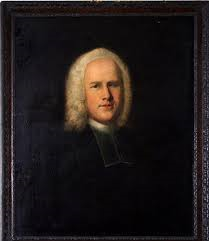
George Whitefield

On hearing the news about Whitefield, Cole dropped his tools and ran for his horse, fearing he would be too late to hear the preacher. He and his wife mounted the horse and galloped off. When the horse tired, Cole would dismount and run alongside till he was out of breath then climb back into the saddle. With twelve miles to travel, Cole wrote, “It was as if we were fleeing for our lives.”
When the Coles came within a mile of their destination, they heard “a noise like a low rumbling thunder and found it was the noise of horses coming down the road. A cloud of dust arose into the air over the tops of the hills and trees. No one spoke a word but every one pressed forward in great haste.” When Cole turned and looked towards the river he saw ferry boats crowded with people. “The land and banks over the river looked black with people and horses all along the twelve miles. I saw no man at work in his field.”
When Cole heard Whitefield preach he said it gave him a heart wound. He saw Whitefield as a man "clothed with authority from the Great God." He had believed himself to be a good man, but that day Cole realized his goodness would not save him. He needed Jesus.
What Cole experienced is the same hunger of the spirit that led thousands to follow Jesus around the countryside. They went without food, slept out on the hills, left their homes and work for the sole purpose of hearing Jesus. They listened intently because they experienced the heart wound that Cole described. The teachings of Jesus pierce the soul. They get into the crevices of our spirit. They change us.
One day as Jesus was preaching on the shore of the Sea of Galilee, great crowds pressed in on him to listen to the word of God. Luke 5:1
The human soul hasn't changed. We are no different than the people who followed Jesus and those who galloped to hear George Whitfield preach about Jesus. Our souls hunger for God. Money, success, false religions, adventures, and earthly delights can suppress that hunger for a while, but no person or thing can satisfy it. Only Jesus.
When the Spirit of God moves, whether on crowds or on an individual, He causes people to drop everything as Cole did, and run toward Jesus as if their lives depended on Him. Because our lives do depend on Him.
Can revivals like the Great Awakening happen today? Before the awakening, the Christian church was careless and compromising. They weren’t living for God. Weren’t treasuring and obeying His Word. Sound familiar?
A study of any revival shows that prayer is the main precursor to revival. Christians worldwide are right now praying that a desire for God will cause millions to run to Him.

 Quoted portions from George Leon Walker, Some Aspects of the Religious Life of New England (New York: Silver, Burnett, and Company, 1897), 89-92.

***

Rose McCormick Brandon writes Bible lessons, devotionals, articles, biblical essays and books from her home in Caledonia, Ontario. She's the author of Promises of Home - Stories of Canada's British Home Children and One Good Word Makes all the Difference. She is a member of The Word Guild and grateful to be the recipient of awards for inspirational/devotional, personal experience and article writing.


Friday, August 09, 2019

Susanna Wesley: Mother on Fire -HIRD


By Rev. Dr. Ed and Janice Hird

Never underestimate the power of a praying mom. Has your life been impacted by a sacrificial mother who would never give up?


Born in 1669, Susanna Wesley was one of the greatest mothers who ever lived, raising up two of Christianity’s most gifted leaders, John and Charles Wesley. Can you envision, like Susanna, being the twenty-fifth of twenty-five siblings?  Her father Samuel Annesley had a Doctor of Divinity from Oxford and in 1648 was chosen to preach at the British House of Commons.  His eight hundred-strong congregation of St Giles Cripplegate was one of the largest in London.  Susanna’s father did a remarkable thing, encouraging his daughter to read and study theology.  When he died, he left Susannah his most valued possessions, which were his manuscripts and family papers.
Daily, as a mother, Susannah prayed “Dear God, Guide me. Make my life count.”  She loved to read biographies about other Christians, especially missionaries.  While reading an account of Danish missionaries, she concluded, “At last it came to my mind, though I were not a man, nor a minister of the gospel,...I might do somewhat more than I do...I might pray more for the people, and speak with more warmth to those with whom I have an opportunity of conversing. However, I resolved to begin with my children.”  She believed that by discipling her own children, she could change the world.  As a young woman, she once said, “I hope the fire (of revival) I start will not only burn all of London, but all of the United Kingdom as well.  I hope it will burn all over the world.”
As the mother of the Methodist revival, she methodically instilled in her children a passion for discipleship and learning. While only ten of her nineteen children survived to adulthood, she poured her life into them, raising up three sons, Samuel, John and Charles to become pastors.  Susanna believed each child was equally valuable; and had an uncanny way of making each know they were important.
Eric Metaxas has described Susanna as the mother of the homeschooling movement. In an age when many parents only educated their sons, Susanna taught all of her children how to read, write and reason, regardless of gender, including all of her seven surviving daughters. She instructed all of her children three hours in the morning and three hours in the afternoon. Her children began and ended each school day by singing a Psalm and reading from the Bible.  Remarkably, she spent one hour a week with each of her children in personal instruction.
Her educational goal was that on her last day, she would be able to say “Lord, here are the children which Thou hast given me, of which I have lost none by my ill example, not by neglecting to install in their minds, in their early years, the principles of Thy true religion and virtue.”  When Susanna failed to find Christ-centered textbooks, she decided to write her own. Her first book A Manual of Natural Theory looked at how the natural universe revealed God as creator. Her second book was an exposition of the Apostles’ Creed, looking at the essentials of the Christian faith. Her third book opened up the practical implications of the Ten Commandments for daily living.  In her crowded house, Susannah would pull her apron over her head, taking an hour a day for her personal devotions when she was not to be disturbed. 
As both the daughter and wife of clergy, Susanna understood the challenges of pastoral ministry.  There was never enough money to feed and clothe the children properly. Her husband Rev Samuel Wesley, as the underpaid Rector of Epworth and Wroot, was always in debt, and even ended up twice in debtors’ prison.  Susanna offered to pawn her own wedding ring, but her husband refused her sacrifice.
 Being very outspoken, her husband had many enemies during his thirty-nine years in Epworth, some of whom destroyed the Wesley’s crops, stabbed their cows, attacked their dog, and set their house on fire in 1702.  During a contentious 1705 election, a political mob surrounded their house at night with loud drumming, firing of pistols, and shouting that they would kill Samuel. When their house was burnt down for a second time in 1709, six-year-old John was miraculously plucked as a brand from the burning.
While her husband was away in 1711, she started Sunday evening devotions for her children, which ended up attracting many neighbours: “Last Sunday I believe we had above two hundred. And yet many went away, for want of room to stand.”  The replacement Epworth priest was deeply offended that far more people went to Susanna’s devotional prayers than his Sunday morning service.  Responding to her concerned husband, she said, “As to its looking peculiar, I grant that it does. And so does almost anything that is serious, or that may in any way advance the glory of God, or the salvation of souls.”  When her son John Wesley later preached to tens of thousands, he fondly recalled the revival that earlier happened with his mother’s Sunday evening devotions.
John, the fifteenth child and Charles, the eighteen child of nineteen were almost not born, because of Susanna’s refusal to say amen to her husband’s 1701 prayer for the new King William of Orange.  Because Susanna saw the new King as a usurper, her husband left home, refusing to return: “We must part for if we have two kings, we must have two beds.” Samuel only returned and reconciled after their house burnt down.
When John Wesley felt called to ordination, his father discouraged him but his mom encouraged him to go for it.  Susanna coached John and Charles in the spiritual disciplines while at Oxford, encouraging him to read the Imitation of Christ by Thomas A Kempis and Rule for Holy Living by Jeremy Taylor. After reading these books, John told his mother, “I have resolved to dedicate all my life to God —all my thoughts and words and actions.”
When John and Charles felt called as missionaries to Savannah, Georgia, Susanna said, “If I had twenty sons, I would send them all.” When John returned to England and began preaching in the fields, Susanna approved, sometimes standing by his side before tens of thousands.  She encouraged John to allow nonordained people to preach.  After her debt-ridden husband died leaving her homeless, she lived for her final three years with John Wesley in the famous Foundry Methodist Chapel.  On her deathbed, she said “Children, as soon as I am released, sing a Psalm of Praise to God.”  May we like Susanna end our lives on fire giving glory to God.
 Image result for susanna wesley
Rev. Dr. Ed and Janice Hird
-an article previously published in the September 2019 Light Magazine


Sunday, June 09, 2019

Evan Roberts in the Land of Revivals: HIRD


Evan Robert in the land of Revivals
By Rev. Dr. Ed and Janice Hird
Image result for Evan Roberts
How might Canada be different if ten per cent of Canadians entered into the Kingdom of God in the next two years? That’s what happened in Wales, the land of revivals and song. Evan Roberts, the spiritual father of the 1904 Welsh Revival, worked from age 12 to 23 with his father Henry in the coal mines. He had visitations from the Holy Spirit, showing all Wales being lifted up to Heaven.  For several months before the revival broke out, Evan would be taken up into the heavens every night where he would commune with God.  Evan began to ask God to give him 100,000 souls, something that occurred during this revival. During this awakening, ten per cent of the Welsh people were ushered into the Kingdom.  Revival historian J Edwin Orr says that 150,000 became members of local churches in Wales, with 250,000 becoming born again.
Prayer was the very breath of Evan’s soul.  He seemed to be constantly praying. The prayer that Evan received from his mentor Rev Seth Joshua was “Bend me, bend me, bend us.” He urged total abandonment to the will of God.  As one participant commented, “Did we not hear him time and again praying the words “Empty me! Fill me! Use me” until they became part of our thinking?” Whenever the Holy Spirit came upon Evan in a revival meeting, his face was transformed, bringing a radiant smile and shining eyes.
The four "points" of Evan’s revival message were:
1. Confess all known sin, receiving forgiveness through Jesus Christ
2. Remove anything in your life that you are in doubt or feel unsure about
3. Be ready to obey the Holy Spirit instantly
4. Publicly confess the Lord Jesus Christ
Evan became perhaps the most famous man in the world at the time. Even the future UK Prime Minister, Lloyd George, vouched for the genuineness of Evan Roberts and the Welsh revival. Evan was present at only about 259 of the tens of thousands of Welsh revival meetings that took place.  The chapels were often so crowded that Evan often had to climb over people’s shoulders just to make it to the pulpit. Participants said that it was not the eloquence of Evan Roberts that transformed people —it was his tears. People were standing for hours in the cold, wintry air hoping that by someone leaving the church, they could push in to witness the scenes that were taking place inside.  Troubled by both the adulation and criticism, he wouldn’t announce his meetings in advance. He wanted Jesus, not himself, to be the focus. Sometimes he would go to a revival meeting and then refuse to speak, instead praying silently before leaving.  Evan said “I am not the source for this revival. I am only one worker in that which is growing to be a host. I am not moving the hearts of men and changing their lives; but ‘God is working through me”.’ 
From the very beginning of the revival, there was a strong sense of conviction of sin, with wrongdoing publicly confessed. Instead of sports, the hot topic in the pubs was about Evan Roberts and the revival. Drunkenness was cut in half, causing bankruptcies in many pubs.  Crime was cut in half. Former houses of prostitution turned into homes of heavenly singing, encouraging their former customers to go to the revival meetings. The Bible Society in Wales could not keep up with the request for their bibles. People began to pay off their bad debts. Some of the toughest characters in the Welsh valleys were converted. Pit-ponies could no longer understand the miners' commands as they had stopped cursing the ponies. The police, often having no one to arrest, would come to the revivals to sing in quartets. In one court case, the prisoner came under conviction, confessing his sins. The judge then preached the gospel to him, and the jury spontaneously broke out into Welsh revival singing.
Just like with the 1970s Jesus movement, most of the Welsh revival leaders and participants were very young.  The revival services were marked with informality, laughing, crying, dancing, joy, and brokenness.  Many of these youth did spontaneous Jesus marches, singing songs and visiting the pubs to invite people to the revival.  No one bothered about the clock. People often stayed until two to three am in the morning, and then marched through the streets singing hymns.  A participant, David Matthews commented, “When I left the heavenly atmosphere of the church for home, I discovered that it was five in the morning! I had been in the house of God for ten hours — they passed like ten minutes!”  
As predicted by Evan, the Welsh revival had a worldwide impact, birthing over 30 revivals around the world, including in China, Korea, India, East Africa, and the 1906 Azusa Street revival in Los Angeles, impacting hundreds of millions. At one meeting, all Evan said was ‘let us pray’, before revival broke out. As with the later Korean revival, the Welsh all prayed simultaneously. This revival of love gave Evan the ability to sing all day. The first Welsh revival team was five teenage girls who would sing about God’s love at the revival meetings.  The love song of the Welsh revival was the song “Here is love vast as the ocean”.  Evan told the reporters, “I preach nothing but Christ’s love”.
Because Evan seldom ate, slept and rested, he soon succumbed to the pressure of his rigorous schedule, and, in 1906, suffered a physical and emotional collapse, the first of his eight nervous breakdowns. The doctor told Evan after his nervous breakdown that if he ever preached again, he would die.  He then moved to England, living in virtual seclusion until he died.  Sadly, Evan refused to see his family when they visited, only returning to Wales upon the death of his father in 1928. While there for his dad’s funeral in Loughor, Evans spoke a few sentences and a "mini-revival" sparked.  Evan Roberts died in 1951 at age 72.
Imagine what God might do in Canada, if we like Evan Roberts bent our will to God’s will for our nation? Bend us, Lord! Bend the Church in Canada!
Rev. Dr. Ed & Janice Hird
-an article previously published in the June 2019 Light Magazine


Tuesday, April 09, 2019

George Whitefield: Waking Up to the Fire of Christ -HIRD


George Whitefield: Waking up to the Fire of Christ
-an article previously published in the April 2019 Light Magazine


When is the last time that your pastor had to be hoisted, like George Whitefield, through a window into your crowded church building, because there was no other way in?  The Rev. George Whitefield took part in a Great Awakening that is still impacting many congregations today.  Charles Spurgeon called Whitefield “all life, fire, wing, force.”
After being ordained at age 21, Whitefield was accused of driving fifteen people mad in his first sermon.  His Gloucester Bishop Benson ironically said that he wished that the madness might not be forgotten before next Sunday.  The so-called madness was actually people waking up to the life-changing love of Christ.  In his 34 years of ordained ministry, Whitefield preached more than 18,000 sermons to around ten million people.  Dr. Thomas S Kidd holds that “perhaps he was the greatest evangelical preacher the world has ever known.” Because of his speaking gift, Whitefield’s nickname was the Seraph (type of angel).  He was once described by UK Prime Minister Lloyd George as the greatest popular orator ever produced by England.  David Hume, a famous agnostic commented that “Mr Whitfield is the most ingenious preacher I ever heard. It is worth going twenty miles to hear him.” The famous English actor David Garrick held that Whitefield could “make men weep and tremble by his varied utterances of the word ‘Mesopotamia’.” (the ancient land that Abraham came from)
While in Oxford, he became close friends with John and Charles Wesley who helped him in the spiritual disciplines. After reading the book The Life of God in the Soul of Man, Whitefield became convinced that good works would not earn him heaven: “God showed me that I must be born again....” Experiencing the new birth gave him a fresh love of the beauty of spring: “At other times, I would be so overpowered with a sense of God’s Infinite Majesty that I would be compelled to throw myself on the ground and offer my soul as a blank in his hands, to write on it what he pleased.” The new birth became the heart of an unprecedented evangelical revival. 
Whitefield accepted the Wesley’s invitation to join them as missionaries in Savannah, Georgia. He waited however for months to sail to Georgia with his patron General Oglethorpe.  During this delay in England, tens of thousands came to hear him preach about the new birth.  After passionately preaching outside to 10,000 miners in Kingswood near Bristol, he wrote: “The fire is kindled in the country; and, I know, all the devils in hell shall not be able to quench it.”  Whitefield became the Billy Graham of the 17th century, preaching that all people need to be born again.  He was very countercultural, doing the unthinkable thing of preaching in fields, without notes, to tens of thousands. In 17th century England, sermons were only supposed to be given inside church buildings. In 17th England, because of the fear of revolution, the worst thing you could be accused of was enthusiasm. Whitefield sought to reach the heart as well as the head, saying that many people “were unaffected by an unfelt, unknown Christ.”
On his way to Georgia, Whitefield had such a strong voice that when the two other ships travelling with them drew close, he was simultaneously able to preach to all the people on the three ships. At a time when travel was precarious, Whitefield had seven visits to America, fifteen to Scotland, and two to Ireland.  Whitefield was the best-known person to have travelled extensively in the thirteen American colonies.  By 1740, he had become the most famous man in both America and Britain, at least the most famous aside from King George II.  Reminiscent of the Beatles, he was the first ‘British sensation.’ 
Whitefield was radically generous even to a fault.  Wherever revival meetings took place, Whitefield received offerings, including from Benjamin Franklin, to help with the most famous orphanage in North America, Bethesda in Savannah, Georgia.  After Benjamin Franklin scientifically established that Whitefield was able to preach to 30,000 without a microphone, he became his publisher, and a close friend and ally. Between 1740 and 1742, Franklin printed forty-three books and pamphlets dealing with Whitefield and the evangelical movement.  He even built Whitefield a building for preaching that became the University of Pennsylvania.  That is why there are statues of both Franklin and Whitefield as co-founders of the University of Pennsylvania. Benjamin Franklin commented: “It was wonderful to see the change soon made in the manners of our inhabitants. From being thoughtless or indifferent about religion, it seemed as if all the world was growing religious, so that one could not walk through the town in an evening without hearing psalms sung in different families in every street.”

The Bishop’s Commissary (superintendent), Alexander Garden, in Charleston was offended by Whitefield’s article challenging slave owners over mistreatment of slaves, and by Whitefield’s preaching both in other parish areas and among other denominations. Garden declared that the slave owners were going to sue Whitefield for libel. During his sermon, Garden attacked Whitefield, and refused him communion.  Then he dragged Whitefield into an ecclesiastical court, trying to defrock him.  Jonathan Edwards of Northhampton, a co-leader in the Great Awakening, wrote: “Whitefield was reproached in the most scurrilous and scandalous manner...I question whether history affords any instance paralleled with this, as so much pains taken in writing to blacken a man’s character, and render him odious.” Whitefield did not let criticism stop him, saying “The more I am opposed, the more joy I feel.”  
On a Sunday morning in Philadelphia, Whitefield preached to perhaps 15,000 people.  Then, he attended an Anglican Communion service where Commissary Cummings publicly denounced him and his followers. Whitefield followed this right after with preaching a farewell sermon to an outdoor assembly of 20,000.  The relentless pace was brutal to Whitefield’s health. At another time in Boston, “Whitfield was running himself ragged and becoming extremely ill, violently vomiting between sermons. He was feverish, dehydrated, and sweating profusely.”
During his four years away from England, the Gentleman’s Magazine and other English newspapers listed George Whitefield as having died.  He changed so many lives that even the English upper classes began to give Whitefield a hearing.  Lord Bolingbroke, after hearing Whitefield at Lady Huntington’s place, wrote: “Mr Whitefield is the most extraordinary man of our times. He has the most commanding eloquence I ever heard in any person...” One Anglican minister claimed that Whitefield had set England on fire with the devil’s flames. Whitefield countered. “It is not a fire of the Devil’s kindling, but a holy fire that has proceeded from the Holy and blessed Spirit. Oh, that such a fire may not only be kindled, but blow up into a flame all England, and all the world over!”

Dying at 55, Whitefield had been used to set many people on fire with love for Christ.  He memorably prayed: “O that I could do more for Him! O that I was a flame of pure and holy fire, and had a thousand lives to spend in the dear Redeemer’s Service.” Whitefield was passionate about awakening to the new birth.  We in Canada also need to wake up to the fire of Christ. We too need to recapture the priority of the new birth. Have you, like Whitefield, awoken yet to the new birth?

Wednesday, January 09, 2019

We are all Indebted to the Wesleys


general james oglethorpe

We  are all Indebted to the Wesleys
By Rev Dr Ed & Janice Hird
After General James Oglethorpe rescued 10,000 people from Debtors Prison, he recruited John & Charles Wesley to serve these exdebtors as Anglican priests in the new colony of Savanah Georgia. The Wesleys were Oxford University academics with little pastoral experience. When they arrived in Georgia, they encountered one disaster after another.  One time when the Wesleys put the only doctor in Savannah, Georgia, in jail for getting drunk, a woman died in childbirth. Another time John Wesley refused communion to Sophia Hopkey his ex-girlfriend who had married another man. After being sued for one thousand pounds for character defamation and challenged to a duel, John Wesley had to escape in the middle of the night.

John famously said: “I went to America to convert the natives. But who will convert me?” During a violent storm while returning by boat to England, he was impressed by the calm faith of the Moravian Brethren. Attending their London chapel, his heart was strangely warmed. Many people in England were angry with hIm once he started preaching outside. Sometimes his opponents attacked Wesley, calling for his crucifixion. Wesley didn’t let anything stop him.  Some historians credit the Wesleys with having prevented the French Revolution from happening in 18th century England, because Methodist revival peacefully improved the lot of the working class.  At that time, adults and even children could be legally hanged for 160 different offenses –from picking a pocket to stealing a rabbit.  In London, 75% of all children died before age five.  Among the poor, the death rate was even higher.  In one orphanage, only one of 500 orphans survived more than a year.  Alcohol abuse was rampant, even among children, with over 11 million gallons of gin consumed in 1750.  Charles and John Wesley believed that changed hearts could lead to a changed society.  By setting many free from alcoholism and teaching the children to read, Methodism gave parents hope for a better life for their families.
Since the 1925 birth of the United Church of Canada, few Canadians hear much about Methodism, which was once an Anglican renewal movement that transformed Canada. Methodists were well known for their summer Camp Meeting revivals, weekly c  lass meetings (ie home groups), and vigorous hymn singing.  Suspected of being disloyal after the War of 1812, Canadian Methodists over time became the quintessential Canadians.  Both sides of our families had Methodist circuit rider preachers. On Janice’s side, her Methodist ancestors were named John Wesley Cline and Charles Wesley Cline.  The most famous Canadian Methodist Egerton Ryerson helped create free Canadian public schools rooted in Judeo-Christian values at a time when less than half the children were attending school.  Ryerson, the founding editor of The Christian Guardian, the first Canadian Christian newspaper, advocated that education “should be as common as water and as free as air. Education among the people is the best security of a good government and constitutional liberty…The first object of a wise government should be the education of the people.”
ryerson egerton
We are all indebted to the Wesley brothers who brought Methodist revival to Canada.
-previously published in the Light Magazine

Monday, December 03, 2018

Revival in Korea by Rose McCormick Brandon


The first signs of revival in Korea appeared in 1903 when medical missionary, Dr. Robert Hardie, began a series of talks on prayer at conferences and churches. Within a year, ten thousand had turned to Christ. In 1906, at Ping Yang (Pyongyang) several believers met for noon-hour prayer asking God for an out-pouring of His Spirit. By the time Christians gathered for the universal week of prayer in January 1907 they expected a first century blast of blessing. Instead, their meetings were dull and weak and their prayers earth-bound.

On the last day of prayer week, a highly-respected man stood and tearfully confessed before a congregation of 1500 that he had stolen from a widow in the church. "God can't bless because of me," he said and promised to make restitution. This man's shocking admission set off a flood of confessions. One after another confessed their sins. The meeting lasted until two o-clock in the morning. In the months following this mass confession thousands came to Christ. Missionary to China, Jonathan Goforth, visited the revival and concluded that hidden sin had hindered God but uncovered sin glorified Him. (When the Spirit’s Fire Swept Korea by Jonathan Goforth)

       By mid-1907, 30,000 converts attended the Pyongyang church. People attended services in shifts. Churches sprang up all over Korea. Confession remained a primary factor in this revival. Many repented of racial bias, including Dr. Hardie. Koreans repented of hatred toward the Japanese, their occupiers. Love from Christ filled their hearts and erased their biases. (John 13:34,35).

       One man, after learning about Jesus in the city, returned to his village with a New Testament which he read to his neighbours. When believers numbered fifty, they decided it was time to form a church, but they had no idea how to do it. Thinking it must have something to do with water baptism they each went home, took a bath, reassembled and declared they were now a church.

       Many Korean Christians suffered imprisonment. They became known for turning their confinement into an opportunity to read and memorize scripture. One man read the entire Bible seven times. Prisoners committed whole books to memory.

Pyongyang became known as “Jerusalem of the East.”

In this land where many experienced an amazing outpouring of God's Spirit, Christians today are cut off from the world, deprived of their Bibles and divided from their countrymen. They need our prayers. When North Korea's iron curtain lifts – may it be soon – we’ll see its remnant church and discover that those revival fires of long ago haven’t been extinguished.  
***
Rose McCormick Brandon is the author of four books: Promises of Home - Stories of Canada's British Home Children, One Good Word Makes all the Difference, He Loves Me Not - He Loves Me and Vanished. She blogs at Listening to my Hair Grow and Promises of Home. 

Friday, November 03, 2017

Fanny Crosby's November Experience by Rose McCormick Brandon


Fanny Crosby
Times of seeking God often precede a moment of revelation that transforms our lives. Blind poetess and prolific hymn writer, Fanny Crosby, had such an experience. Fanny had become the star of the first Institute for the Blind in New York City where she was educated and later taught. She recited her poetry before presidents and had her work published in newspapers and books.  One biographer wrote, “As Johann Strauss reigned in Vienna as the Waltz King and John Phillip Sousa in Washington as the March King, so Fanny Crosby reigned in New York in the later nineteenth and early twentieth century as the Hymn Queen.”
            Methodist class meetings, with their lively singing and warm atmosphere were attracting many New Yorkers who longed for more than religious formality. In 1850 Mr. Camp, Fanny’s friend and a science teacher at the Institute, invited her to attend special revival meetings at the Methodist Broadway Tabernacle on Thirtieth Street. Fanny declined. Then one night she had a vivid dream. “It seemed that the sky had been cloudy for a number of days and finally, someone came to me and said that Mr. Camp desired to see me at once. Then the clouds seemed to roll from my spirit and I awoke from the dream with a start.”
          After the dream, Fanny attended meetings with Camp every evening for several weeks. Services consisted of long emotional sermons, punctuated with loud amens and hallelujahs, tears of repentance and joyful outbursts, unlike anything Fanny had experienced in rural Connecticut where serious Calvinists worshipped in formal services.
          A feeling that a deeper life in God awaited her kept Fanny returning to the Methodist meetings. A few times she knelt with other God-seekers at the dirt-floor altar and prayed for hours but came away joyless and empty. Until November 20, 1850. “On that night it seemed to me light must come then or never.” At the invitation for prayer, Fanny walked to the altar and again knelt and prayed fervently for a spiritual breakthrough. When she was about to give up, the congregation sang Isaac Watts’ hymn “Alas and Did My Savior Bleed.” When Fanny heard the words of the final verse, “Dear Lord I give myself away, ‘tis all that I can do,” she jumped to her feet and shouted Hallelujah! Hallelujah! Of that night she said, “My very soul was flooded with celestial light. For the first time I realized I had been holding the world in one hand and the Lord in the other.”
         Bernard Ruffin writes in his biography of Fanny – “although there were no dramatic changes in her life and she soon realized it did not solve all her spiritual problems, her November experience as she called it, marked the beginning of a deeper Christian life and a total dedication of her life to God.” 
          Fanny’s hymn portfolio increased to 9,000. Many, like At the Cross Where I First Saw the Light allude to her November 1850 experience.  Her reputation as a happy, contented Christian lasted until she died at age 95. She didn’t seek pity for her blindness but often said, "When I get to heaven the first face that shall ever gladden my sight will be that of my Savior!" Generations have grown up on Fanny’s hymns and congregations still sing Near the Cross, Tell Me the Story of Jesus, Praise Him Praise Him, I am Thine O Lord, Close to Thee and hundreds of others. Her gravestone in Bridgeport, Connecticut is inscribed with two lines from one of her best known hymns 
“Blessed Assurance, Jesus is Mine
Oh what a foretaste of glory Divine.”
            Experiences like Fanny’s ignite a passion for Christ in our hearts that forever changes us.
****
Rose McCormick Brandon is the author of Promises of Home - Stories of Canada's British Home Children, One Good Word Makes all the Difference and numerous magazine articles. She writes two blogs, Promises of Home and Listening to my Hair Grow. Contact her at: rosembrandon@yahoo.ca  


Monday, July 03, 2017

Another Great Awakening? by Rose McCormick Brandon


Jonathan Edwards
America’s first citizens built a nation based on godly principles. A century or so later, descendants of the founders had transferred their affection from God to money, power and influence. Although most attended church, they were smug, proud and godless.
         In the 1730s Jonathan Edwards, minister at Southampton, Massachusetts became disturbed by the spiritual deadness and immoral conduct of his parishioners. Edwards, who had devoted himself to holy living early in life while attending Yale, began a series of sermons on justification by faith alone (Martin Luther’s principle message). Hundreds responded to his heartfelt sermons by making public commitments to Christ.
          Edwards’ sermons ignited a revival  that became The Great Awakening. Thousands more converted to Christ through the preaching of George Whitefield of Britain. When Edwards invited Whitefield to preach in his church he reported that “the congregation was extraordinarily melted” and that all were in tears. Whitefield went on to preach to crowds gathered in fields because no building could hold the tens of thousands who attended. 
         Edwards experienced fierce opposition from the religious sector because of his support for Whitefield, but he recognized that God was doing something extraordinary.
          Edwards famously preached his sermon, Sinners in the Hands of an Angry God. The title may convey a judgemental attitude, but Edwards was a loving man who defended emotional responses that often accompany revival. He became a missionary to the natives and wrote theological papers, eventually becoming President of the College of New Jersey (Princeton).
        The Great Awakening resulted in so many entering the ministry that more schools were required. Princeton, Rutgers, Brown and Dartmouth were all founded to meet this need.
God has had it much on his heart, from all eternity, to glorify his dear and only-begotten Son; and there are some special seasons that he appoints to that end, wherein he comes forth with omnipotent power to fulfill his promise and oath to him. Now these are times of remarkable pouring out of his Spirit, to advance his kingdom. (1)
           Have we become smug and proud? As dry as dust? Passive, compromising and dull? Oh for an awakening, a remarkable outpouring of His Spirit to jolt us out of passivity and into the vibrant life of Christ.
Understanding the present time: The hour has already come for you to wake up from your slumber, because our salvation is nearer now than when we first believed. The night is nearly over; the day is almost here. So let us put aside the deeds of darkness and put on the armor of light. Let us behave decently, as in the daytime, not in carousing and drunkenness, not in sexual immorality and debauchery, not in dissension and jealousy. Rather, clothe yourselves with the Lord Jesus Christ, and do not think about how to gratify the desires of the flesh. Romans 13:11-14
Restore us, Lord God Almighty; make your face shine on us, that we may be saved. Psalm 80:19

(1)   Jonathan Edwards, Some Thoughts Concerning the Present Revival of Religion in New England
***
  Rose McCormick Brandon writes faith and family articles, short stories, biblical essays, Bible studies and devotionals from her home in Caledonia, Ontario. She is presently writing a daily devotional book. Rose also writes articles on Canadian history and gives presentations at libraries, historical societies and museums. She is the author of One Good Word Makes all the Difference and Promises of Home - Stories of Canada's British Home Children.
   Visit Rose's two blogs: Listening to my Hair Grow and Promises of Home.

Saturday, June 03, 2017

Remembering North Korea by Rose McCormick Brandon

Dr. Robert Hardie
The first signs of revival in Korea appeared in 1903 when medical missionary, Dr. Robert Hardie, gave a series of talks on prayer at a conference. Hardie shared these messages in many churches. Within a year,ten thousand turned to Christ. In 1906, several from the Methodist and Presbyterian Missions at Ping Yang (Pyongyang) began noon-hour prayer meetings asking God for an out-pouring of His Spirit. When believers in the area gathered for the universal week of prayer in January 1907 they expected a first century blast of blessing. Instead, their meetings seemed dull and weak and their prayers earth-bound.
On the last day of prayer week, a highly-respected Christian stood and tearfully confessed before a congregation of 1500 that he had stolen from an estate he'd managed. "God can't bless because of me," he said and publicly promised to make restitution. This man's shocking admission set off a flood of confessions. One after another confessed their sins. The meeting lasted until two o-clock in the morning. In the months following this mass confession thousands came to Christ. Missionary to China, Jonathan Goforth, visited the revival and concluded that hidden sin had hindered God but uncovered sin glorified Him.
       By mid-1907, 30,000 converts attended the Pyongyang church. To accommodate this number people went to church in shifts. Churches sprang up all over Korea. Confession of sin remained a primary factor in this revival. Many repented of racial bias, including Dr. Hardie, who confessed his prejudice against Koreans. Koreans repented of hatred toward the Japanese, their occupiers. Love from Christ filled their hearts and erased their biases. People recognized them as His disciples because of their love (John 13:34,35).
       One man learned about Jesus in the city and returned to his village with a New Testament which he read to his neighbours. When converts numbered fifty they decided it was time to form a church but had no idea how to do it. Thinking it must have something to do with water baptism they each went home, took a bath, returned and declared they were now a church.
       Korean Christians eagerly shared the gospel. Even school children were known to stop passers-by in the street and tearfully plead with them to follow Jesus. Those who suffered imprisonment for the faith used the time to read their Bibles – one man read it through seven times. Others memorized large portions of scripture. It wasn’t uncommon for prisoners to commit whole books of the Bible to memory. Pyongyang became known as “Jerusalem of the East.”
 
Rose McCormick Brandon
Today, Pyongyang is often in the news. In the same land where many experienced this amazing outpouring of God's Spirit, Christians are cut off from the world by Communism and divided from their countrymen. They need our prayers. We won't know until Korea's iron curtain is lifted how many believers have survived, how they survived and what God is doing amongst them now. What we do know is those revival fires can't have gone completely out. Sparks remain.
O Lord, remember your people in North Korea. Pour out your Spirit upon them as before. Keep them strong and may your words resonate continually in their minds and hearts.
***
Rose McCormick Brandon writes books and articles, teaches Bible studies and writing classes, speaks at churches, libraries, historical societies and museums. Visit her website at: http://writingfromtheheart.webs.com Contact her at: rosembrandon@yahoo.ca. Visit her blog on Canada’s British Home Children at http://littleimmigrants.wordpress.com.

Thursday, November 03, 2016

Fanny Crosby's November Experience by Rose McCormick Brandon


Fanny Crosby recited her poetry before presidents. Her work was published in newspapers and books.  One biographer wrote, “As Johann Strauss reigned in Vienna as the Waltz King and John Phillip Sousa in Washington as the March King, so Fanny Crosby reigned in New York in the late nineteenth and early twentieth century as the Hymn Queen.”

 In 1850, Methodist class meetings, with their lively singing and warm atmosphere attracted many New Yorkers who longed for more than religious formality. Mr. Camp, Fanny’s friend and a science teacher at the Institute for the Blind, invited her to attend special revival meetings at the Methodist Broadway Tabernacle on Thirtieth Street. Fanny declined. One night she had a vivid dream. “It seemed that the sky had been cloudy for a number of days and finally,someone came to me and said that Mr. Camp desired to see me at once. Then the clouds seemed to roll from my spirit and I awoke from the dream with a start.”

            Fanny attended the Methodist meetings with Camp every evening for several weeks. Services consisted of long emotional sermons, punctuated with loud amens and hallelujahs, tears of repentance and joyful outbursts, unlike anything Fanny had experienced in rural Connecticut where serious Calvinists worshipped in formal services.

            A feeling that a deeper life in God awaited her kept Fanny returning to the Methodist meetings. A few times she knelt with other God-seekers at the dirt-floor altar and prayed for hours but each time came away joyless and empty.

             Until November 20, 1850. “On that night it seemed to me light must come then or never.”

             At the invitation for prayer, Fanny walked to the altar and again knelt and prayed fervently for a spiritual breakthrough. When she was about to give up, the congregation sang Isaac Watts’ hymn “Alas and Did My Savior Bleed.” When Fanny heard the words of the final verse, dear Lord I give myself away ‘tis all that I can do, she stood and shouted, "Hallelujah! Hallelujah!" Of that night she wrote, “My very soul was flooded with celestial light. For the first time I realized I had been holding the world in one hand and the Lord in the other.”

            Bernard Ruffin, a biographer, wrote – “although there were no dramatic changes in her life and she soon realized it did not solve all her spiritual problems, her November experience, as she called it, marked the beginning of a deeper Christian life and a total dedication of her life to God.” 

            Fanny’s hymn portfolio increased to 9,000. Many, like At the Cross Where I First Saw the Light, allude to her November 1850 experience.  Her reputation as a happy, contented Christian lasted until she died at age 95. She didn’t seek pity for her blindness but often said, "When I get to heaven, the first face that shall ever gladden my sight will be that of my Savior!"

           Generations have grown up on Fanny’s hymns and congregations still sing Near the Cross, Tell Me the Story of Jesus, Praise Him Praise Him, I am Thine O Lord, Close to Thee and hundreds of others. Her gravestone in Bridgeport, Connecticut is inscribed with two lines from one of her best known hymn 

“Blessed Assurance, Jesus is Mine

Oh what a foretaste of glory Divine.”

            Personal revivals, like Fanny’s November experience, ignite a passion for Christ in our hearts that forever changes us.


Rose McCormick Brandon is the author of four books, including One Good Word Makes all the Difference and Promises of Home - Stories of Canada's British Home Children. She writes personal essays and devotionals for several publications.


Thursday, July 16, 2009

Never Your Way Again - Scott

Luke 14:27 - "... anyone who does not carry his cross and follow me cannot be my disciple."

I believe that we need a major revival across this land. But, revival will not fully come if we hold back. We can get 'that close' and miss the blessing by inches.

What do we value most? What could get in the way of total commitment?

Let me ask you a question that God has given for your consideration:

“What if you never got your own way ever again?”

It is contradictory to claim to be followers of the Master and then to demand our own way. The good news is that there is the assurance that we will not be denied our heart's desire according to God's will.

Have you been demanding your way? How's that been working for you?

I have seen God working in the congregation I attend. I believe we are on the verge of a great revival.

Many folks get cranky when something different happens. We often hear the 'Seven Last Words of the Church': WE NEVER DID IT THAT WAY BEFORE.

Some might admit, “Yeah, I'm sort of like that.”

Well, it's time to change.

From Macedonia and Greece, Alexander the Great subjugated the entire area of the Mediterranean. One day he received a report that one of his men had fled in the face of the enemy. Alexander wanted to speak privately with this soldier. The young man came to the great leader's tent. The general was almost ready to excuse the young soldier's impulsiveness. But then he asked him “What is your name?” The soldier answered, “Alexander, sir!”

“What is your name?”

“Alexander, sir!”

The General looked straight at the young man, straightened to his full height, and said firmly, “Soldier, you have only two choices. Change your attitude or change your name!”

What is our response?

Unwilling to give up the demand to have our own way, we can be very selfish. That's what got this world into trouble in the first place. The Bible is a record of individuals and nations that wanted their own way. The list is a long one.

What are the saddest words in the Bible? Here is my choice: “It takes eleven days to travel from Mount Sinai to Kadesh Barnea by way of the hill country of Edom.” (Deuteronomy 1:2 GNB)

If you’ve ever read the story of the Exodus (or watched “The Ten Commandments”) you will have learned that the people of Israel wandered for 40 years before arriving in the Promised Land. What the verse from Deuteronomy tells us is that the trip should only have taken eleven days. Selfishness and disobedience led to the Israelites taking a whole generation to make what should have been a trip of a week and a half.

The people wanted comfort, peace, and victory over others. They wanted God their way and either adopted the false Gods of other nations or created their own image of what He should be in order for them to get their own way.

Jesus clearly says we can't expect to have our own way if we want to know and benefit from God's way. All we have must be gladly yielded when Jesus asks for it. “If any of you want to be my followers, you must forget about yourself. You must take up your cross each day and follow me.” (Luke 9:23 GNB)

It's time to decide if we can be satisfied to never have our own way ever again so that God can revive his church. Is our legacy going to be 40 years of wandering or do we want to enter the Promised Land TODAY?

If God's way is what you really want, you will receive your heart's desire. He is waiting to bless TODAY.

+++++

Robert Scott is a pastor and the author of ADVERTISING MURDER, LOST YOUTH and MURDER EXPRESS, titles in the Jack Elton Mystery series, Published by AVALON Books, New York

Tuesday, May 26, 2009

INVITE GOD - Bob Scott


"Today God is reaching down. It is no longer about Him coming down but about our reaching up and responding." – Pastor Steve Gray, World Revival Church

I believe that the perception of most church-goers is that we should be working harder to increase the number of people who attend our services every week. Many of us come from a time when the pews were filled, or almost so, every Sunday. But I doubt that a large turn-out, on its own, will bring any lasting results.

Faith in God has declined. The church has become less important to more and more individuals. Christianity is perceived as something for past generations but “not for us.” For many it is promising a place to go “if you die today.” But that is of no use if you plan to continue living in this world of ours.

The difficulty of establishing a vital faith increases when we stop calling God into our lives. It is disastrous if we stop reaching out to Him and inviting Him to impact our world. We can see the results of not asking Him to be central in our society.

We went through an era when it was proclaimed that God was dead. The real problem, then and now, is that God is unemployed. If we fail to look to Him to be part of everything we do, we are missing the great blessings He offers here and now. A helping hand is held out to a needy world. Grasp it firmly and we will see changes, not just in our experience of worship. The wisdom of reaching out to God for today will be confirmed in the changed lives that we will experience.

"Rip the heavens apart! Come down, LORD; make the mountains tremble." - Isaiah 64:1 CEV

Robert Scott is a pastor and the author of ADVERTISING MURDER, LOST YOUTH and MURDER EXPRESS, titles in the Jack Elton Mystery series, Published by AVALON Books, New York

Popular Posts