Showing posts with label renewal. Show all posts

Sunday, June 09, 2019

Evan Roberts in the Land of Revivals: HIRD


Evan Robert in the land of Revivals
By Rev. Dr. Ed and Janice Hird
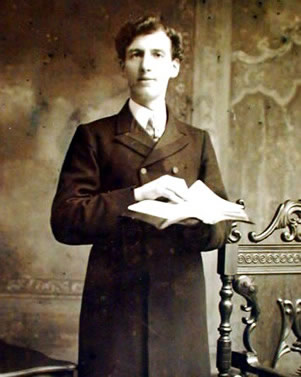
Image result for Evan Roberts
How might Canada be different if ten per cent of Canadians entered into the Kingdom of God in the next two years? That’s what happened in Wales, the land of revivals and song. Evan Roberts, the spiritual father of the 1904 Welsh Revival, worked from age 12 to 23 with his father Henry in the coal mines. He had visitations from the Holy Spirit, showing all Wales being lifted up to Heaven.  For several months before the revival broke out, Evan would be taken up into the heavens every night where he would commune with God.  Evan began to ask God to give him 100,000 souls, something that occurred during this revival. During this awakening, ten per cent of the Welsh people were ushered into the Kingdom.  Revival historian J Edwin Orr says that 150,000 became members of local churches in Wales, with 250,000 becoming born again.
Prayer was the very breath of Evan’s soul.  He seemed to be constantly praying. The prayer that Evan received from his mentor Rev Seth Joshua was “Bend me, bend me, bend us.” He urged total abandonment to the will of God.  As one participant commented, “Did we not hear him time and again praying the words “Empty me! Fill me! Use me” until they became part of our thinking?” Whenever the Holy Spirit came upon Evan in a revival meeting, his face was transformed, bringing a radiant smile and shining eyes.
The four "points" of Evan’s revival message were:
1. Confess all known sin, receiving forgiveness through Jesus Christ
2. Remove anything in your life that you are in doubt or feel unsure about
3. Be ready to obey the Holy Spirit instantly
4. Publicly confess the Lord Jesus Christ
Evan became perhaps the most famous man in the world at the time. Even the future UK Prime Minister, Lloyd George, vouched for the genuineness of Evan Roberts and the Welsh revival. Evan was present at only about 259 of the tens of thousands of Welsh revival meetings that took place.  The chapels were often so crowded that Evan often had to climb over people’s shoulders just to make it to the pulpit. Participants said that it was not the eloquence of Evan Roberts that transformed people —it was his tears. People were standing for hours in the cold, wintry air hoping that by someone leaving the church, they could push in to witness the scenes that were taking place inside.  Troubled by both the adulation and criticism, he wouldn’t announce his meetings in advance. He wanted Jesus, not himself, to be the focus. Sometimes he would go to a revival meeting and then refuse to speak, instead praying silently before leaving.  Evan said “I am not the source for this revival. I am only one worker in that which is growing to be a host. I am not moving the hearts of men and changing their lives; but ‘God is working through me”.’ 
From the very beginning of the revival, there was a strong sense of conviction of sin, with wrongdoing publicly confessed. Instead of sports, the hot topic in the pubs was about Evan Roberts and the revival. Drunkenness was cut in half, causing bankruptcies in many pubs.  Crime was cut in half. Former houses of prostitution turned into homes of heavenly singing, encouraging their former customers to go to the revival meetings. The Bible Society in Wales could not keep up with the request for their bibles. People began to pay off their bad debts. Some of the toughest characters in the Welsh valleys were converted. Pit-ponies could no longer understand the miners' commands as they had stopped cursing the ponies. The police, often having no one to arrest, would come to the revivals to sing in quartets. In one court case, the prisoner came under conviction, confessing his sins. The judge then preached the gospel to him, and the jury spontaneously broke out into Welsh revival singing.
Just like with the 1970s Jesus movement, most of the Welsh revival leaders and participants were very young.  The revival services were marked with informality, laughing, crying, dancing, joy, and brokenness.  Many of these youth did spontaneous Jesus marches, singing songs and visiting the pubs to invite people to the revival.  No one bothered about the clock. People often stayed until two to three am in the morning, and then marched through the streets singing hymns.  A participant, David Matthews commented, “When I left the heavenly atmosphere of the church for home, I discovered that it was five in the morning! I had been in the house of God for ten hours — they passed like ten minutes!”  
As predicted by Evan, the Welsh revival had a worldwide impact, birthing over 30 revivals around the world, including in China, Korea, India, East Africa, and the 1906 Azusa Street revival in Los Angeles, impacting hundreds of millions. At one meeting, all Evan said was ‘let us pray’, before revival broke out. As with the later Korean revival, the Welsh all prayed simultaneously. This revival of love gave Evan the ability to sing all day. The first Welsh revival team was five teenage girls who would sing about God’s love at the revival meetings.  The love song of the Welsh revival was the song “Here is love vast as the ocean”.  Evan told the reporters, “I preach nothing but Christ’s love”.
Because Evan seldom ate, slept and rested, he soon succumbed to the pressure of his rigorous schedule, and, in 1906, suffered a physical and emotional collapse, the first of his eight nervous breakdowns. The doctor told Evan after his nervous breakdown that if he ever preached again, he would die.  He then moved to England, living in virtual seclusion until he died.  Sadly, Evan refused to see his family when they visited, only returning to Wales upon the death of his father in 1928. While there for his dad’s funeral in Loughor, Evans spoke a few sentences and a "mini-revival" sparked.  Evan Roberts died in 1951 at age 72.
Imagine what God might do in Canada, if we like Evan Roberts bent our will to God’s will for our nation? Bend us, Lord! Bend the Church in Canada!
Rev. Dr. Ed & Janice Hird
-an article previously published in the June 2019 Light Magazine


Tuesday, April 09, 2019

George Whitefield: Waking Up to the Fire of Christ -HIRD


George Whitefield: Waking up to the Fire of Christ
-an article previously published in the April 2019 Light Magazine


When is the last time that your pastor had to be hoisted, like George Whitefield, through a window into your crowded church building, because there was no other way in?  The Rev. George Whitefield took part in a Great Awakening that is still impacting many congregations today.  Charles Spurgeon called Whitefield “all life, fire, wing, force.”
After being ordained at age 21, Whitefield was accused of driving fifteen people mad in his first sermon.  His Gloucester Bishop Benson ironically said that he wished that the madness might not be forgotten before next Sunday.  The so-called madness was actually people waking up to the life-changing love of Christ.  In his 34 years of ordained ministry, Whitefield preached more than 18,000 sermons to around ten million people.  Dr. Thomas S Kidd holds that “perhaps he was the greatest evangelical preacher the world has ever known.” Because of his speaking gift, Whitefield’s nickname was the Seraph (type of angel).  He was once described by UK Prime Minister Lloyd George as the greatest popular orator ever produced by England.  David Hume, a famous agnostic commented that “Mr Whitfield is the most ingenious preacher I ever heard. It is worth going twenty miles to hear him.” The famous English actor David Garrick held that Whitefield could “make men weep and tremble by his varied utterances of the word ‘Mesopotamia’.” (the ancient land that Abraham came from)
While in Oxford, he became close friends with John and Charles Wesley who helped him in the spiritual disciplines. After reading the book The Life of God in the Soul of Man, Whitefield became convinced that good works would not earn him heaven: “God showed me that I must be born again....” Experiencing the new birth gave him a fresh love of the beauty of spring: “At other times, I would be so overpowered with a sense of God’s Infinite Majesty that I would be compelled to throw myself on the ground and offer my soul as a blank in his hands, to write on it what he pleased.” The new birth became the heart of an unprecedented evangelical revival. 
Whitefield accepted the Wesley’s invitation to join them as missionaries in Savannah, Georgia. He waited however for months to sail to Georgia with his patron General Oglethorpe.  During this delay in England, tens of thousands came to hear him preach about the new birth.  After passionately preaching outside to 10,000 miners in Kingswood near Bristol, he wrote: “The fire is kindled in the country; and, I know, all the devils in hell shall not be able to quench it.”  Whitefield became the Billy Graham of the 17th century, preaching that all people need to be born again.  He was very countercultural, doing the unthinkable thing of preaching in fields, without notes, to tens of thousands. In 17th century England, sermons were only supposed to be given inside church buildings. In 17th England, because of the fear of revolution, the worst thing you could be accused of was enthusiasm. Whitefield sought to reach the heart as well as the head, saying that many people “were unaffected by an unfelt, unknown Christ.”
On his way to Georgia, Whitefield had such a strong voice that when the two other ships travelling with them drew close, he was simultaneously able to preach to all the people on the three ships. At a time when travel was precarious, Whitefield had seven visits to America, fifteen to Scotland, and two to Ireland.  Whitefield was the best-known person to have travelled extensively in the thirteen American colonies.  By 1740, he had become the most famous man in both America and Britain, at least the most famous aside from King George II.  Reminiscent of the Beatles, he was the first ‘British sensation.’ 
Whitefield was radically generous even to a fault.  Wherever revival meetings took place, Whitefield received offerings, including from Benjamin Franklin, to help with the most famous orphanage in North America, Bethesda in Savannah, Georgia.  After Benjamin Franklin scientifically established that Whitefield was able to preach to 30,000 without a microphone, he became his publisher, and a close friend and ally. Between 1740 and 1742, Franklin printed forty-three books and pamphlets dealing with Whitefield and the evangelical movement.  He even built Whitefield a building for preaching that became the University of Pennsylvania.  That is why there are statues of both Franklin and Whitefield as co-founders of the University of Pennsylvania. Benjamin Franklin commented: “It was wonderful to see the change soon made in the manners of our inhabitants. From being thoughtless or indifferent about religion, it seemed as if all the world was growing religious, so that one could not walk through the town in an evening without hearing psalms sung in different families in every street.”

The Bishop’s Commissary (superintendent), Alexander Garden, in Charleston was offended by Whitefield’s article challenging slave owners over mistreatment of slaves, and by Whitefield’s preaching both in other parish areas and among other denominations. Garden declared that the slave owners were going to sue Whitefield for libel. During his sermon, Garden attacked Whitefield, and refused him communion.  Then he dragged Whitefield into an ecclesiastical court, trying to defrock him.  Jonathan Edwards of Northhampton, a co-leader in the Great Awakening, wrote: “Whitefield was reproached in the most scurrilous and scandalous manner...I question whether history affords any instance paralleled with this, as so much pains taken in writing to blacken a man’s character, and render him odious.” Whitefield did not let criticism stop him, saying “The more I am opposed, the more joy I feel.”  
On a Sunday morning in Philadelphia, Whitefield preached to perhaps 15,000 people.  Then, he attended an Anglican Communion service where Commissary Cummings publicly denounced him and his followers. Whitefield followed this right after with preaching a farewell sermon to an outdoor assembly of 20,000.  The relentless pace was brutal to Whitefield’s health. At another time in Boston, “Whitfield was running himself ragged and becoming extremely ill, violently vomiting between sermons. He was feverish, dehydrated, and sweating profusely.”
During his four years away from England, the Gentleman’s Magazine and other English newspapers listed George Whitefield as having died.  He changed so many lives that even the English upper classes began to give Whitefield a hearing.  Lord Bolingbroke, after hearing Whitefield at Lady Huntington’s place, wrote: “Mr Whitefield is the most extraordinary man of our times. He has the most commanding eloquence I ever heard in any person...” One Anglican minister claimed that Whitefield had set England on fire with the devil’s flames. Whitefield countered. “It is not a fire of the Devil’s kindling, but a holy fire that has proceeded from the Holy and blessed Spirit. Oh, that such a fire may not only be kindled, but blow up into a flame all England, and all the world over!”

Dying at 55, Whitefield had been used to set many people on fire with love for Christ.  He memorably prayed: “O that I could do more for Him! O that I was a flame of pure and holy fire, and had a thousand lives to spend in the dear Redeemer’s Service.” Whitefield was passionate about awakening to the new birth.  We in Canada also need to wake up to the fire of Christ. We too need to recapture the priority of the new birth. Have you, like Whitefield, awoken yet to the new birth?

Wednesday, January 09, 2019

We are all Indebted to the Wesleys


general james oglethorpe

We  are all Indebted to the Wesleys
By Rev Dr Ed & Janice Hird
After General James Oglethorpe rescued 10,000 people from Debtors Prison, he recruited John & Charles Wesley to serve these exdebtors as Anglican priests in the new colony of Savanah Georgia. The Wesleys were Oxford University academics with little pastoral experience. When they arrived in Georgia, they encountered one disaster after another.  One time when the Wesleys put the only doctor in Savannah, Georgia, in jail for getting drunk, a woman died in childbirth. Another time John Wesley refused communion to Sophia Hopkey his ex-girlfriend who had married another man. After being sued for one thousand pounds for character defamation and challenged to a duel, John Wesley had to escape in the middle of the night.

John famously said: “I went to America to convert the natives. But who will convert me?” During a violent storm while returning by boat to England, he was impressed by the calm faith of the Moravian Brethren. Attending their London chapel, his heart was strangely warmed. Many people in England were angry with hIm once he started preaching outside. Sometimes his opponents attacked Wesley, calling for his crucifixion. Wesley didn’t let anything stop him.  Some historians credit the Wesleys with having prevented the French Revolution from happening in 18th century England, because Methodist revival peacefully improved the lot of the working class.  At that time, adults and even children could be legally hanged for 160 different offenses –from picking a pocket to stealing a rabbit.  In London, 75% of all children died before age five.  Among the poor, the death rate was even higher.  In one orphanage, only one of 500 orphans survived more than a year.  Alcohol abuse was rampant, even among children, with over 11 million gallons of gin consumed in 1750.  Charles and John Wesley believed that changed hearts could lead to a changed society.  By setting many free from alcoholism and teaching the children to read, Methodism gave parents hope for a better life for their families.
Since the 1925 birth of the United Church of Canada, few Canadians hear much about Methodism, which was once an Anglican renewal movement that transformed Canada. Methodists were well known for their summer Camp Meeting revivals, weekly c  lass meetings (ie home groups), and vigorous hymn singing.  Suspected of being disloyal after the War of 1812, Canadian Methodists over time became the quintessential Canadians.  Both sides of our families had Methodist circuit rider preachers. On Janice’s side, her Methodist ancestors were named John Wesley Cline and Charles Wesley Cline.  The most famous Canadian Methodist Egerton Ryerson helped create free Canadian public schools rooted in Judeo-Christian values at a time when less than half the children were attending school.  Ryerson, the founding editor of The Christian Guardian, the first Canadian Christian newspaper, advocated that education “should be as common as water and as free as air. Education among the people is the best security of a good government and constitutional liberty…The first object of a wise government should be the education of the people.”
ryerson egerton
We are all indebted to the Wesley brothers who brought Methodist revival to Canada.
-previously published in the Light Magazine

Friday, August 15, 2014

Everything Old is New Again

About a month ago, my wife and I went for a leisurely Saturday drive out to the Carp Farmer's Market about a half hour from Ottawa. It was one of those ideal summer mornings—perfect weather. We thoroughly enjoyed the displays of fresh produce and home-baked goods, but best of all we enjoyed sampling them. Surrounded by friendly faces and live country music, who could ask for more?

But there was more. On the fairgrounds next to the farmer's market antique autos were rolling into position for a 100+ vintage car exhibit. I've always revelled in these displays, so after a locally prepared midmorning snack, we sauntered over.


Now I admit I find early twentieth century cars fascinating, but for me, pure nostalgia draws me to the mid-century beauties of the 1950's and '60's—the cars of my childhood and youth. Nothing says classic styling like the fins on a '57 Chevy or a mid '60's Mustang.


But for me the real find—the pearl among the oysters—was a green 1953 Ford. Why did this car attract me like a magnet? It was the first car I remember—my father's family car. I remember every detail about it from the chrome jet hood ornament to the Ford name crest on the trunk.


A thousand half-forgotten memories flooded back when I set eyes on that car. I was a one-year-old when Dad bought that car back in Saskatchewan. I cut my teeth in that old Ford and it was a central part of so many childhood memories. And here it was—a near perfect replica—sitting before some sixty years later. Furthermore, my name was on the license plate. How cool is that!


Unfortunately, over time we have lost so much. My father's old Ford went to rust bucket heaven a decade or two after he drove it home from the dealer. Cars rust, fabric frays, memories fade. That's why I draw so much comfort from this Bible verse: Therefore, if anyone is in Christ, the new creation has come: The old has gone, the new is here! (2 Corinthians 5:17).
This body of mine may be growing old and showing signs of wear, but in Christ I am being renewed every day. If there is resurrection and renewal for old cars, surely through faith in the risen Christ there is hope for this old body of mine. And if that be true there may even be hope for my Dad's old 1951 pick-up truck stored in a shed in Saskatchewan, and my grandma's bones stored in a grave a few miles away.  
So will it be with the resurrection of the dead. The body that is sown is perishable, it is raised imperishable (1 Corinthians 15:42).
There's hope and renewal for old Ford's and Kitz's too!

David Kitz is an award-winning author and Bible dramatist. For details on his book and drama ministry visit www.davidkitz.ca


Tuesday, April 20, 2010

The Clunker - Black


The old car that once was your sleek and polished-till-gleaming, and babied pride and joy, is now a rust bucket. It gets sent to a wrecker’s yard, where some salvageable components are removed for spare parts, and what’s left comes under ‘The Great Crusher’. From thence it joins a bunch of other hapless vehicles that have already shared that fate, to be carted off together to a steel plant, where they go through a blast furnace.

The hull of your old car may come out as part of a great ingot of steel, having the girth of a large fallen maple. That ingot might go through another furnace, then be rolled under enormous pressure, and made into a huge roll of sheet steel, or be cast in a mould, or forged or stamped into any of various forms under many tons of pressure. The items coming out of that process may later go through various treatments to cut, grind, fashion, and temper them ... and so on.

What will your old pride and joy become? A few lengths of metal pipe? Concrete reinforcement bars? Or, thousands of key rings? Maybe a gazillion nuts and bolts to help hold other cars together. Will it become a railing on a cruise ship, or perhaps a huge anchor or chain? Maybe a gun in the hands of a hunter, or soldier; or in the hands of a criminal – God forbid!
Ah, but perhaps your car will rest in the gentle hands of dozens of skilled surgeons and nurses around the world, as scalpels and hypodermic needles, saving lives.
~~~
What that car was is not quite what it was becoming, and what it was becoming was not clear until it was complete, and finally revealed. By that time, no one involved in the process knew what it had been before, neither did they care.

But our Heavenly Father cares about what you and I are becoming, and will continue to work His grace in us as we entrust ourselves to Him.
~~+~~

Reflection Scriptures
Rom. 8:28-29 (NIV) And we know that in all things God works for the good of those who love him, who have been called according to his purpose. For those God foreknew he also predestined to be conformed to the likeness of his Son, that he might be the firstborn among many brothers.
1 John 3:1-2 (NIV) How great is the love the Father has lavished on us, that we should be called children of God! And that is what we are! The reason the world does not know us is that it did not know him. Dear friends, now we are children of God, and what we will be has not yet been made known. But we know that when he appears, we shall be like him, for we shall see him as he is.
Rev. 21:4b-5a (NIV) There will be no more death or mourning or crying or pain, for the old order of things has passed away." He who was seated on the throne said, "I am making everything new!"
~~+~~
I wrote the original version of the above illustrative scenario some time ago, and revised it recently as an illustration for a homily. May you find some inspiration for your life.
~~~
Peter A. Black is a soon-to-be-retired pastor living in Southwestern Ontario, and a freelance writer.
He is the author of "Parables from the Pond" (Word Alive Press).
His current project is ghost writing an historical biography.


Monday, October 19, 2009

Rejected and Renewed - Belec


Years ago an editor gave me some (free) wise counsel - "Cut it down by half and leave nothing out." At first, I was mortified, because a rejection letter accompanied this sage piece of advice. I didn't realize back then that a handwritten note from an editor was encouraging.

After I dabbed the tear-stained note, I glanced again at the clever words that would stick with me forever. I thought about what they really meant. Remove the fluff. Dispose of the verbosity and keep it simple smart-girl. So I did. I tried. I even sent off another manuscript to the wise editor. I heeded her advice and she repaid me in kind – I gave her a nice tight manuscript and she gave me a nice fat $350 cheque.

That was in the mid 80's. But I’ve never forgotten those wise words. Reducing wordiness has helped me in so many areas of my writing. Writing devotional material is a great way to practice writing tight. The template is there and the guidelines are unbending.

When writing picture books for children or short stories in periodicals or Sunday School take home papers, I have discovered the importance of making every single word count. My rule is – if it doesn’t impact the story – then it gets tossed. Even when I am writing books for older children, I try to make sure that I don’t overdo it with fluffy, stuffy descriptions and I try to make sure I get to the point.

I don't always get it right and I still get those dejecting rejections. But I keep on doing what I love because I have an addiction to 26 assorted letters. God has poked me in some interesting directions over the years and I know that rejections are not any dastardly plan of His created to ridicule my writing ability or lack thereof.

When I really get feeling sorry for myself, (like yesterday when I reached into my mailbox and pulled out an old familiar manilla proposal / rejection letter holder from that dear editor who seemed to really, really love my idea and seemed so eager to read my work and write up that big ol' contract...) I think of Jesus.


Jesus' words contained no fluff, no effervescent effusiveness or the like. He got right to the point without mincing words or worrying about how to please everyone. He spoke from the heart and touched hearts. Yet he faced rejection after rejection. People misunderstood Him; they thought Him a traitor, a liar, a barbarian set on disrupting religion. Eventually his rejection led Him to Golgotha where the timbers mocked and beckoned. But the Good News is He did not die in vain. Renewal came in the morning. He rose again and the rest, as they say, is His Story!

So instead of whining about that nasty, drooling manilla creature sitting in my 'get it out of the office as quickly as you can' basket, and bemoaning the fate of my previously appreciated manuscript - I will think of Jesus. I will ponder what He endured and how He gave it all for the likes of me. I will be encouraged and remember that God's plans are not always what I think they should be. And I will measure my rejection against the ultimate sacrifice that Jesus made. Then I will get back into the saddle and wait - for God.

Sunday, April 15, 2007

A Grand Spectacle

At a certain time of day, early in the evening, I make sure the curtains on the windows in our living room are open. I don’t want to miss the spectacle. Yes, right here in Ponoka, there’s a grand spectacle every evening. It’s a spectacle of promise.

We are fortunate enough to live on a street that is one-sided. There are houses on the east side, but not on the west. That side is still an undeveloped bush, full of birds, squirrels and deer. It’s there that the spectacle of promise happens. As the sun begins to drop, the light slants, hitting thousands of small catkins hanging from the trees. When the sun hits them, they glow, making the entire bush light up. It’s the promise of spring; the promise of new growth; the promise of the colour green.

As I have watched the glow become more and more intense day by day, I have been reminded of all the promises God has given us. They, too, are promises of new growth, rebirth and second chances. They are filled with words of love and protection, encouragement and comfort. They confirm the power of all believers to accomplish God’s purposes. They speak about God’s faithfulness, mercy and forgiveness and His desire for a continuing relationship with us. They outline the path to peace and everlasting life.

None of God’s promises are hidden. He has made a spectacle of them, displaying them for all to see. They glow like the catkins on the trees across from my house. They are promises that will never be broken.

The Apostle Paul knew this when he addressed the people of Corinth – “For no matter how many promises God has made, they are “Yes” in Christ. And so through him the “Amen” is spoken by us to the glory of God.” 2Corinthians 1:20

There is no duplicity in God. Just as we know those catkins will develop and bloom into bright green leaves, we can know that God is saying “yes,” to us. “Yes, I am here. Yes, I love you more than you can comprehend. Yes, I want you to get to know me. And yes, soon, very soon, we will be together.”

One promise that sums up all the others can be found in Romans 8:28 – “And we know that in all things God works for the good of those who love him, who have been called according to his purpose.” All the promises, all the trials, all the events of our lives, are meant to culminate in what is good. For the believer, there is no doubt it will happen.

As spring creeps to its fulfillment, as we watch the earth bursting into new life around us. we can be confident that the same kind of life is growing in us. The same kind of renewal is possible. God is saying “Yes!”

May we all shout “Amen!”

Popular Posts