
ate
Economics
By Rev. Dr. Ed & Janice Hird
-an article published in the March 2024 Light Magazine
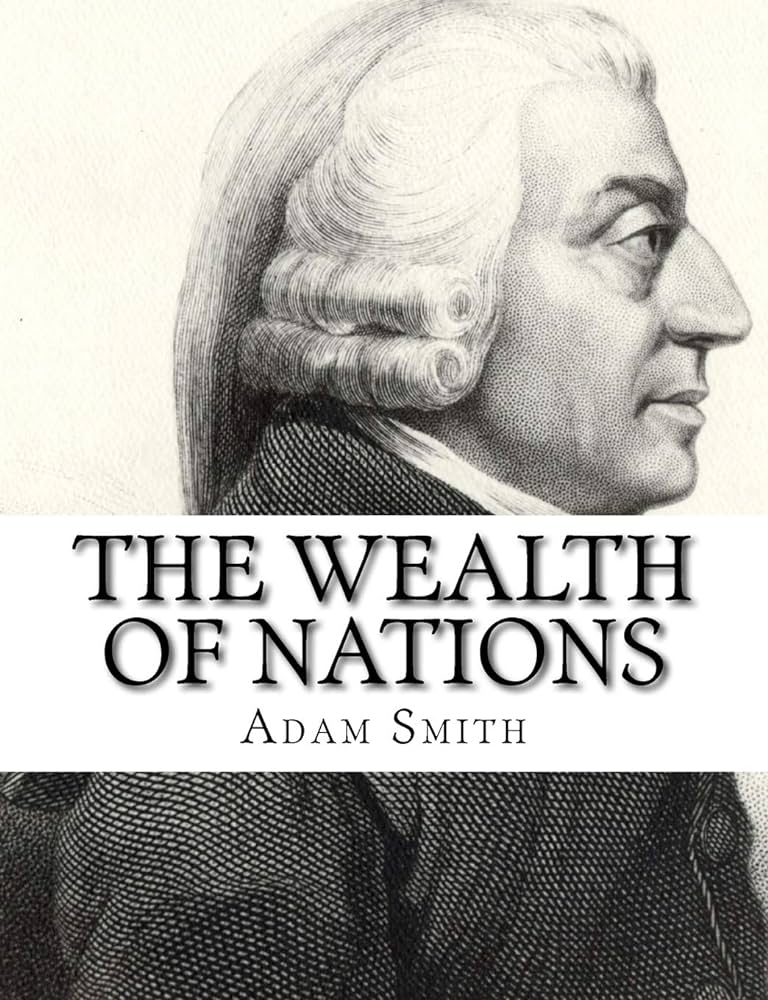
Many people nowadays have little idea how Adam Smith’s
economic ideas have shaped their lives for good. Can a rediscovery of the real
Adam Smith rescue our muddled Canadian economy?
In 1776, Smith’s second book The Wealth of the Nations
was so popular that he became known as the Father of Economics and the Father
of Capitalism. For some people today,
Capitalism has become a negative word associated with Scrooge-like greed and
cutthroat business practices. Karl Marx blamed capitalism for all the world’s
ills. Can capitalism instead embrace the
compassionate vision in Charles Dickens’ book A Christmas Carol?
Because Smith was a devout Christian economist, God was
mentioned a total of 403 times between his two books, including his
lesser-known book The Theory of Moral Sentiments. Biblical economics is
based on our being faithful stewards, realizing that all things come from God,
and of his own have we given him (1 Chronicles 29:14). Stewardship in the Greek is the same word as
economics (oikonomos, manager of the oikos, the house). Smith wanted everyone
to earn a decent living, saying ‘No society can surely be flourishing and happy
of which the far greater of the members are poor and miserable.’ He lamented how the poverty and poor health
care in the Scottish Highlands resulted in many a mother having only two of her
children survive after giving birth to twenty babies. With Canada’s standard of living suffering
from governmental and economic mismanagement, perhaps it may be time to revisit
the economic wisdom of Adam Smith. Might a rediscovery of the Protestant work
ethic of diligence, thrift and efficiency help Canada get back on track?
What might happen in Canada if we once again rewarded hard
work rather than punishing it with excessive taxation and regulations? Smith
wrote about the Man of system who bureaucratically treated people as if
they are chess pieces. In contrast, Smith held that economic freedom with free
markets and free trade brings economic progress. Smith observed how God
transforms private interest into public good by his invisible sovereign hand.
Born in 1723 in Kirkcaldy, Scotland, Adam Smith never knew
his father who had died five months before his birth. Smith regularly attended the local church
with his devout mother Margaret. His strong Christian faith is often ignored or
minimized by modern economists. He never
married, living with his mother until her death in 1784. He then died himself six years later. You cannot really understand Adam Smith
without appreciating his 1759 book The Theory of Moral Sentiments:
As to love our neighbour as we love ourselves is the great
law of Christianity, so it is the great precept of nature to love ourselves
only as we love our neighbour, or what comes to the same thing, as our
neighbour is capable of loving us.
As Christians, our financial choices need to be shaped by the
love of neighbour as ourselves rather than the love of money. The golden rule is God’s golden way
economically. When people matter more than profits, everyone wins.
Adam Smith was not just a philosopher and economist. He was also an early psychologist and
sociologist who served at Glasgow University as Professor of Moral Philosophy. He
was such an academic rock star in Glasgow that the university bookstore even
sold a bust of his head during his lifetime. Smith was fascinated about what
made people tick, especially how emotions/sentiments affected our life choices
and ethical decisions. Influenced by his lifelong friend David Hume, Smith held
that our emotions and imagination shape us far more than our apparent
rationality. Like Hume, Smith pioneered the modern scientific method where
technology, business, and society are advanced through careful experimental
observation.
Unlike Hume, Smith retained a strong Christian worldview as
he embraced science. With most of his
students training to become ordained clergy, he taught them extensively about natural
theology, how God our creator impacted our natural world:
…every part of nature, when attentively surveyed, equally
demonstrates the providential care of its Author, and we may admire the wisdom
and goodness of God, even in the weakness and folly of man.
Smith was struck by the miraculous order of God’s good universe.
He called the universe God’s machine, designed to produce at all times the
greatest quantity of happiness in us. Romans 8:28 reminds us how all things
work together for the good. In The
Theory of Moral Sentiments, Smith commented that:
all the inhabitants of the universe, the meanest as well as
the greatest, are under the immediate care and protection of that great and
all-wise being who directs all the movements of nature, and who is determined
by his own unalterable perfections to maintain in it at all times the greatest
possible quantity of happiness.
Since he was fatherless, Smith deeply appreciated that God
was indeed our heavenly Father. He commented that ‘the very suspicion of a
fatherless world must be the most melancholy of all reflections’, leaving us
with nothing but endless misery and wretchedness.
All the economic prosperity in the world, said Smith, can
never remove the dreadful gloominess of a world without God our Father. Smith taught that with this conviction of a
benevolent heavenly Father, all the sorrow of an afflicting adversity can never
dry up our joy. Smith, who sometimes suffered from depression, knew that
because he was not cosmically alone, he had reason to keep going. While there is
weeping in the night, there is indeed joy in the morning. (Psalm 30:5) After
experiencing academic burnout, he left Glasgow University, serving as a
European tutor for Henry Scott, the future Duke of Buccleuch. While in Paris,
he became friends to Voltaire and the French physiocrat economists, led by Dr.
Francois Q uesnay, the Royal
Physician to King Louis XV. After the tragic death of Henry Scott’s younger
brother, Smith returned home, never to again visit Europe.
Smith held that we need to submit our will to the will of the
great director of the universe. While
Smith as an Oxford-trained academic was very private about his emotions, he
clearly taught that God deserved our unlimited trust, and ardent & zealous
affection.
No conductor of an army can deserve more unlimited trust,
more ardent and zealous affection, than the great conductor of the universe.
Both economics and theology for Smith needed to be practical.
He said that while contemplating God’s benevolent and wise attributes is
sublime, we must not neglect the practical call to care for our family, friends
and country. As God’s financial stewards, earning money enables us to more
effectively care for our family, our neighbour, and our country.
Smith liberated us from medieval mercantilism, which was a
zero-sum game of winners and losers where there was no mutual economic growth
and value-adding, except in farming. Mercantilism had countries grow wealthier
through invading other countries to steal their grain and gold. The
mercantilists could not imagine that everyone could win through peaceful
international trade. Smith’s economics
involved the division of labour, resulting in specialization and free trade
between countries and regions. He blamed the profit-driven mercantilism for the
dreaded slave trade. Smith realized that free people are better workers,
producing better profits. Mercantilism
was also so tied down with local guilds that workers were often unable to work
in neighbouring towns. Smith envisioned ordinary workers being able to move
freely around the country to offer their services. Thanks to Smith’s economic
revolution, ordinary people, rather than just the very rich or the government
officials, could save up enough money to own their own property. In contrast to
mercantilism, Smith held that:
A nation is not wealthy by the childish accumulation of shiny
metals, but it is enriched by the economic prosperity of its people.
How might our world be better in 2024 if we embraced Adam
Smith’s compassionate, Christian-based economics?


