
E. Stanley Jones on the Power of Pentecost
Have you noticed that there is a growing interest among many Christians in the Jewish feasts, including the Day of Pentecost/Shavuot? Liturgical churches often use the red colour to symbolize the fire of the Holy Spirit. Ironically, many Pentecostal churches don’t celebrate the day of Pentecost, though that seems to be changing. Many countries around the world celebrate Pentecost/Whit Sunday as a public holiday, some giving Whit Monday off as well.
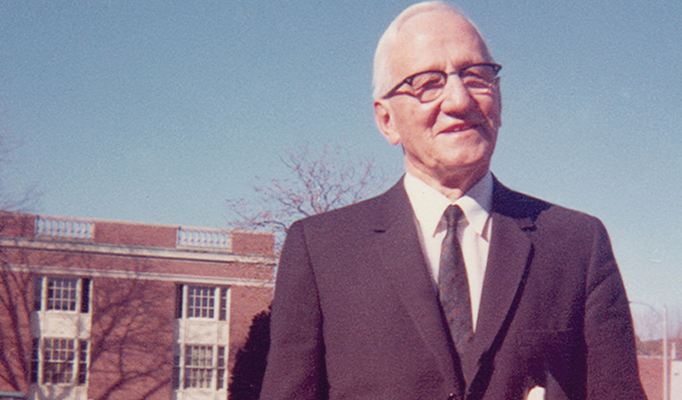
E. Stanley Jones loved the day of Pentecost, dealing extensively with Pentecost in many of his 28 books. The 2026 Book of the Year Christ of Every Road by E. Stanley Jones is specifically called “A Study in Pentecost.” He wanted us to experience the life-changing power of the Holy Spirit, the third person of the Trinity.
This year’s day of Pentecost is celebrated 50 days after Easter/Passover on Sunday May 24. The Jewish feast of Shavuot/Pentecost on the 6th of Sivan goes from May 21 to 23, being based on the lunar calendar rather than the Gregorian solar calendar. While they occurred on the same day in 2022 and 2025, the Jewish and Christian Pentecost can sometimes be weeks apart.
Shavuot in Hebrew means “Weeks”, referring to the seven weeks of time from Passover to Pentecost. Exodus 23:16 calls it the Festival of Harvest (Hag HaKatzir), referring to the offering of the first fruits (two loaves of bread) from the spring wheat Harvest (Exodus 34:22, Leviticus 23:15-21, Numbers 28:26, Deuteronomy 16:9-12). Israel’s climate is so rich that it has both a spring and fall harvest.
Rabbinic tradition links Shavuot chronologically to the giving of the Ten Commandments/Torah to Moses in Exodus 19 on Mount Sinai. In Acts Chapter 2, we saw the birth of the Church with the giving of the Holy Spirit in the Upper Room on Mount Zion, paralleling the giving of God’s Word on Mount Sinai. The original Harvest theme of Shavuot becomes the missionary Harvest of all the nations. God told them to wait in the Upper Room until they were clothed with tongues of fire and supernatural tongues, enabling them to become witnesses in Jerusalem, Samaria, and to the ends of the earth.
While E. Stanley Jones did not speak in tongues, he was gracious to those who did. Jones was deeply charismatic in the sense of moving in the Spirit, surrendering to the Spirit, and listening to the Holy Spirit.
In Christ of the Round Table, he called Pentecost normal Christianity, as illustrated in Romans Chapter 8. In The Christ of Every Road, he described Romans 7 as sub-Christianity, lacking a living experience of Pentecost. This, Jones said, is “the supreme tragedy in present-day Christian living.” He called Pentecost the dominant need of our age. The lost chord in the modern church, said Jones, is Pentecost.
Why was Jones so excited about Pentecost? Jones was impressed by how Pentecost affirms our common humanity: “Pentecost strips us of all pretensions, pride, place and makes us persons.” Jones held that Pentecost saved the disciples from the trivial, the marginal, and the irrelevant. Pentecost is the charter of freedom and equality, laying the foundations of western democracy. All, through accepting Christ, receive the indwelling Spirit, whether rich or poor, Jew or Gentile, male or female, young or old.
He also valued the life-giving implications of Pentecost: “It stands for life, hence its central impulse is sharing. We only live as we give.” The infilling and outpouring of the Holy Spirit releases a radical generosity. Pentecost for Jones was about utter self-surrender. Only Pentecost can get us out of our closets, no longer hiding behind closed doors. It gives us the gift of courage. The Holy Spirit makes us spiritually contagious, infecting others with God’s love.
Pentecost for Jones meant power – power to forgive injuries, to keep an un-soured spirit amid the deepest injustices, to overcome evil with good, hate by love, and the world by a cross. It cleanses our tongues from backbiting, jealousy, and bitterness, and purifies our hardened, divided hearts, making us more Christ-like. Pentecost gives us the weapons of inexhaustible forgiveness, unquenchable good will, and limitless love.
Pentecost is about fire in God’s fireplace: “He makes every common bush flame with God.” Jones saw Pentecost as “an experience in which the soul is kindled into flame.”
Pentecost to Jones was the sermon on the mount become practical. Without the Holy Spirit, the Christian life just becomes an unbearable burden. Pentecost, said Jones, is not a spiritual luxury, but rather an utter necessity for human living. Pentecost for Jones was an artesian well of joy bubbling over. Jones said,
“It is the joy of the eye that sees, of the aesthetic mature that senses beauty, of the intelligence that has found truth, of the heart that knows love, of the life that has found Life.”
Pentecost gives us a divine song to sing, sometimes because of, sometimes in spite of. Blessed, said Jones, is the Christian who has learned to work to the music of the Spirit. When the Holy Spirit fills us again and again, prayer overflows to the Father. Jones said,
“If the will is surrendered and responsive, so that the channels are open, then, flowing from the eternal purity of the divine nature, the life of the Spirit bubbles up within our hearts as a fountain of exquisite joy, cleansing away the impurities of our thinking and acting and providing power by which to live, and to live anywhere.”
Jones believed that with the embrace of Pentecost, we will experience a spiritual awakening on a widespread global level. Pentecost makes all languages, cultures and nations sacred, fulfilling the Great Commission.
What might happen at Pentecost if we choose to ask for more?


