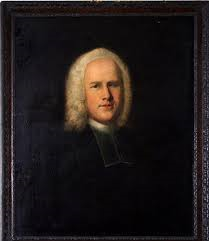
George Whitefield:
Waking up to the Fire of Christ
When is the last time that your pastor had to be hoisted,
like George Whitefield, through a window into your crowded church building,
because there was no other way in? The
Rev. George Whitefield took part in a Great Awakening that is still impacting many
congregations today. Charles Spurgeon
called Whitefield “all life, fire, wing, force.”
After being ordained at age 21, Whitefield was accused of
driving fifteen people mad in his first sermon.
His Gloucester Bishop Benson ironically said that he wished that the
madness might not be forgotten before next Sunday. The so-called madness was actually people waking
up to the life-changing love of Christ. In
his 34 years of ordained ministry, Whitefield preached more than 18,000 sermons
to around ten million people. Dr. Thomas
S Kidd holds that “perhaps he was the greatest evangelical preacher the world
has ever known.” Because of his speaking gift, Whitefield’s nickname was the
Seraph (type of angel). He was once
described by UK Prime Minister Lloyd George as the greatest popular orator ever
produced by England. David Hume, a famous
agnostic commented that “Mr Whitfield is the most ingenious preacher I ever
heard. It is worth going twenty miles to hear him.” The famous English actor
David Garrick held that Whitefield could “make men weep and tremble by his
varied utterances of the word ‘Mesopotamia’.” (the ancient land that Abraham
came from)
While in Oxford, he became close friends with John and
Charles Wesley who helped him in the spiritual disciplines. After reading the
book The Life of God in the Soul of Man,
Whitefield became convinced that good works would not earn him heaven: “God
showed me that I must be born again....” Experiencing the new birth gave him a
fresh love of the beauty of spring: “At other times, I would be so overpowered
with a sense of God’s Infinite Majesty that I would be compelled to throw
myself on the ground and offer my soul as a blank in his hands, to write on it
what he pleased.” The new birth became the heart of an unprecedented
evangelical revival.
Whitefield accepted the Wesley’s invitation to join them as
missionaries in Savannah, Georgia. He waited however for months to sail to
Georgia with his patron General Oglethorpe.
During this delay in England, tens of thousands came to hear him preach
about the new birth. After passionately preaching
outside to 10,000 miners in Kingswood near Bristol, he wrote: “The fire is
kindled in the country; and, I know, all the devils in hell shall not be able
to quench it.” Whitefield became the
Billy Graham of the 17th century, preaching that all people need to
be born again. He was very
countercultural, doing the unthinkable thing of preaching in fields, without
notes, to tens of thousands. In 17th century England, sermons were
only supposed to be given inside church buildings. In 17th England, because
of the fear of revolution, the worst thing you could be accused of was
enthusiasm. Whitefield sought to reach the heart as well as the head, saying that
many people “were unaffected by an unfelt, unknown Christ.”
On his way to Georgia, Whitefield had such a strong voice
that when the two other ships travelling with them drew close, he was
simultaneously able to preach to all the people on the three ships. At a time
when travel was precarious, Whitefield had seven visits to America, fifteen to
Scotland, and two to Ireland. Whitefield
was the best-known person to have travelled extensively in the thirteen
American colonies. By 1740, he had
become the most famous man in both America and Britain, at least the most
famous aside from King George II.
Reminiscent of the Beatles, he was the first ‘British sensation.’
Whitefield was radically generous even to a fault. Wherever revival meetings took place, Whitefield
received offerings, including from Benjamin Franklin, to help with the most
famous orphanage in North America, Bethesda in Savannah, Georgia. After Benjamin Franklin scientifically
established that Whitefield was able to preach to 30,000 without a microphone,
he became his publisher, and a close friend and ally. Between 1740 and 1742,
Franklin printed forty-three books and pamphlets dealing with Whitefield and
the evangelical movement. He even built
Whitefield a building for preaching that became the University of
Pennsylvania. That is why there are
statues of both Franklin and Whitefield as co-founders of the University of
Pennsylvania. Benjamin Franklin commented: “It was wonderful to see the change
soon made in the manners of our inhabitants. From being thoughtless or
indifferent about religion, it seemed as if all the world was growing
religious, so that one could not walk through the town in an evening without
hearing psalms sung in different families in every street.”

The Bishop’s Commissary (superintendent), Alexander Garden,
in Charleston was offended by Whitefield’s article challenging slave owners
over mistreatment of slaves, and by Whitefield’s preaching both in other parish
areas and among other denominations. Garden declared that the slave owners were
going to sue Whitefield for libel. During his sermon, Garden attacked
Whitefield, and refused him communion.
Then he dragged Whitefield into an ecclesiastical court, trying to
defrock him. Jonathan Edwards of
Northhampton, a co-leader in the Great Awakening, wrote: “Whitefield was
reproached in the most scurrilous and scandalous manner...I question whether
history affords any instance paralleled with this, as so much pains taken in
writing to blacken a man’s character, and render him odious.” Whitefield did
not let criticism stop him, saying “The more I am opposed, the more joy I
feel.”
On a Sunday morning in Philadelphia, Whitefield preached to
perhaps 15,000 people. Then, he attended
an Anglican Communion service where Commissary Cummings publicly denounced him
and his followers. Whitefield followed this right after with preaching a
farewell sermon to an outdoor assembly of 20,000. The relentless pace was brutal to Whitefield’s
health. At another time in Boston, “Whitfield was running himself ragged and
becoming extremely ill, violently vomiting between sermons. He was feverish,
dehydrated, and sweating profusely.”
During his four years away from England, the Gentleman’s
Magazine and other English newspapers listed George Whitefield as having
died. He changed so many lives that even
the English upper classes began to give Whitefield a hearing. Lord Bolingbroke, after hearing Whitefield at
Lady Huntington’s place, wrote: “Mr Whitefield is the most extraordinary man of
our times. He has the most commanding eloquence I ever heard in any person...” One
Anglican minister claimed that Whitefield had set England on fire with the
devil’s flames. Whitefield countered. “It is not a fire of the Devil’s
kindling, but a holy fire that has proceeded from the Holy and blessed Spirit.
Oh, that such a fire may not only be kindled, but blow up into a flame all
England, and all the world over!”

Dying at 55, Whitefield had been used to set many people on
fire with love for Christ. He memorably
prayed: “O that I could do more for Him! O that I was a flame of pure and holy
fire, and had a thousand lives to spend in the dear Redeemer’s Service.” Whitefield
was passionate about awakening to the new birth. We in Canada also need to wake up to the fire
of Christ. We too need to recapture the priority of the new birth. Have you,
like Whitefield, awoken yet to the new birth?