Showing posts with label preaching. Show all posts

Thursday, October 03, 2019

Running to Jesus by Rose McCormick Brandon

One morning in 1741, Nathan Cole, a Connecticut farmer, heard from a neighbour that George Whitefield, an evangelist from England, would soon be speaking nearby. At this time, a cloud of spiritual hunger had descended on England and America. Whitefield, the Wesley brothers, and American Jonathan Edwards found themselves at the epicenter of a great spiritual awakening.
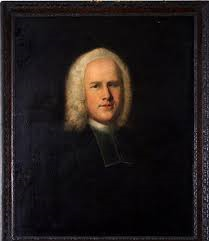
George Whitefield

On hearing the news about Whitefield, Cole dropped his tools and ran for his horse, fearing he would be too late to hear the preacher. He and his wife mounted the horse and galloped off. When the horse tired, Cole would dismount and run alongside till he was out of breath then climb back into the saddle. With twelve miles to travel, Cole wrote, “It was as if we were fleeing for our lives.”
When the Coles came within a mile of their destination, they heard “a noise like a low rumbling thunder and found it was the noise of horses coming down the road. A cloud of dust arose into the air over the tops of the hills and trees. No one spoke a word but every one pressed forward in great haste.” When Cole turned and looked towards the river he saw ferry boats crowded with people. “The land and banks over the river looked black with people and horses all along the twelve miles. I saw no man at work in his field.”
When Cole heard Whitefield preach he said it gave him a heart wound. He saw Whitefield as a man "clothed with authority from the Great God." He had believed himself to be a good man, but that day Cole realized his goodness would not save him. He needed Jesus.
What Cole experienced is the same hunger of the spirit that led thousands to follow Jesus around the countryside. They went without food, slept out on the hills, left their homes and work for the sole purpose of hearing Jesus. They listened intently because they experienced the heart wound that Cole described. The teachings of Jesus pierce the soul. They get into the crevices of our spirit. They change us.
One day as Jesus was preaching on the shore of the Sea of Galilee, great crowds pressed in on him to listen to the word of God. Luke 5:1
The human soul hasn't changed. We are no different than the people who followed Jesus and those who galloped to hear George Whitfield preach about Jesus. Our souls hunger for God. Money, success, false religions, adventures, and earthly delights can suppress that hunger for a while, but no person or thing can satisfy it. Only Jesus.
When the Spirit of God moves, whether on crowds or on an individual, He causes people to drop everything as Cole did, and run toward Jesus as if their lives depended on Him. Because our lives do depend on Him.
Can revivals like the Great Awakening happen today? Before the awakening, the Christian church was careless and compromising. They weren’t living for God. Weren’t treasuring and obeying His Word. Sound familiar?
A study of any revival shows that prayer is the main precursor to revival. Christians worldwide are right now praying that a desire for God will cause millions to run to Him.

 Quoted portions from George Leon Walker, Some Aspects of the Religious Life of New England (New York: Silver, Burnett, and Company, 1897), 89-92.

***

Rose McCormick Brandon writes Bible lessons, devotionals, articles, biblical essays and books from her home in Caledonia, Ontario. She's the author of Promises of Home - Stories of Canada's British Home Children and One Good Word Makes all the Difference. She is a member of The Word Guild and grateful to be the recipient of awards for inspirational/devotional, personal experience and article writing.


Friday, November 03, 2017

Fanny Crosby's November Experience by Rose McCormick Brandon


Fanny Crosby
Times of seeking God often precede a moment of revelation that transforms our lives. Blind poetess and prolific hymn writer, Fanny Crosby, had such an experience. Fanny had become the star of the first Institute for the Blind in New York City where she was educated and later taught. She recited her poetry before presidents and had her work published in newspapers and books.  One biographer wrote, “As Johann Strauss reigned in Vienna as the Waltz King and John Phillip Sousa in Washington as the March King, so Fanny Crosby reigned in New York in the later nineteenth and early twentieth century as the Hymn Queen.”
            Methodist class meetings, with their lively singing and warm atmosphere were attracting many New Yorkers who longed for more than religious formality. In 1850 Mr. Camp, Fanny’s friend and a science teacher at the Institute, invited her to attend special revival meetings at the Methodist Broadway Tabernacle on Thirtieth Street. Fanny declined. Then one night she had a vivid dream. “It seemed that the sky had been cloudy for a number of days and finally, someone came to me and said that Mr. Camp desired to see me at once. Then the clouds seemed to roll from my spirit and I awoke from the dream with a start.”
          After the dream, Fanny attended meetings with Camp every evening for several weeks. Services consisted of long emotional sermons, punctuated with loud amens and hallelujahs, tears of repentance and joyful outbursts, unlike anything Fanny had experienced in rural Connecticut where serious Calvinists worshipped in formal services.
          A feeling that a deeper life in God awaited her kept Fanny returning to the Methodist meetings. A few times she knelt with other God-seekers at the dirt-floor altar and prayed for hours but came away joyless and empty. Until November 20, 1850. “On that night it seemed to me light must come then or never.” At the invitation for prayer, Fanny walked to the altar and again knelt and prayed fervently for a spiritual breakthrough. When she was about to give up, the congregation sang Isaac Watts’ hymn “Alas and Did My Savior Bleed.” When Fanny heard the words of the final verse, “Dear Lord I give myself away, ‘tis all that I can do,” she jumped to her feet and shouted Hallelujah! Hallelujah! Of that night she said, “My very soul was flooded with celestial light. For the first time I realized I had been holding the world in one hand and the Lord in the other.”
         Bernard Ruffin writes in his biography of Fanny – “although there were no dramatic changes in her life and she soon realized it did not solve all her spiritual problems, her November experience as she called it, marked the beginning of a deeper Christian life and a total dedication of her life to God.” 
          Fanny’s hymn portfolio increased to 9,000. Many, like At the Cross Where I First Saw the Light allude to her November 1850 experience.  Her reputation as a happy, contented Christian lasted until she died at age 95. She didn’t seek pity for her blindness but often said, "When I get to heaven the first face that shall ever gladden my sight will be that of my Savior!" Generations have grown up on Fanny’s hymns and congregations still sing Near the Cross, Tell Me the Story of Jesus, Praise Him Praise Him, I am Thine O Lord, Close to Thee and hundreds of others. Her gravestone in Bridgeport, Connecticut is inscribed with two lines from one of her best known hymns  –
“Blessed Assurance, Jesus is Mine
Oh what a foretaste of glory Divine.”
            Experiences like Fanny’s ignite a passion for Christ in our hearts that forever changes us.
****
Rose McCormick Brandon is the author of Promises of Home - Stories of Canada's British Home Children, One Good Word Makes all the Difference and numerous magazine articles. She writes two blogs, Promises of Home and Listening to my Hair Grow. Contact her at: rosembrandon@yahoo.ca  


Thursday, April 09, 2015

Restoring Health through Medicine and Prayer -HIRD

By the Rev. Dr. Ed Hird
 

In December 1980, I lost my voice for eighteen months due to Spasmodic Dysphonia.  My GP told me that I would never preach again.  My father-in-law the Rev Dave Cline, at the time, was the Order of St Luke the Physician (OSL) Warden for BC and Yukon.  Desperation led me to join OSL where I devoured every book that I could find on healing.  I particularly appreciated the insights I gained from filling out the OSL study guide on Jesus’ healing miracles.  Later I even became an OSL Chaplain.  On May 25th 1982, I had successful throat surgery and was able to speak again.  During the surgery, I had a twenty-four hour prayer vigil.  Healing prayer and healing medicine belong together.  Every three months, I have Botox treatments that help maintain my voice.
020 
Every time I preach is a miracle.  My goal is to be like the tenth leper who came back and gave thanks.  During the eighteen months of voice loss, I read sixty books on speaking and writing.  God birthed a passion for writing and communication during my darkest time.  I realized that even without a voice, I still had much to say.  My ‘voice’, particularly about healing and wholeness, was meant to be heard.  Since that time, I have written over four hundred and fifty newspaper articles and have recently published my sequel book ‘Restoring Health: body, mind and spirit’ on Titus.  Many people don’t realize that the book of Titus is Paul’s health instruction manual to unhealthy pirates.  The book of Titus gives us the keys to healthy churches, healthy families and healthy lives.  Paul’s key emphasis to Titus again and again was holistic health/soundness: healthy faith, healthy doctrine, healthy love, and healthy endurance.  Health for Paul was not just physical.  Paul insisted on health in every area of Titus’s life as he impacted the Cretans.  The very Greek word for both health and soundness is ‘hygiaino’ ὑγιαίνω from which we get the modern term ‘hygiene’.  Many people do not realize that soundness and health are the same biblical concept.  When a heart is healthy, the doctor says that it is sound.  The book of Titus was not merely about healthy/sound doctrine.  Health for Paul was holistic, embracing our whole life in body, mind and spirit.

Over the years, I learned that the healing ministry needs to be integrated into regular Sunday morning worship, not just put in a midweek corner for the few.  I will never forget the night that Lee Grady, former Editor of Charisma Magazine, prophesied about St. Simon’s North Vancouver being a well-spring of healing with healing teams being raised up for body, soul and spirit restoration.  Every worship service at St. Simon’s, whether traditional or contemporary, has a team ready to pray for healing.  Keith Bird, OSL Canada editor, said that Restoring Health “presents to us ‘modern-day pirates’ a challenge for becoming whole in body, mind and spirit.  I didn’t want to put it down.”  Imagine how wellsprings of holistic healing, Titus communities throughout Canada, might revolutionize our toxic Canadian pirate culture.

The Rev. Dr. Ed Hird, Rector 
http://edhird.com 
St. Simon’s Church North Vancouver
http://stsimonschurch.ca  
-an article for the December issue of the Order of St Luke the Physician Canada newsletter ‘The Canadian Healer’.

Wednesday, April 18, 2012

But God Doesn't LIKE Salsa - Gibson

Since their births, my four grandbeans have absorbed the habits of their nearest and dearest adults. I should mention here that their daddy is a preacher. That their grandfather is a Preacher. And that Mama and Nana preach too, in and out of the pulpit, in words written, spoken and sung.

Surrounded by such adults, it’s not surprising that the Beans would receive advanced classes in early spirituality. Some days I’m not sure that’s optimal.

Our third grandbean joined the Preacher and me for lunch the other day. At the tender age of four, Dinah is experimenting with her fledgling faith—and finding it useful.

“This is TOO spicy,” she said, of her tamale square.

“Ah,” said I. “That’s why I also made mashed potatoes.”

She dipped the tip of her spoon into the spuds on her plate. “But I don’t WIKE smashed potatoes.” she said. Then she put the spoon down. “Nana, I want salsa on my potato.”

I put salsa on the potato. She played with it a moment. “Nana,” she said sadly, “Ahm NOT hungry.” She slipped off her chair and left the table, then, minutes later, bounced back. All happy. “Nana, I want a snack.”

"No snack. You haven't finished your mashed potato and salsa or your tamale square. Around here, nobody gets snacks if they haven't eaten their lunch."

"I don't WIKE it,” she said, and retreated again. Then returned, seconds later. "Nana, God is hungry."

I almost dropped my fork. "Pardon me?"

"God is hungry!"

I gulped. "And how do you know God is hungry?"

"He told me."

"He told you?"

"Uh, huh. God is in my heart and God said he's hungry. He needs to eat."

"WELL then," says I. "No offense intended, but God can eat YOUR lunch."

"Nope," said the little con-artist, flouncing off for the third time. "God doesn't like salsa either."

At an after-church dinner, on another day, Dinah sat next to her older brother, who took his turn making contrary comments about Nana's food. Eating quietly (God liked her food that day), she listened to his complaints. After several miserable minutes, she’d heard enough. Lifting her pointer finger, she wagged it under his nose, and quoted from Philippians 2:

“Do everything without complaining and arguing, so that you may become blameless and pure children of God…!” Sermon text finished, she added the application: “Benjamin, dat’s what YOU need to do!” On the YOU, she poked his shoulder, and resumed eating. He howled, and the surrounding adults—at least this one—nearly choked.

“How to Use Religious Words to Manipulate Nana and Coerce Your Brother.” Who taught her that deep spiritual lesson?

Faith, they say, is more caught than taught. Some days I think we preachers should all just shut up and start tossing around more love and fewer words—especially in the presence of children.


Kathleen Gibson


newspaper columnist, broadcaster, author


Popular Posts