Tuesday, October 13, 2015

Lifting Praising Hands by Ruth Smith Meyer

As I drove to the Lake Huron shore to join my family for our annual trek down memory lane and a time of thanksgiving for ongoing blessings, my heart echoed the psalmist’s words, “I thirst for you as parched land thirsts for rain.”

My hubby and I have had a few difficult months when our usual routines were totally disrupted, our days filled with new challenges and foreign confrontations. Even our time for quiet contemplation on God’s Word was at a bare minimum. My energy to meet a different way of life and adapt to a new normal was at low ebb. The knowledge that I held in my heart, the surety that God would see me through, had not seeped into the far reaches of my brain.  That orifice was still searching the files of past experiences trying to come up with a solution of its own.

 As I drove, a few splashes of brilliance in the autumn landscape brought brief pleasure before I once more mulled over the changes in our lives. I wondered how my writing life would fit into the new scheme of things or if it would be pushed aside. I hated to think that would happen, for writing has become a satisfying part of who I am and brings me sustenance as well as joy. It brings me delight to serve my husband and care for him, but my aging body is no longer capable of doing all I used to do.
My attention was again, drawn to the scarlet, orange and yellow maples. The changing colour of the leaves is thrilling in their beauty, but that same colour signals the end of this year’s foliage.  It’s the autumn of my life too.  How can I make this time of life bring joy to myself and others as I cling to the branches and yet acknowledge I must also learn to let go? How is that going to change the landscape of my life? The thoughts kept churning through my mind.


Up ahead, against the blue, blue autumn skies with their purple lined clouds I espied a few of the much maligned wind turbines. (In spite of what others think about those towers, my heart as usual lifted at the sight of them. I love their grace and silent movement.) 


Suddenly I almost saw Psalm 134:2 visibly written on them. “Lift your hands in prayer toward his holy place and praise the Lord.”  Those long blades were turning at the merest whisper of winds--winds of which I had been totally unaware in the hurried racing of my mind. But their blades turned because they were lifted toward the sky, ready and willing to move in the breeze.


 It’s as though God was whispering to me, “When you’re in need of power, my child, lift your hands toward me, too. You’ll see that although you thought you were alone; that nothing was moving positively; that you were at the end of your strength; if you lift your hands toward me, things will change. You, too, will notice the winds of the Spirit moving the circumstances of your life. You will see the work I can do in and through you. But you need to raise your hands toward me.”


Those thoughts lingered with me throughout the weekend and speak to me still. In the celebration of Thanksgiving, can I move toward lifting my hands to praise God and let him do the turning?


Psalm 134 does indeed urge me to lift my praising hands to the Holy Place and bless God.  In turn the God who made heaven and earth will bless me.  What more could I need?


Ruth  invites you to join her at www.ruthsmithmeyer.  You may also be interested in reading her latest book, the story of her life, Out of the Ordinary. 


Sunday, October 11, 2015

Giving thanks—Carolyn R. Wilker


 After our opening hymn, “We plough the fields and scatter,” this morning, our pastor asked the children what they are thankful for. One said “family” and his little sister said the same thing. And that’s okay, because those things are important too.

When Pastor Claudine mentioned farmers and harvest, it occurred to me that city children do not have the same understanding of harvest that I would have had as a child, or even children growing up on a farm today. City kids don’t see the crops growing, as I did, unless their parents take them to see family in the country. They don’t see wheat in the field being cut, threshed and loaded into a barn for later use. They wouldn’t see all the time and energy or even understand how much the sunshine and rain affect the crops or see the worry in parents’ eyes when too much rain flattens a good stand of grain or hail beats down the corn.

We took our children to see their grandparents on the farm, so they learned some respect for that way of living, yet it's not the same as growing up there and living and farming day in and day out.

My brother is home for a visit from Calgary. On the way to our parents’ place today, he noticed the crops and how they had grown since his last visit in June. By that time the seeding had been done and the crops were just beginning to grow. There’s something about growing up in the country that never leaves you.

                       Dad driving an old rebuilt tractor in the hometown fair


My siblings and I, having grown up on a farm, perhaps understood more of this than children who live in town. I learned the meaning of a difficult year when the crops weren’t as good, and when the egg price was lower and how that affected what we could buy. Granted, we lived mostly on what we grew and we never went hungry. We had what we needed and we were cared for and loved. We also learned what it took to manage a farm, all the work involved when both Mom and Dad were on the tractor at harvest time and we took on the other chores as we were able. Helping with younger siblings, making meals and gathering eggs.

It wasn’t just about what was in the fields for Mom. We had a large garden, and after a full day of regular chores, she did her canning and freezing in the evening after small ones were in bed. When we were old enough, we helped and she no longer had to stay up late to get it done.

 Living in the city, I  have a small garden, but I still go to market for fresh fruits and vegetables and can and freeze food too, but not nearly as much as Mom put away.


And so today, I give thanks for the work of farm families who produce food that eventually shows up on store or market shelves to feed others. Long after I’m off the farm, I still understand how weather affects crops and how summer is such a busy season for them. I hope their efforts bring them enough to live out the winter and much more. That they can provide for their children, give them an education and pay the bills. I wish them good health and joy. Like Murray McLauchlan in his song to the farmer: “Thanks for the meal…
From a kid from the city to you.”


Friday, October 09, 2015

An attitude of Gratitude: Thanksgiving -HIRD

by Reverend Dr. Ed Hird

Life is messy. Family is messy. Marriage is messy. Church is messy.  How do we navigate through the complexities of daily life? A key to healthy sailing through life’s storms is gratitude.
 
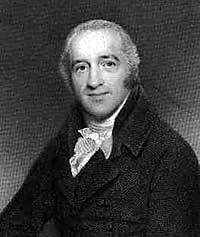
The 19th century Cambridge resident, Charles Simeon, once said: “What ingratitude there is in the human heart.” It is so easy to end up as a complaining, grumbling person when things don’t go our way. The best therapy for a complaining or fearful attitude is to switch from grumbling to thankfulness, from moaning to praising, from bellyaching to belly laughing.

Dr. Patrick Dixon commented that someone who can never laugh is as emotionally imprisoned as someone who can never cry. Dr. Dixon notes that laughter alters the levels of various “stress” hormones such as cortisol, dopamine, adrenaline and growth hormone – all released when we are tense, working hard, worried or afraid. In typical office stress, all the hormones are released but no exercise follows and the body suffers. We develop stomach ulcers, arteries clog up, we become irritable and develop a host of other problems – all because the body is pumping out hormones we don’t need. Laughter, says Dr. Dixon, shuts down these hormone levels, keeping them low. Interestingly, endorphin levels (natural morphine-like substances) seem to remain the same, following laughter.

More and more research is coming to the forefront, showing that gratitude and joyful laughter are connected with healthy living, while grumbling is connected with diseased living. Dr. E. Stanley Jones once said: “If you are unhappy at home, you should try to find out if your wife hasn’t married a grouch.” Worry, fear, and anger are the greatest disease causers. We need to prune from our lives all tendencies to fault-find, blame and put down others. Instead we need to daily practice the healing therapy of “counting our blessings.”
 
I would encourage you to take 10 minutes today to write down 10 gifts that you have received in your life that you are thankful for. It might be your children, your work, your sense of humour, your spouse, your parents, the trees and mountains, or the country of Canada. Then practice saying thank you for these wonderful gifts. It always helps to have someone to whom to say “thank you”.  As the source of all good gifts, it only makes sense to express appreciation to the Creator of this mysterious universe. As someone once said, happiness is seeing a sunset and knowing who to thank.

I am more convinced than ever that each of us were born to be thankful. Ingratitude is like putting sawdust into our car engines. Through an attitude of gratitude, we are protecting ourselves from countless diseases that could otherwise come our way. Our immune system is a remarkably delicate mechanism that just cannot handle acidic emotions like bitterness, rage, or malice. I challenge you therefore to find out for yourself whether an attitude of gratitude will improve your emotional and physical health. Over our kitchen table is a wall plaque with the words: “in everything, give thanks.”

The church where I am Rector, St. Simon’s Church North Vancouver community was birthed in 1945 70 years ago in the Deep Cove Fire Hall. Many churches in the Seymour/Deep Cove area no longer exist.  One of the keys to St. Simon’s ongoing vitality is the gift of gratitude. God has taught us that all things work together for the good for those who love the Lord. He has taught us that what was sometimes meant for evil, God means for good, even for the saving and helping of many other people.

This Harvest Thanksgiving Oct 11th, the St. Simon’s NV community will celebrate its 70th anniversary with a joint 10 am service, followed by a complimentary barbeque.

 Picture
May God give each of us the strength to develop an attitude of gratitude.  Gratitude is the key to everything healthy in our lives.  What are you grateful for on this Harvest Thanksgiving weekend?

— Ed Hird is Rector at St. Simon’s Church North Vancouver , part of Anglican Mission in Canada. He is the author of Restoring Health:body, mind and spirit and Battle for the Soul of Canada.
-originally published in the October 2015 Light Magazine

70th  Cross


Wednesday, October 07, 2015

The latest in my Talk to the Fossils series - Denyse O'Leary

Talk to the Fossils 3.jpg Horizontal gene transfer: Sorry, Darwin, it's not your evolution any more
Horizontal gene transfer (HGT), sometimes called lateral gene transfer (LGT), is a profound recent discovery in genetics: Genome mapping has shown that bacteria can acquire genes from the bacteria around them --that is, horizontally -- rather than from a previous generation (vertical transfer), as when a parent cell divides into two daughter cells. They can transfer multiple segments of DNA at once to fellow species members.
But that was hardly the critical finding. This is: Because bacteria are found everywhere and are comparatively simple, they can move newly acquired genes between life forms in the other domains of life. They can produce heritable changes with no recent common ancestor. …
…
So we are a long way from when biochemist Christian de Duve (1917-2013), grudgingly admitted the significance of horizontal gene transfer, noting that it "... has been recognized as a major complication when attempting to use molecular data to reconstruct the tree of life."
It certainly has, because where HGT is in play, there just isn't a tree of life. Even popular science writers are beginning to recognize the significance of this fact. More.
Talk to the Fossils 3.jpgEpigenetic change: Lamarck, wake up, you're wanted in the conference room!
To recap, Darwinism entails vertical transfer of genes from a common ancestor to descendants. Horizontal gene transfer means transfer of genes from one organism to another on contact, irrespective of the ancestry of either life form. HGT is a form of evolution, yes. But it drastically weakens the status of Darwinism as the "only known theory." Any Darwinian claim about evolution must first rule out HGT as a possible explanation. And, as we shall shortly see, it must rule out epigenetics as well.
Why does this historic shift in the burden of proof receive comparatively little attention? Probably it's due to the overwhelming acceptance of Darwinism as a cultural metaphor and philosophy of life. One thinks, for example, of Amazon citing "purposeful Darwinism" and taking Darwinian Theory to the max as a defense against a recent exposé of the firm's labor conditions. The concepts Amazon advances are scientifically meaningless but culturally meaningful. And culture drowns out science.
Thus, when talking to fossils (or current living forms), our challenge is to listen to what they have to say, not what the Darwinian interpreters of the fossils (and of almost everything else) have to say.
Which brings us to epigenetics. Jean-Baptiste Lamarck (1744-1829) was an early evolutionist who proposed that life forms could acquire information from their environment and pass it on in their genes. He was dismissed, when not ridiculed, by Darwinists for many decades (though not, as it happens, by Darwin). But the basic thrust of his idea has recently resurfaced in epigenetics.
There is an irony in the way the resurgence came about. A key science achievement of the 1990s was the mapping of the human genome.
More.
Who guessed that the genome, of all things, would be, not Darwinism’s triumph, but its grave?
Talk to the Fossils 3.jpg Devolution: Getting back to the simple life
Most of the time, when we think of evolution, we mean mechanisms for the growth of complex new information. After all, entropy (the tendency for disorder to increase over time) can satisfactorily explain loss of information. Yet, in the history of life, some forms survive while -- or even by -- losing information (devolution). Their history may tell us something useful too.
We all know devolution when we see it -- a jar of pennies becomes a doorstop, a computer becomes a boat anchor, the XYZ volume of the Encyclopedia props up a too-short table leg.
But interest in devolution of life forms spiked with the recent discovery of giant viruses, which a 2014 editorial at The Scientist considered a possible fourth domain of life.
The giant mimivirus for example, unlike conventional viruses, "carries many genes thought to be unique to cellular life, suggesting that it evolved from a cell."
If so, strictly speaking, it "devolved" from a cell. More.
Devolution caused researchers to think Incorrect thoughts. Talk to the Fossils 3.jpgLife continues to ignore what evolution experts say (look, this is becoming a habit!)
Readers may well wonder about the term "mechanism" of evolution, as used here. Consistent with Michael Behe's question, "How, exactly?", it means a process observed to account for inherited change. If a bacterium is observed to absorb antibiotic resistance genes from another bacterium and pass them on during cell division, we will term that a mechanism. It is not a theory about what "must have happened" over vast tracts of time; it is an event we have witnessed, produced by causes we can identify.
But what drives the process? That is, why do living cells attempt to protect themselves in ways that rocks and rotting wood do not? As we shall see, a number of non-Darwinian biologists now focus on the way that cells have changed and do change themselves to respond to challenges in their environment -- natural genetic engineering. More.
Talk to the Fossils 3.jpg Natural genetic engineering? Natural popcorn? Or something more important?
Why does the animal want to live?
We can build machines -- we create them to do what we want -- and then put them out with the trash. But not free-living life forms. They try to survive. To deny this would require us to say, as Barham notes, that purpose is an illusion.
Part of the problem between Barham and Shapiro, which led to an exchange of views, sounds conceptual. What does Dr. Shapiro mean by "natural" processes, as opposed to "more than strictly material" ones, as above? A strictly material process would be a series of events fully explained by material processes (for example, what happens when a loose stone falls off a cliff).
But some entities in nature are not material at all: the number 7 comes to mind. Some philosophers have argued that we can construct a theory of items grouped by sevens without using a concept like 7. But whatever advantages these philosophers' suggestion may offer, it does not represent what people do. We have an immaterial concept of 7 that organizes items and events, instantiated in various media at various times. It is natural without being material in any meaningful way. More.
Talk to the Fossils 3.jpgNatural selection: Could it be the single greatest idea ever invented?
Darwin's theory of evolution (natural selection acting on random mutations) is a cultural icon, like the Big Bang, or e=mc2. One needn't know anything specific about any of these ideas. Indeed, media professionals can be passionately devoted to Darwinism without knowing anything about it at all.
That makes sense. Professed loyalty to Darwin is an admission to good parties. And Darwinism's relationship to modern warfare and eugenics is drowned out by cultural support. True, hillbillies thump the Bible against it, to the groans of the better educated. But what if...?
First, what exactly isDarwin's theory anyway, other than an invite to the approved parties?
Here it is: Information can be created without intelligence. That is, natural selection acting on random mutation explains the order of life we see all around us. What can't survive won't, and that explains how very complex life forms and structures -- including the human mind -- get built up.
True: Things that can't survive don't. But why would that fact alone drive nature to produce anything as simple as a kitten, let alone a math genius?
We've looked earlier at documented ways evolution can really happen -- if all we really want to know is how life forms can change over time. That said, I spent the last fifteen years trying to understand the cultural part. Darwinism isn't just about evolution as such. It is also a way of looking at life. It tries to explain life without assuming that there is any actual mind at all, dispensing with traditional philosophies and religions. More.
And how is that working out? Also, just out of interest, why do so many Christians support it? Talk to the Fossils 3.jpg Can sex explain evolution?
Picture a triplex: Tom, a world class cribbage addict in Apartment A, does no work and has no money (apart from social assistance and charity). Dick, in Apartment B, works eight shifts a week in trucking, so has no trouble paying his bills. Harry, formerly in Apartment C, went off and became a multimillionaire (legally) in packaging and shipping for the software industry.
Does work alone explain Harry's success? Did he work a thousand times harder and more often than Dick? Is that even possible? Or is it all an accident of fate, such that Tom or Dick might have stumbled down the same way and done the same thing?
Most human beings tend to doubt that it is so simple. Also, there are not a billion generations between Tom, Dick, and Harry. Not even one, actually.
And if each of these guys somehow ends up with fertile heirs, is any of them "unfit"?
Very well, so let us now look at Darwin's other theory, sexual selection: More.
Talk to the Fossils 3.jpg Could we all get together and evolve as a group?
No subject apart from religion has vexed Darwin's followers more than why people sacrifice themselves for others. They have embraced the ambiguous term "altruism" because it does not clearly mean "compassion" or "heroism." Rather, it is to be seen as the same natural force that causes worker ants to pass on their genes by serving their queen, who lays lots of eggs, instead of reproducing themselves (kin selection). Maybe this force creates the change we are looking for.
A champion of this proposed mechanism was evolutionary biologist E. O. Wilson.
But then Wilson dramatically abandoned kin selection in 2010 in a Nature paper, "The evolution of eusociality," co-authored with mathematicians. He argued that strict Darwinism (natural selection) "provides an exact framework for interpreting empirical observations," dispensing with the other theories he had promoted for decades. Over 140 leading biologists signed a letter to Nature, attacking the 2010 paper. Some called his new, strictly Darwin model "unscholarly," "transparently wrong," and "misguided."
What? All this is said of a Darwin-only model? More.
Read there, argue here. See the other series:  The cosmology series is here. The origin of life series is here. The human evolution series is here. The human mind series is here. Follow UD News at Twitter!

Saturday, October 03, 2015

Living in the Present Tense by Rose McCormick Brandon


rainbow2Some day everything will come together; all the stray ends of our imperfect lives will be gathered and tied into an elegant bow. So we wait . . . for perfection, for health, for money.
We defer joy.
A woman once described a day when all the stars of her scattered life seemed to align. The sun shone. She walked to a beautiful park hand-in-hand with her only grandson. They sat on a bench, ate hot dogs, played soccer, chatted with neighbours, then strolled back home to snuggle up together with a book.  "For a few hours my world was perfect. If only every day could be like that," she said.
If only . . . so many days are ruled by that phrase. If only my child would call me. If only my husband would find a good job. If only I'd fall in love with Mr. Right. If only I had a child. If only my body would cooperate with my mind. A life lived in the "if onlies" can't find joy in the present.
Finding joy in the present means accepting present imperfections - little things like messes, unpainted walls, dreary weather and big things like unemployment, sickness, pain, divorce. Joy won't wait. It doesn't dwell in the past or wait for us in the future. It lives in the present - as God does.
When asked, "who are you?" the Father answered I AM. And Jesus carried that message into His ministry.
"Hereafter the Son of Man will sit on the right hand of the power of God.”
 Then they all said, “Are You then the Son of God?”
So Jesus said to them, “You rightly say that I am.” Luke 22:69-70
 
Are you living in the I AM of God, in His present? Each day is a joy gift from God; joy can't sit on the back burner, it's a today experience.

Lord, thank you that today you and I are at peace because you have forgiven my sins. And that peace brings me joy. My circumstances will never attain perfection but my friendship with you is perfect. And that gives me deep, heart-warming joy, holy joy, present joy.

***
Rose McCormick Brandon is the author of four books, including One Good Word Makes all the Difference and Promises of Home - Stories of Canada's British Home Children. Visit her website at: writingfromtheheart.webs.com and read her blogs Promises of Home and Listening to my Hair Grow.

Friday, October 02, 2015

Will They Hear Angels Sing? (by Peter A. Black)

It is obvious – the people are in haste,
heading towards who-knows-where.
 
They trudge along a rugged road in the dark, their way illuminated only by small lights in the heavens. They – men and women from youth to old age, and yes, little children too – bear bundles on their backs as they press forward, leaning into the night. In the foreground a man, his body straining forward, toils between the shafts of a spoke-wheeled wagon bearing his family’s earthly goods.

WWII. Credit: Wikipedia.org. (Not the same
as was in the book; that was a night scene.) 
This sombre black and white and grey-toned picture, so full of action and human pathos, stirred something in me when my eyes first alighted on it. I recall a sense of feeling sorry – of compassion, for “those poor people.” (Do I remember correctly that those people also strove against wind-driven snow? I think so.)
I was about five years old.
 
That picture was featured in a book containing simple piano arrangements of Christmas carols. The book was a gift to my older sister, Chris. The publishers chose that illustration to accompany the carol, “It Came upon the Midnight Clear.”*

WWII. Credit:Wikipedia.org
(Not the picture in the book)
 But why this dark, sombre and sad picture?

The book was published shortly after WWII had ended. But it would be a year or so before I knew about refugees who, in the millions, fled their homes in numerous countries across Europe and beyond, to escape the ravages of the war. I then readily made the connection in my young mind between the people in the picture and what I now knew.
Currently we’re again seeing people fleeing by night and by day, heading towards who-knows-where, propelled by danger, drawn by the light of hope amidst the darkness of their plight. Now, through pictures and movie news-clips, young minds and hearts are again getting sensitized by pictures to the plight of children like them, half a world away – kids who want to laugh and love and play with chums at school and in their neighbourhoods and enjoy life with their families.

Here’s the verse of the carol that I associated most with the picture at that early age:

2015 Syrian Refugees. Source: mashable.com
And ye, beneath life’s crushing load,
Whose forms are bending low,
Who toil along the climbing way
With painful steps and slow,
Look now! for glad and golden hours
Come swiftly on the wing:
O rest beside the weary road
And hear the angels sing.


Source: radical.net


Summer yields to the cool currents of fall and night pushes day into an ever decreasing space, while merciful nature yields her autumn fruits.

Courtesy: Dreamstime.com
Bronze basted turkeys and hams, savoury cabbage rolls and an enormous array of delightful delicacies of a North American Thanksgiving will be upon us in no time at all. But what of the souls, whose bodies bend low as they lean, toiling in the dark night of humanity’s inability to live at peace with one another – often in the name of God or of a faulted concept of a god?

And then, Hanukkah and Christmas come around with their association of miracles, of angels and light. May the angels of heaven guide and guard those weary souls, and may flesh-clad human angels of divine mercy meet those suffering travellers at points along the way; people through whose kind words, generous deeds and warm hearts, the weary ones may hear, for the first time, the angels sing.

~~~
* Author: Edmund H. Sears
~~+~~
The above is a modified edition of a P-Pep! article published in Black's column, P-Pep! in The Standard Guide Advocate, September 24, 2015.
~~~

Peter's second book is a compilation of inspirational articles on a variety of themes from his weekly column. These are interspersed with brief expressions intended to encourage. Ebook edition is available through Amazon.
 
ISBN: 978-0-9920074-2-3 (Angel Hope Publishing)
 
Peter's first book: “Parables from the Pond” – a children's / family book (mildly educational, inspirational in orientation, character reinforcing). Finalist – Word Alive Press. ISBN: 1897373-21-X. The book has found a place in various settings with a readership ranging from kids to senior adults.Black's inspirational column, P-Pep! appears weekly in The Standard Guide-Advocate (of Southwestern Ontario). His articles have appeared in 50 Plus Contact and testimony, and several newspapers in Ontario.
~~+~~


Thursday, October 01, 2015

Thanksgiving – Looking Back Leads Us Forward. by Eleanor Shepherd

 
Reading the history of how Thanksgiving celebrations arose in our country, we discover reasons to celebrate and give thanks.  The aboriginal occupants of this country were actually celebrating the bounty of their harvest long before Europeans arrived on Canadian shores. They were joined by the early European settlers whose thanksgiving often focused on some special good fortune.  For example, in 1578 the explorer Martin Frobisher, in whose honour the northern bay he discovered is named, was able to offer his thanksgiving for survival of the long journey that he safely made, seeking the longed for passage from Europe to Asia through what we now know is North America. 
Recognizing this part of our history at Thanksgiving we can add our gratitude for our own survival during the difficult times in our lives or for safety as we travel over the highways and waterways that have spread out over that long sought passage from east to west to east.  Applying this to our live we can deepen our appreciation for the new discoveries that we make as we pursue our journey of life, never knowing what we are going to encounter with confidence in God’s faithfulness to accompany us all along the way.
            Historically, celebrations of Thanksgiving have often followed noteworthy historical events.  It is interesting to note that the tradition of a yearly Day to celebrate Thanksgiving in Canada was initiated by refugees who were fleeing from the Civil War in the United States. The habit developed to have a theme each year beyond rejoicing in the blessings of an abundant harvest.  Included in Thanksgiving celebration themes were the golden and diamond jubilees of the reign of Queen Victoria and the coronation of King Edward VII.    


            The noteworthy times in our own lives can become the theme for our Thanksgiving celebrations like the birth of a child or grandchild.  The safe arrival of that child and the joy of cuddling the precious little one with all their promise and potential evoke thanksgiving. Our Thanksgiving celebration can focus on the celebration of a wedding when we realize the value of the love that entwines our lives and the gift that our spouse is to us.  Even funerals when we forget the shortcomings of the one who has left us and remember with gratitude all they contributed to our lives becomes a Thanksgiving event.  Holiday times when we can break from our regular routine and enjoy family time or do something special together and appreciate the joys of family and friends bring forth Thanksgiving. Noteworthy life events create themes for our Thanksgiving.
 
            Historically, in Canada, from the end of the First World War until 1930, both Armistice Day and Thanksgiving Day were celebrated on the Monday closest to November 11, the anniversary of the official end of hostilities in World War I. Then in 1931, Armistice Day was renamed Remembrance Day and Thanksgiving Day was moved to a Monday in October. Since 1957, Thanksgiving Day has always been held on the second Monday in October.
            As Canadians we love peace.  It is appropriate for us that Thanksgiving be associated with armistice. We know the gratitude of living in a time of relative freedom from warfare for most of us.  Our service people have largely been involved in peace keeping missions since the Second World War.  A thanksgiving subject for us is that our lives have not been interrupted by the social devastation that accompanies war. 
            The historical roots of this fall holiday give rise to themes for our Thanksgiving.  As I think of the history of my own life, I plan to take some time over the Thanksgiving weekend to chronicle some of the events on my time line.  I can use each event as an opportunity to express gratitude and thanksgiving to God for some particular aspect of it that has blessed me.  This will remind me how God has been present in my life, giving me what is good and I will have courage to move into the future, confident that whatever awaits me He will be there working for my good.  Want to join me?
Word Guild Award
2009
Word Guild Award
2011 

Popular Posts