
By Rev. Dr. Ed & Janice Hird
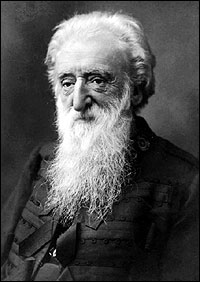
Everyone
nowadays loves the Sally Ann, the Salvation Army. But such admiration was not
always universal. Violence and bloodshed
was the order of the day when William Booth first reached out to the
down-and-out in East London. Few people
today realize that one of the main purposes of the famous Sally Ann Bonnet was
to protect the heads of wearers from brickbats and other missiles. So many people used to buy rotten eggs to
throw at the Sally Ann Bonnets that these rancid eggs became renamed in the
market place as ‘Salvation Army eggs!’ In fact Janice’s great grandfather
George Morgan was a longshoreman who volunteered as a body guard for William
Booth, and Ed’s step-great grandmother Ensign Kate Lee Gathercole preached on
the volatile streets alongside her good friend Catherine Booth.
In
1880, heavy sticks crashed upon the Salvation Army soldiers’ heads,
laying them open, and saturating them in blood.
Mrs. Bryan (wife of the Captain) was knocked down and kicked into
insensibility not ten yards from the police station, and another sister so
injured that she died within a week.
During 1882, it was reported that 669 soldiers and officers had been
knocked down, kicked or otherwise brutally assaulted, 251 of them being women
and 23 children under 15. In Hamilton,
Ontario, the Salvation Army officers were initially ‘squeezed and mangled,
scratched, their clothes torn and almost choked with the dust…’ In Quebec City, 21 of the Salvation Army soldiers
were seriously injured, an officer was stabbed in the head with a knife, and
the drummer had his eye gouged out. In Newfoundland, the Salvation Army was
attacked with hatchets, knives, scissors and darning needles. One night, a woman-Salvationist in
Newfoundland was attacked by a gang of three hundred ruffians, thrown into a
ditch and trampled on. She managed to
crawl out only to be thrown in again, as other women were shouting ‘Kill her!
Kill her!
Ironically many police initially blamed the Salvation Army
for being persecuted. In numerous parts
of England, playing in a Salvation Army Marching Band was punishable with a
jail sentence! During 1884, no fewer
than 600 Salvationists had gone to prison in defense of their right to proclaim
good news to the people in music and word.
In Canada alone, nearly 350 SA officers and soldiers served terms of
imprisonment for spreading the gospel.
Despite the jail sentences and persecution, within three years the
Army’s strength more than quadrupled!
The early Salvation Army ‘jailbirds’ described their handcuffs as
heavenly bracelets. It is little wonder
that the Salvation Army eventually developed such a powerful prison
ministry.
One
of William Booth’s mottoes was ‘go for souls and go for the worst!’ A local English newspaper The
Echo commented that the Salvation Army largely recruited the ranks of
the drunkards and wife-beaters and woman home-destroyers. Many of us remember as children the song: ‘Up
and down the City Road, In and Out the Eagle; That’s the way the money goes,
Pop goes the weasel’! Few of us
realized that we were singing about the famous Eagle Tavern, just off
City Road in London. ‘Pop goes the weasel’
was cockney slang for the alcoholic who was so desperate for a drink that he
would even pawn (pop) his watch (weasel). Ironically, the Salvation Army bought the
Eagle Tavern and turned it into a rehabilitation centre. The Lion and Key public house in East
London became known as ‘The Army Recruiting Shop’. The landlord said, ‘My trade’s suffering, but
you’re making the town a different place, so we can’t grumble. Go on and prosper!’
William
Booth shocked the world by conducting worship with tambourines and fiddles,
instead of the traditional church organ.
To make up for the Salvation Army’s lack of church buildings, General
Booth bought circus buildings, skating rinks, and theatres.
In
response to such bold innovation, one newspaper columnist claimed in 1883 that
‘The Salvation Army is on its last legs, and in three weeks it may be calculated
it will come to an end.’ In the
beginnings, the Salvation Army was essentially a youth movement, with
seventeen-year-olds commanding hundreds of officers and thousands of seekers. Archbishop Tait of Canterbury was so
impressed by this youth movement reaching the poor, that he set up a commission
which unsuccessfully tried to adopt the Salvation Army as an Anglican society.
By
persevering, the Salvation Army began to earn respect from both the churched
and the unchurched, and from all segments of society. Even Queen Victoria at Windsor Castle sent
the following message: ‘Her majesty learns with much satisfaction that you have
with other members of your society been successful in your efforts to win many
thousands to the ways of temperance, virtue, and religion.’ By their persevering in reaching out to the
poor, William Booth and the Salvation Army became known as the champions of the
oppressed. Like no other individual in
nineteenth-century England, General Booth dramatized the war against want,
poverty and destitution.
It
was not by accident that William Booth’s message became linked with ‘soup,
soap, and salvation’! Every
Salvation Army soldier was taught from the beginning to see themselves as
servants of all, practicing the ‘sacrament’ of the Good Samaritan. The famous preacher Charles Spurgeon once
said, ‘If the Salvation Army were wiped out of London, five thousand extra
policemen could not fill the place in the repression of crime and disorder.’ In
recognition of his incalculable impact on the poor, William Booth received on
June 26th 1907 the degree of Doctor of Civil Law from the University
of Oxford.
William
Booth throughout his life showed remarkable creativity and courage. He was one of the world’s greatest travelers
in his day, visiting nearly every country in the world. Even at age 78, General Booth was described
as ‘…a bundle of energy, a keg of dynamite, an example of perpetual
motion.’ A keen observer of the
international scene, Booth in 1907 prophesied Japan’s technological rise,
saying: ‘It is only a question of time when her industries will be tutored with
the most expert direction, and packed with the finest machinery taken from all
nations of the world, and I do not see what can prevent her producing the
finest articles at the cheapest possible price.’
His
fellow soldiers saw Booth as a man to follow to their death, if need be. William Booth was truly a spiritual father to
the fatherless. His son Bramwell held
that his Dad’s greatest power lies in his sympathy, for his heart is a
bottomless well of compassion. A Maori
woman described William Booth as ‘the great grandfather of us all – the man
with a thousand hearts in one!’ Mark
Twain said, ‘I know of no better way of reaching the poor than through the
Salvation Army. They are of the poor,
and know how to get to the poor.’
We give
thanks for the remarkable General William Booth and the Salvation Army who have
shown the true Father’s Heart to so many hurting, fatherless people.

The Rev. Dr. Ed and Janice Hird


