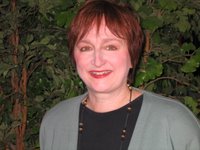
Showing posts with label Deborah Gyapong. Show all posts

Wednesday, January 09, 2008

Do We Write (and Read) What's Good? Or What's Safe? - Gyapong

Over the holidays, I read two books by Frank Schaeffer, the son of Francis and Edith Schaeffer, who were important evangelical leaders in the 1970s and 80s. They founded L'Abri, a retreat centre in Switzerland where many young pilgrims from around the world found their lives profoundly changed. Frank Schaeffer was a gifted Christian apologist, and his wife was also a gifted speaker and writer.

Their son's books---his memoir Crazy for God: How I grew up one of the elect, helped found the Religious Right, and lived to take it all (or almost all) of it back, and his semi-autobiographical novel Portofino, are anything but hagiography. They are "warts and all" portraits of his famous parents. Yet at the same time, genuine grace and love pours through. I am more interested in reading his parents now.

Frank recounts how his non-religious publisher sent boxes of Portofino (published in the 90s) to Christian bookstores, expecting the novel would sell like hotcakes because of the Christian celebrity of his parents. Instead, boxes were shipped back because of the sexual content and sometimes unflattering portrayal of evangelicals.

I write at more length about Frank's memoir over at The Master's Artist. I highly recommend both these books, even though they are not "safe" according to the conventions of so-called Christian publishing. They are, however, good. They are well-written, they reveal real people, trying to lead godly lives and often making a mess of it. Sounds like most Christians I know!

So much of what I have found wrong with much of so-called "Christian" publishing is the stress on the safe rather than good. We find the safety requirements in the written and unwritten rules against certain words and content, even a tacit agreement to put Christian characters in their best light once they have accepted Christ.

Even portrayals of sinful characters have lacked the punch, especially in fiction, though much has improved over the last decade.

I confess, I would rather watch the Sopranos, with all its awful language and envelope pushing sex scenes than read a safe Christian romance that lulls me to sleep with its sweetness and light. I may be unusual, but I don't read to escape reality, I want an intense experience that makes me gain new insight into it. If you've ever watched the Sopranos, you'll see excellent character development, real people, real conflict and tackling of spiritual and psychological truths that ring true.

I suppose it is possible to be good and safe, good and unsafe, bad and safe, and bad and unsafe. Either category of good is fine with me. The world is awash in the latter two categories.

I personally don't think that God is "safe" in our conventional understanding of safety. He can turn our world upside down and change us in ways that feel anything but safe. But when we look back at how we've grown, some of us even find ourselves thankful for the suffering that forced us to wake up.

A really good book should challenge our safety bubble and make us hungry for a true encounter with God.

Friday, November 30, 2007

Life imitating art


I recently had the pleasure of reading Keith Clemons latest book Angel in the Alley. I found myself looking forward to picking it up every night before bed. This is Keith's fourth book, and I think it's going to be his breakthrough novel. All the usual you can expect from Keith--engaging characters, wonderful sense-laden descriptions, and a great read.

But what has remained with me the the longest is the dystopia he created, a future North America where it is illegal to preach the Gospel.

Keith did an amazing job of speculating about new technology, future squalor for a growing segment of have-nots addicted to instant gratification and violence, a huge police state apparatus to crush religious freedom and the heroic efforts of small groups of Christians to keep the faith alive.

Of course, Keith's vision did not spring from his imagination alone. That's the most disturbing part of the book. The prophetic nature of Keith's vision was confirmed when, yesterday, while visiting some of my favorite blogs, I discovered that a human rights complaint has been leveled against Macleans Magazine for running an excerpt of Mark Steyn's book America Alone: The End of the World as We Know It.

Mark Steyn is one of my favorite columnists. He excels as a satirist, though apparently some people don't like being satirized. He also happens to be a Christian.

There has also been a human rights complaint against a popular conservative message board Free Dominion, run by a couple of Kingston-based evangelicals. Yes, sometimes some of the posters on this message board can be a little over-exuberant or immoderate. Even the hosts of the board don't agree with what they say, but they support their right to say it.

Now various groups and individuals have found they can use the levers of the state--provincial and federal Human Rights Commissions---to lob complaints that don't cost them a thing, but cost the defendant thousands of dollars in legal fees even if the complaint is eventually dropped as it was in the case of Calgary Bishop Henry who faced two complaints for a pastoral letter defending traditional marriage.

I know I cringe sometimes at the language used by some Christians on some issues. I wish sometimes they would be more charitable, or more nuanced, or more wise in a tactical sense.

But I also know that even the most charitable and nuanced and wise Christians can be lied about and demonized in the news media.

Our religious freedom is in danger, my friends. So is our freedom of speech. Keith Clemons does a great job of showing us this as a compelling backdrop to a gripping adventure story. I hope this book gets a wide audience. Buy several copies as Christmas presents. You'll be doing the future a favor.

Now I'm reading Nancy's Glitter of Diamonds and thoroughly enjoying it too!

Way to go! Canadian authors who are Christian!!!!!

Monday, September 24, 2007

For such a time as this . . . .


Over the past year, I have experienced having my first novel published, a book launch, interviews on local talk radio and on 100 Huntley Street.

These experiences have been wonderful in their own way, but in reading Nancy's post from a couple of days ago, and Marci's from yesterday, I am reminded of those times when God reveals to us a little moment where it is so crystal clear that we are in His will. What joy those moments are, and so often they are about small things, like Nancy's description of helping an old lady across the street in a strange, dreary-looking neighborhood.

Several years ago, I made a practice of visiting a friend who was in hospital being treated for cancer. I always found it an effort to go. Many, many other activities would have been preferable. But one day, out of mere habit, feeling spiritually dry but having committed myself to doing this, I forced myself to head out into the winter morning, scrape the ice off the car, and drive to the Ottawa General on my day off work. My friend, Mabel, had received a bout of radiation the day before, so I did not know that her daughter had told family members not to visit that day so her mother could rest.

What her daughter didn't know was the doctors planned to give Mabel a chemotherapy injection that morning. She had cancer in her spine, and a previous operation had cut a small hole in her skull for chemo injections that would carry the cancer-fighting chemicals as close to the tumors as possible. I asked Mabel if she wanted me to stay, and she did.

So, I happened to be there when a doctor or nurse injected a large syringe full of a yellow liquid into Mabel's skull hole, then left the room.

Mabel became scary sick within minutes of the injection. I raced out to get a doctor. Then she settled down for a couple of hours of abject misery and I stood by to help her back and forth to the bathroom---she was tremendously frail---or to hold a vomit basin for her.

It was while holding that blue plastic basin that I had one of those moments of perfect peace, knowing that I was created for that moment to be there for Mabel, even though I hate hospitals, I could never, ever imagine becoming a nurse and like any of you, I don't particularly like smelly bodily fluids. The fact that I had come, after the family had been asked not to, became a sign to that family of God's loving care for their mother, sister, and aunt. That was so rewarding to see a glimpse of God working and knowing that He used you for his glory, even though your participation had been, well, in my case, perhaps even grudging.

While my book launch was a joyous occasion, I did not feel the heavens part in the same way. There have been times I've received glimpses of the plan, though.

About a month after my launch, an old friend invited me on his talk radio program and had me stay for the whole two hours. It was a magical interview, probably the highlight of my publicity tour, even more gratifying than being on Huntley Street, though that was a wonderful experience, too. But again, while these experiences made me high, they were not quite the same as those small but clear signs, like glowing breadcrumbs, that yes, Deborah, you are on the path I have set out for you.

But one followed shortly afterwards. I did a book signing at Salem Storehouse a few days after I had done the radio interview. Because The Defilers was sold out in Ottawa the afternoon of the interview, I had to bring some books from my own private stash to Salem for the signing. We sold about ten books, and I had only one left. Out in the parking lot, I had just put the big poster of the book cover into my Toyota's trunk, when a woman who had just parked her car strode over to me, asking if the book signing was over. She had heard me on the radio a few days before and had driven an hour and a half to buy a book. She needed it for her daughter who was struggling with her faith. Had she rolled into the parking lot a minute later, I would have missed her. She was able to get a signed copy of the book, and because the signing was officially over, it was easy for me to take a moment aside to pray with her for her daughter.

I sometimes think that our writing life is very much like my hospital-visiting experience. Sometimes it's hard slogging. You get up and you write because you've made a commitment to meet a deadline or finish a manuscript. You work on snappy query letters and professional proposals even though you might prefer a trip to the dentist. You get rejection letters. You wonder whether any of it is worth it. But then some small thing happens that lets you know, yes, you are in My will, you are exactly where I want you to be and here's an opportunity to be Me for someone, and something to do with your writing life put you in those circumstances.

Those moments make up for any lack of success. They even surpass the joy of getting a contract, or launching a book.

One day in His courts is better than ten thousand elsewhere. I pray that God will open your eyes today to what He is doing in your life through you for the Kingdom and that you will receive a token, a sign of His grace that will keep you going through those times of wilderness and hard slogging.


Deborah Gyapong covers politics and religions for Catholic and Evangelical newspapers. Her first novel, The Defilers, won the Best New Canadian Christian Author Award in 2005. In 2007, it won an Award of Merit in The Word Guild's contemporary novel category.

Thursday, July 26, 2007

Prophetic Message or Great Saleable Product? - Gyapong

There's lots of great advice out there for authors who want to find out how to write query letters and land a publishing contract. There's also lots of great advice on how to make your manuscript a saleable product and how to sell yourself as a brand.

There is nothing wrong with this. In fact, I've benefited a great deal from much of this advice. But three years ago, when a group of us started The Master's Artist, we felt a need to get away from the barrage of material that was focused on sales and marketing.

We wanted to provide a place of encouragement for writers who 1) want to follow Jesus with all their hearts 2) who want to pursue excellence in their art--without worrying about what the sales folks will say. I believe God may be calling some of us to write but postpone our dreams of publication or popularity. Will we still answer the call?

Today over at The Master's Artist I posted a blog tour interview with Mary E. DeMuth who is promoting her latest book Authentic Parenting in a Postmodern Culture.

I believe Mary, like our own Sheila Wray Gregoire and Keith Clemons and N.J. Lindquist to name just a few, (who have all been profiled over at The Master's Artist), is a prophetic voice. And because of that she runs into snags. When she attended the giant Christian retail show in Atlanta recently, she was told some bookstore owners are balking because they reject the word postmodern in the title. Postmodern means relativist and nothing more. In Mary's book, she admits she used to equate postmodernism with poison. But whether we like it or not, our culture is shifting. It's better we know what's going on and prepare our children for it, she writes.

How do you keep on keeping on when you feel like a voice crying in the wilderness, where you are so ahead of the curve that no one wants to put your book in their stores, or accuses you of things that have nothing to do with the message between the covers.

Mary is also a novelist and her beautifully written stories (Watching the Tree Limbs and Wishing on Dandelions) resemble To Kill a Mockingbird more than they do the bestselling Christian Romances on the wall of my local Christian bookstore. Alas, that means they don't easily fall into a definable, brandable commodity. But they are good. They deserve to be read.

The Master's Artist will be undergoing some changes in the near future. Some key people are leaving to pursue other things. That means we have to re-examine our vision and whether what we have been doing for the past three years is still needed. If you want to know more about the vision that has inspired us, Mark Bertrand and Jeanne Damoff have both written wonderful essays on What is a Master's Artist.

If you've never stopped by The Master's Artist....how about checking us out...and if you like us, tell us whether you see a need for us to carry on.

I hope we can continue---to encourage writers who are called to be prophetic rather than popular, to encourage keeping an eye on God's calling to create art that may or may not make a great product. As I said starting out, nothing wrong with striving to write a saleable manuscript, keeping your audience in mind. But the audience God has in mind may not be born yet. Do we need to think about that?

Wednesday, June 27, 2007

Making it look effortless - Gyapong


We've all heard versions of the proverbial story about the Christian woman or man who gushes out a manuscript on coffee stained three-hole binder paper, and through providential circumstances, the novel or true life story gets published and ends up being a best seller.

"It is was all God," they say, teary-eyed. "I give Him all the glory."

Those of us who have spent years honing our craft, going through many rewrites, the pain of rejection, the sometimes brutal critiquing process, and more rewrites say, huh?

And the less gracious among us might mutter to ourselves, well, if God wrote that, don't you think He'd do a better job?

Which is not to say, however, that God might not be totally behind some of these publishing phenomena and use them to bear fruit for the Kingdom. The book that brought me to Christ was a simple testimony by an Italian American man about the work of the Holy Spirit in the life of his Momma and their family. Nothing grand or eloquent about it. In fact, sometimes I wish I could say it was C.S. Lewis who brought me to Christ. There's more "intellectual cachet" in that! But God uses the simple things to confound the "wise," right?

Frank Foglio's book Hey! God is still in print and, I imagine, still touching lives for Jesus. I thank God that he wrote the book and that someone published it and someone cared enough to give it to a drug dealer, who left it lying around for me to find when I was left alone on a bad drug trip.

So, what do we do, those of us who have to work really hard and wonder whether God is in our work, too? Whether our lack of worldly success is a sign of God's lack of favor?

Yet I look around me and many of the people who I firmly know in my spirit are sacrificially following God are laboring in obscurity and they seldom know when or how God is going to finance their ministry, whether it involves writing or the arts or other God-inspired ventures. But when I am around them, I sense the sweet fragrance of Christ. I have no doubt God is in them, inspiring them, guiding them, despite their lack of renown or worldly success.

I would encourage them to keep on keeping on, to continue their work.

Another thing for us writers to remember when we look at some beautiful writing that seems to flow so easily on the page. Sometimes, something that looks effortless and easy is the product of hours of rewriting.

Yesterday I had a conversation with an award winning journalist who writes for the local daily. She and I covered the same event and her story was so good, and seemingly turned around so quickly, I wondered how she did it. She writes beautifully.

Well, turns out she had started working on this story days in advance, and had spent she said 12 hours on it prior to the event, so that once she got there she only had a few details to add.

We both confessed that as we grow as writers we find it gets harder, not easier, maybe because our standards are higher.

My message today is this: put God first. Give over your writing to Him and everything else in your life. If He blesses you with the publication of a coffee-stained, hand-written first draft on your first try, then praise Him and may your work bear much fruit for the Kingdom. For those of us who have to work hard, who have to rewrite, let us find God in the work, in the joy of beautiful craftmanship, as an offering to Him. The suffering and rejection we experience is all part of our character-building so that we can become vessels for Him. We need to keep our eyes on Jesus and not worry about what He's doing with other writers, only whether our daily offering of work is a sacrifice of praise and thanksgiving.

Thursday, May 10, 2007

Acquiring a taste for short stories

I've heard it said there is little market for short stories. I would have been right smack in that demographic a relatively short time ago. Most short stories I came across in magazines were plain weird or hard to understand. What was the point?

But now I've changed. Flannery O'Connor's short stories first started to whet my interest. They fascinated me and even haunted my dreams after I read them. Most recently, Alice Munro has me thoroughly in love with hers. I want to read everything of hers I can get my hands on. Since she is prolific, I have lots of enjoyment ahead.

I'm also excited by what Bethany House editor Dave Long has done over at his Faith in Fiction blog from time to time by running short story contests.

Most recently, Dave teamed up with the new Christian literary magazine Relief Journal and its new fiction editor J. Mark Bertrand (who blogs Fridays at The Master's Artist), for the Daily Sacrament Contest.

The winner and a runner up will both be published in Relief---which is a great magazine. I encourage you to support it. And I hope one day soon, we'll have a Canadian outlet for good short stories by Christians.

But what's also amazing and encouraging is how good the other runners up are. One of them is by Canadian author Susan Fish. Go and read her Four Feasts. It's really good and I still find myself thinking about it even though I read it several days ago.

One of the advantages of short fiction is that it allows a writer to experiment with point of view, voice, character and so on without making the massive commitment to follow through with a full length novel. Which is not to say short stories, when done well, are easy to do.

One of the aims of Relief, the contests at Faith in Fiction, and our own The Word Guild awards to be announced June 13, is to encourage better and better quality in Christian writing.

Or writing by Christians. Unfortunately "Christian" as an adjective has come to mean "inferior" or "derivative" or "preachy" or "narrow" or "overly sweet" in some quarters. Authors who are Christian have gone a long way to show the stereotypes are unfair. Check out Susan's story.

Enjoy!

Some authors of short stories published on Dave Long's blog have landed contracts on the strength of their work.

Marci Laycock placed first in the contest Dave ran with Infuze Magazine with her wonderful "Missing Christmas."

Monday, April 09, 2007

Christian fiction teaching moments


If you've ever written a proposal for a Christian novel, you almost always have to write something about the "takeaway value," some lesson or spiritual benefit for the reader. In Janette Oke's famous novel Love comes softly the takeaway value is in the title: it's a prairie romance about a couple forced together by circumstance who come to love each other slowly as they discover each other.

When I first started reading Christian fiction back in the early 1990s, it almost seemed part of the formula of the Christian fiction genre to have the Gospel preached in the form of the four spiritual laws and some character come to Christ in the course of the story. It's one of the reasons why Christian fiction has a reputation for an inferior product.

These days, Christian fiction---the genre published by the Christian Booksellers Association (CBA)--is not so rigidly conformed to those old formulas. In fact, there has been a trend in the other direction, to be less overtly preachy, even to the extent of leaving out the Gospel or downplaying it, but keeping a takeaway value such as forgiveness.

When I began writing The Defilers in the early 90s, I wanted to conform to what I thought were the specifications of a CBA novel. That meant I intended to include a conversion story and I wanted to have a clear takeaway value. I also wanted it to conform to the specifications of a good suspense novel on the secular side. Thus I tried to make sure that the conversion story was a natural part of a "character arc" or change in a character over the life of the story. I also wanted to make sure that any discussion of Jesus was realistic and natural, not tacked on or preachy. Thus, I set out to write a believable conversion story. The take-away message concerned the power of Jesus Christ over dark spiritual forces---in other words---spiritual warfare and the knowledge that "the battle is the Lord's."

Recently, Christian Week asked me to write about what I'd learned about spiritual warfare in the course of my personal spiritual journey to equip me for writing The Defilers. That feature--Giving the Devil His Due--is now available online. It explains some of what I hoped to get across in addition to a captivating, suspenseful story. I also reveal the various influences through other Christian authors in their works, both fiction and non-fiction.

One of the criticisms of Christian fiction--aka CBA fiction--is that it is didactic. However, I think that writing can have a message and still be good, compelling storytelling. But authors have to be careful to enflesh the truth with words, to make sure they don't just preach statements of faith in their work as if parroting the Sinner's Prayer is all you need to get to heaven.

The best works of art are those that also teach the author something in the course of the writing. Our Christian faith is not something that easily fits into a set of intellectual propositions. Instead, we have mysteries conveyed by stories of a virgin birth, a God who became flesh, who died and rose again. A Christ who is fully human and fully God in one nature. How do we comprehend a God who is infinite, omnipotent, sovereign, who became so small as to be born in a human womb? What kind of dangers do we run into by making God a character in our stories? Even our own human nature is not something that is easily portrayed by cardboard characters and cartoon-like plots. Christian fiction is improving and changing as authors within the genre gain the skill to put flesh on the truths they see, and explore the mysteries that are part of our faith.

Thursday, March 15, 2007

The lost art of letter writing

Recently I read a wonderful memoir by an elderly friend of my mother's: Russia and Beyond: One Family's Journey 1908-1935 by Margaret Zarudny Freeman. It tells an amazing story of her family's survival during the Russian revolution. She was the oldest of six children and wrote with amazing detail how they coped in western Siberia, helped by a couple of loyal servants after their father fled the country to work first in China, then in Japan. While he was away their mother was arrested by the Bolsheviks and later shot.

Here's a description of the book from Amazon:
Russia and Beyond is a young woman's account of herself and her family in
the chaotic years surrounding the Russian Revolution and Civil War of 1917-20,
followed by a long self-exile in Russo-Chinese Manchuria, and the beginnings of
a new life in America in the 1930s. A child's-eye view of violent military
events, and of unflinchingly practical responses to personal emergency and loss
- with five siblings in tow after the death of their politically victimized
mother - matures to an understanding of homeland loyalty, displacement, and
expatriation, in a more international arena. The author, now aged 97, has left
us an inspiring, sometimes chilling, but forever positive narrative of this
harsh intellectual coming of age, and of the mutual love and perseverance that
sustained her, and her young fellow survivors. A comment from Nadine Gordimer
(Nobel Laureate in Literature, 1991): "Dear Margaret, I've read your book with
growing interest and fascination, page after page. It's a remarkable evocation,
a double one: a revelation of the profound meaning of emigration not written
before, and a picture of family relationships enduring the disruptions of
historico-political disasters in what must be no less than a unique survival by
trust and love." Johannesburg, South Africa 10 August 2005

Mrs. Freeman does not spare herself in her portrayal of childhood selfishness, sibling rivalry, and conflict with adults. Her portrait of her father and mother and the servants is the stuff of great literature. One thing that struck me in reading the book was how many letters this family wrote each other. The father wrote as often as he could, even when strife, famine and dislocation made the mails unreliable. He encouraged his children to write him often, and saved the letters. First of all, it amazed me how much family togetherness was stressed no matter what distances separated people. Today, we may live in the same house, but so often everyone's in their own room with their own computer or TV set, often not even having meals together.

Secondly, those letters, saved through periods of unemployment, uncertainty, travel and danger, provided a treasure trove for Mrs. Freeman when she wrote this wonderful memoir.

What's happened to letter writing today? We send emails now, but mostly emails are short, a paragraph or two. And how can we depend on saving them? I have lost my saved email when hard drives have crashed. I have other saved email on hard disks that are soon going to be obsolete on new computers. Many of us have the little portable hard drives that look like squat pens, but who knows how long that electronic format will last.

We are in a period of such rapid technological change that even trying to write a memoir or a novel that specifically mentions a certain kind of technology can either date you pretty fast, or confuse readers. How many teenagers today would know what a floppy disk is? Or an eight-track tape?

I find it hard and cumbersome to write letters. I send the occasional hand written card, but even that is difficult. I am addicted to convenience and have trouble slowing down to write a long, thoughtful, observant letter. What I used to devote to letter writing, I now devote to blogging.

Maybe I have a wider audience in the blogs, but who knows whether 25 years from now, any of what I've written here will be accessible.

We're paying a price for convenience and today I confess my addiction to it. And, this Lenten season, my feeling of contrition makes me aware this addiction is not a good thing. The book also made me realize is that too often I don't take the time to get to know the people I meet. For example, I had met Mrs. Freeman several times over the years and had no idea of her remarkable story.

As we live in our virtual worlds, are we taking time to connect with the real people in our midst?
How alive will our writing be if our main contact is through computers, monitors and appliances? Do you miss the days of letter writing?

Popular Posts