Sunday, September 02, 2018

Friendship – Lending a Listening Ear


Are you a ‘Facebooker’ or ‘Twitter tweeter’? Both or neither?

Invitations come from people known and unknown to me, as they likely do you, requesting me to join them on Facebook and other online networks. It’s really nice. I confess: my friends and online ‘would-be’ friends might not appreciate my lack of response to their posts and friend requests, though. (Hey, perhaps you’re among them. My apologies.)

Our last visit with May's sister Barbara
in Scotland. She died shortly after. 
My wife May and I have numerous relatives and friends in Canada and abroad. She keeps in touch with many of them online in our behalf. I have personal friends and good acquaintances at points across this country. And yet, it’s people who are in geographical and physical proximity who more often gain my attention and time. Consequently, during the past two years I’ve cut way back on online networking.

Have I retreated into an unsociable shell? No. Rather, I’m connecting with various people around me and over time have assumed area commitments, and of necessity am relegating cyberspace involvements to a smaller corner of life, for now.

A town near Glasgow
I snapped this coffee shop moment of 
May with my eldest sister Chris and 
bro-in-law Norman who, in their eighties 
share friendship and hospitality with people 
of all ages, in Jesus' name.
My intention isn’t to be unfriendly. However, the folks with whom I engage in these face-to-face, ‘flesh-and-blood’ encounters are near at hand, in my ‘hood.’ They’re currently part of my life—and our lives, since my wife also shares in certain of these connections.

For example: Dwayne,* a senior gentleman, chats with us in the coffee shop. His wife’s in nursing care forty-five kilometres away and is drifting further and further from him and deeper into dementia. Mindy, an octogenarian widowed friend, invites us round to her place for tea. I’m a talker, but I can listen, too. Fact is, most everyone likes to be heard. These folks like to talk face-to-face and know that someone is listening.

And then, there’s our friends, Frank and Sheila, also seniors, who, although having no kids or grandkids, politely listen when we and other folk proudly share our kid and grandkid stories. And there’s the guy who doesn’t claim to be a Christian but gets hyped up about religion, government and what’s going on in the world. Others shoulder some pretty heavy burdens. These all appreciate a little time spent with them. 

Biblical wisdom says that those who want to have friends must themselves demonstrate friendship (Ref. Proverbs 18:24). When you and I invest in friendship let’s do so with sincerity and in behalf of Jesus our Lord, who invested His life in humanity and gave Himself up to the death of the cross to reconcile us to God and restore our relationship with Him.

And so, whether our friendly connections are carried through cyberspace, or occur across a room or only inches apart on the other side of a table, may the life and grace of Jesus flow, and may people be brought into His saving grace.

Thanks for lending me your listening ear. I feel better already!

~~~

* All names except my wife’s and those in the photo captions have been changed for privacy.

~~+~~

Peter A. Black is a retired pastor – well, sort of retired – and lives in Southwestern Ontario. He writes a weekly inspirational newspaper column, P-Pep! and is author of Raise Your Gaze ... Mindful Musings of a Grateful Heart, and Parables from the Pond – a children's / family book. ~~+~~

Saturday, September 01, 2018

Roots that Hold Us by Eleanor Shepherd


In August, my daughter, Elizabeth, my granddaughters, Sanna (age 6) and Alma (22 months) and I visited the little fishing village on the coast of Trinity Bay in Newfoundland where my mother was born and where as a teen, I had discovered her heritage.

Much of the story, I learned from my Mother, who lost her own mother to stomach cancer when she was fourteen. As the eldest child and the only girl, she knew everyone assumed she would forfeit any further studies and stay home and care for her four younger brothers ranging in age from 11 to 2.

What a relief it must have been to her, when her father informed her that her Evans grandparents, his father and step-mother were moving in to help care for the family. Her father  lost his mother early, and his father, Mom’s grandfather, eventually married Eliza Evans who became our Great-Grandma Evans.This woman had a heart as big as that community where the family made their home.  Even when my mother was a little girl, Grandmother would send her off with a pot of hot soup to a family where there was sickness or some reason for care and compassion.  My Mom had learned from accompanying her grandmother on such missions that it was appropriate not only to offer the soup to the family for physical sustenance but also to read to them a portion from the Bible for their emotional and spiritual sustenance, which she did in her turn. It was the beginning of my Mother's awareness that God was calling her to serve Him full time as minister of His grace in The Salvation Army.  


      She would need to complete her schooling and find a job in order to be able to fulfill this calling. With the death of her mother, such a goal appeared to become an unattainable dream.  Yet Grandmother Evans saw her willing heart and decided to do what she could to make it possible. From her own meagre savings she gave my Mother the money to buy her first Salvation Army uniform.  Then she told my mother to pursue her studies and get herself a teaching position in The Salvation Army schools. She would care for the boys, so that my Mother could leave and get any available teaching job to be able to save the money she needed to apply for officership.  For the rest of her life my Mother honoured Grandmother Evans by being the best messenger of the Gospel that she could be, in gratitude for the sacrifices Grandmother made.

At the age of 16, I stood with my parents and the folks of the community of Hant's Harbour around her grave as the casket was lowered and we sang in honour of her life,
"I'll be true, Lord to Thee
I'll be true, Lord to Thee
And whatever may befall
I shall surely conquer all,
If I am but true to Thee."

At that age, I had little idea what the future held for me, but I made that promise with all my heart, nevertheless.

This summer I was able again to stand in front of the grave of this courageous woman, Eliza Evans and reflect on the truth of those words for me.  As I watched my little granddaughters gather flowers that were growing in the cemetery around us and place them lovingly on the tomb of a great-great-grandmother they had never known but knew was loved by their grandma, and their mother’s grandma, I marvelled again at the faithfulness of God from one generation to the next.

We make our promises and by His grace, we keep them to the best of our ability, and we are able to depend on His faithfulness whatever comes our way.

Word Guild Award
2011
Word Guild Award
2009
Word Guild Award
2018

Tuesday, August 14, 2018

Dropped Hat Results in Trip to Greece

The steps of a good man are ordered by the LORD, and He delights in his way (Psalm 37:23).


It’s not often that accidentally dropping your hat at a public event leads to a trip to Athens, Greece. But that’s exactly what happened to Orleans, Ontario resident David Kitz.
Kitz was attending Orleans MP Andrew Leslie’s 2017 New Year’s levee when he dropped his hat
David Kitz in front of the Parthenon in Athens
near the coat check.
“Suddenly, I felt a light tap on my back as a gentleman handed me my hat,” Kitz recounts.
“You dropped this,” the gentleman offered.
“A discussion followed and I discovered that this man, Omer Livvarcin, had a few months earlier fled Turkey following the coup attempt.”
Livvarcin explained, “I was a high-ranking officer in the Turkish navy, but following the coup everyone in the military was under suspicion. My wife’s private school in Ankara was shut down and all the teachers were dismissed. Life was becoming very difficult for us. Many of our friends were arrested. We were sure we would be next. That’s why we fled to Canada.”
After that chance meeting, Kitz and Livvarcin kept in touch. “I was troubled by the news coming out of Turkey,” Kitz explained.
Human Rights Advocate
David Kilgour
In early June of this year that interest led to a call from former Edmonton MP and cabinet minister, David Kilgour. Two months earlier Kilgour had been on a fact-finding mission to Athens with US members of congress. Kilgour described the human rights abuses of the Turkish Erdogan regime as “absolutely deplorable.”
Kilgour was asked to make a second trip to Athens to advocate for the Turkish refugees stranded there, but prior commitments made that trip impossible. That’s when he called on David Kitz to go in his place.
“The four-day trip was a real eye-opener,” Kitz states.
He explains, “The Turkish refugees fell into three broad categories: journalists, teachers and intellectuals.”
“The first interview was with a senior level journalist with Zaman, the biggest daily newspaper in Turkey. In 2013, Zamon reported that truckloads of armaments were crossing from Turkey into Syria in support of ISIS fighters. The government’s response was swift. The newspaper’s assets were seized and the journalists were arrested.
Teachers’ faces hidden for the safety
of family members still in Turkey
“The next day we met with a university professor and engineer, Yunus Karaca. Karaca patented an award-winning system for separating glass, metal and plastics for municipal recycling. Yet despite numerous accolades including from NASA, his career has been stifled. His passport was cancelled by the Turkish authorities, and fearing arrest, he fled with his young daughter to Greece.”But the most gripping interviews were with teachers, some of whom were imprisoned for a year or more with as many as 28 men crammed into a cell.
The leader of a teachers’ union told Kitz that the 30,000 members of his union lost their jobs, and then they were systematically arrested and imprisoned for being members of a terrorist group.
Families have been wrenched apart. They live in dread of police arriving at their door. Many are in hiding. To escape they make a dangerous night-time crossing by river into Greece.
Kitz states, “Their stories affected me deeply. I returned to Ottawa with a determination to raise awareness here and across Canada.”
Omer Livvarcin
As for Omer Livvarcin, he is a poster child for what an asylum-seeking refugee can bring to this country. After escaping with his family and little else, he now is a part-time professor at the University of Ottawa’s Telfer School of Management. He heads up two projects doing research on artificial intelligence (AI).
“Canada opened its doors to me. Now I want to give back. By using AI in military procurement I believe we can design a process that can save taxpayers hundreds of millions of dollars.”
His second research project involves using AI to benefit the charitable and non-profit sector.
“Again,” Livvarcin states, “for me this is about gratitude—about giving back.”
You never can tell where unexpected events—like a failed coup or a dropped hat—might take you.

Saturday, August 11, 2018

For the Beauty of the Earth


Walk in the Farmer’s Market any day this summer and you’ll see colour everywhere. Green, red, yellow, orange and even purple. Walk up and down the outdoor aisles and be tempted to try many fruits and vegetables, maple syrup and honey. I love going to the market in summer and it’s where I get my produce for canning.

Favourite market place, so many vendors to choose from


Already I have jars marked 2018 dill pickles and pickled beets on the shelf in my cold room. I still have some jars from last year’s canning, 2017—applesauce, grape jelly, fruit relish and a limited number of dill pickles. We’ll use those first and then open the new jars afterwards.


Mom always taught us that getting the produce as it’s ready and handling it right away guarantees the best crop for eating while it’s in season and for preserving. It makes for a busy season when so many offerings are available at one time, but that’s the way the growing season works. She stayed up late many nights while we were small children, to get the processing done probably more efficiently and more easily. It’s a task where you don’t need interruptions.  Then as we were old enough, we learned the tasks to help mom—podding peas, snibbling beans, shucking corn cobs, peeling apples and more.
 
My cold room shelf, a mix of 2017 and 2018 preserves
Eventually we learned the process so that one day we could do it ourselves in our own kitchen. And now I can supply Mom with some of those preserves since she doesn’t have a garden and doesn’t can anymore. However, I only make those products that I know our family will help us consume. We don't want anything to go to waste.

The beauty of the earth goes beyond the produce growing in season and encompasses all of creation, to the skies, the trees, waterfalls, rainbows and scenes in nature.

 We sang the hymn, For the Beauty of the Earth, in church when I was growing up. Folliott Sandford Pierpoint, the composer, wrote of creation as a whole:

1 For the beauty of the earth,
for the glory of the skies,
for the love which from our birth
over and around us lies.

Refrain
Christ, our Lord, to you we raise
this, our hymn of grateful praise.

According to hymnary.org, Pierpoint “was born at Spa Villa, Bath, October 7, 1835, and educated at Queen's College, Cambridge, graduating in classical honours in 1871.” He wrote of the same earth we know, but in a different time and location. Other composers and hymn arrangers, such as John Rutter, have arranged new compositions from this initial hymn that shows up in more than 500 hymnals.

 Pierpoint’s song is in the public domain and has been for more than a century. We may expect to see other musicians present different versions. Having sung in church and community choirs, I am familiar and rather fond of Rutter’s artistic arrangements of hymns. Whatever you sing of God’s praise, whether an original composition or new arrangement, sing joyfully. For in singing, we pray twice.

Tuesday, August 07, 2018

If, as atheists say, the mind is not real, how do we explain this? - Denyse O’Leary


Recently, I became involved in writing about artificial intelligence at Mind Matters Today. Here’s a short piece you might enjoy: 
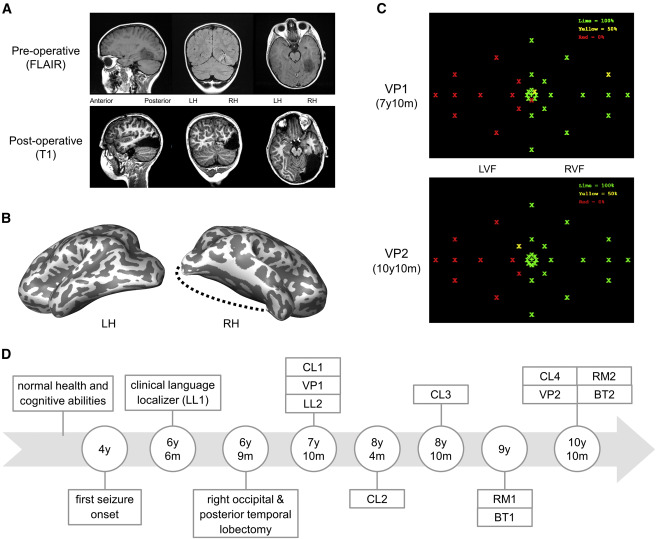
If the mind is just what the brain does, as materialists claim, how do we explain this?


The boy, identified as UD in the case study, was a healthy, normal kid—up until he suddenly suffered a seizure at age four. He subsequently developed intractable epilepsy due to the tumor. When he was nearly seven years old, his parents and doctors made the tough decision to surgically remove the mass. That also meant removing the entire right side of his occipital lobe and part of his temporal lobe on his right side. Together, the extracted sections accounted for a third of the right hemisphere of UD’s brain.
It was a terrible decision to have to make.
After the surgery, doctors and researchers weren’t sure exactly how UD’s brain would handle losing such key visual and recognition regions. Of the two extreme possibilities, one was that his brain’s networks wouldn’t reorganize at all to compensate for the loss, and UD would have severe visual and sensory processing disabilities. The other extreme hypothesis was that UD’s brain would completely compensate, with other regions taking over the roles of the right sides of the occipital and temporal lobes, leading UD to function completely normally. Beth Mole, "Doctors cut out a large chunk of a boy’s brain—now he’s doing just fine" at Ars Technica
 

In the end, the only permanent injury appears to have been a blind spot on his left side. The paper is at Cell Reports (open access).

Modern medical diagnostics, far from definitively showing that the mind is just what the brain does, challenges that notion.

Earlier this year, Ars Technica also reported on the case of an otherwise healthy 84-year-old man who had a 9cm (~3.5 inch) pressurized pocket of air in place of much of his right frontal lobe. He had come to medical attention because of routine complaints for an elderly person. (The journal article is open access.)

When pundits talk glibly of creating artificial minds or claim that consciousness is an illusion, it might help to remember that few predicted cases like this could exist and few thought that high tech diagnostics would lead to their discovery.

See also: How to hack your unconscious mind - assuming it exists Those who tell us that we can learn to use our unconscious mind and those who tell us that it doesn’t exist both claim to speak for science. But this is no ordinary dispute. An ordinary dispute might be something like What killed the dinosaurs? Imagine instead a dispute between scientists who do and scientists who do not believe that dinosaurs have ever existed.

Neurosurgeon outlines why machines can’t think: The hallmark of human thought is meaning, and the hallmark of computation is indifference to meaning. and Neuroscience tried wholly embracing naturalism, but then the brain got away

and See also: The brain is not a “meat computer” Dramatic recoveries from brain injury highlight the difference Writers' tips

Also, a sample writer’s tip link from the Ottawa Christian Writers’ Fellowship Facebook page: A new kind of book, designed for the age of peak TV? (May as well know it's out there. Would the format work for us?) See here. Join OCWF here to see all the rest. (You do not need to live in or near Ottawa.)

Friday, August 03, 2018

A Promise Kept by Rose McCormick Brandon


May 14, 1948. In a thirty-two minute proclamation Ben Gurion established modern Israel. Dancing, singing and cheering followed. Less than twenty-four hours later, enemies numerous and more experienced, attacked. In an Old Testament display of power God took the side of the Jews, fought for them and won.
God fulfilled His ancient promise to Israel: Listen to me, you nations nearby or across the sea. I scattered the people of Israel, but I will gather them again . . . I will rescue them from enemies who could overpower them. My people will come to Mount Zion and celebrate; their faces will glow because of my blessings. I’ll give them grain, grapes, and olive oil, as well as sheep and cattle. Israel will be prosperous and grow like a garden with plenty of water. Jeremiah 31:10-12
May 14, 2018. An historic day. Israel celebrated its seventieth birthday. Seventy years since the fledgling nation danced in the streets. On this day, the United States officially moved its embassy from Tel Aviv to Jerusalem. A brave step. Until now, all the nations of the world have refused to recognize Jerusalem as Israel’s capital. The U.S. promised many times to move its embassy, but all those promises were broken. 
As in 1948, most peoples of the world watched unable to grasp the significance of this event. Many sneered. Some attacked. This time mainly with words. 
David established Jerusalem as Israel’s capital 3000 years ago. Jesus wept over Jerusalem (Luke 19:41) 2,000 years ago. Now, against all odds, a people disconnected from their homeland for almost twenty centuries have returned. Impossible. Except that God decreed it. Israel began with 650,000 citizens in 1948. Today, there are more than six million. And more arriving.  
God’s promises are always fulfilled! Always! You can take the promises of God and build a lifetime on them. They won’t collapse, wear out or disintegrate. No world leader, no matter how lauded and admired, can stand against His promises. God is an immoveable rock. Those who oppose Him fight a losing battle (Matthew 21:44). 
He that keeps Israel neither slumbers nor sleeps (Psalm 121:4). God blesses those who bless Israel (Genesis 12:3).

“What a glorious day! Remember this moment!” Benjamin Netanyahu, May 14, 2018

            Praise you Lord God! Time may pass. People may forget. But, You never forget Your promises. 
* * * 
Rose McCormick Brandon is the author of four books - Promises of Home – Stories of Canada’s British Home Children, One Good Word Makes all the Difference, He Loves Me Not He Loves Me (with Sandra Nunn) and Vanished (with Shirley Brown) – plus dozens of personal experience pieces, devotionals, short stories and essays. Rose’s work has won awards in the personal experience and short essay categories. Her story, Manitoulin Connections, was published in Chicken Soup for the Soul, O Canada. A member of The Word Guild and The Manitoulin Writers Circle, Rose publishes two blogs: Listening to my Hair Grow (faith writings) and Promises of Home (stories of child immigrants). Rose and husband, Doug, summer on Manitoulin Island where her pioneer ancestors settled and the home of his favourite fishing holes. The rest of the year, they live in Caledonia, Ontario, near their three children and three grandchildren. 


Popular Posts