Tuesday, March 14, 2023

Empty Tomb


Imagine yourself at the tomb in early dawn just as the sun peeks over the horizon. There’s a coolness in the air and you’ve come with spices, as tradition demands, to cover the smell of death and honour the dead at the same time. But you stop, seeing that the enormous rock has been rolled away from the mouth of the tomb. This is not what you expected to see while you’re numb with grief.

Graveclothes are folded neatly inside. There are two men standing nearby in dazzling clothes who ask, “Why do you look for the living among the dead? He is not here, but has risen!” (Luke 24:5)

And then do you remember what Jesus had said earlier? That he would rise again.

Your first instinct might be to run back and tell your friends. What do you say?

This pivotal moment marks a new beginning. Jesus is freed from the grave and bears the marks of his crucifixion. Jesus appears to his disciples at various times and to the women who have carried spices to his grave. He says more than once, “Peace be with you.” And he tells them “As the Father has sent me, so I send you.” (John 20: 21)


Empty Tomb

In the gray dawn

I say goodbye to one

whose hands brought life from death

whose words confounded kings and priests


The cave is shadowed and dark

a boulder rests unneeded, but not unheeded

rising light exposes

folded cloth in an empty cave

confounding

compounding yesterday’s drama


footsteps


i turn      

in a voice as soft as morning


He calls my name


Carolyn Wilker   --Published 2007 Esprit

 https://www.carolynwilker.ca/


Thursday, March 09, 2023

Robert Louis Stevenson’s Global Kingdom Impact


By Rev Dr Ed & Janice Hird

-an article for the Light Magazine


Many of us as children read Robert Louis Stevenson’s best-selling books like Treasure Island, Kidnapped, and a Children’s Garden of Verses. He was a popular celebrity in his own time. Arthur Conan Doyle, of Sherlock Holmes fame, wrote to Stevenson speaking of “all the pleasure you have given me during my lifetime–more than any other living man has done.” Rudyard Kipling called him ‘his idol’.  GK Chesterton said that Stevenson "seemed to pick the right word up on the point of his pen, like a man playing pick-up-sticks."  Recently, Stevenson was ranked, just after Charles Dickens, as the twenty-sixth most-widely-translated author in the world.

Few have realized the deep Christian message that he wove into his many novels.  There are hundreds of biblical references in his over thirty books. In Treasure Island, a pirate brings a curse on himself by using a ripped-out page of the Bible to give Long John Silver a ‘black spot’ of death. The bible verse was Revelation 22:15: “Without are dogs and murderers.” Greed for false treasure leads to nothing but violence and death.  The true treasure brings peace and life. Treasure Island is a spiritual application of Jesus’ parable in Matthew 13 44

The kingdom of heaven is like treasure hidden in a field. When a man found it, he hid it again, and then in his joy went and sold all he had and bought that field.

In Dr. Jekyl and Mr. Hyde, Stevenson gives one of the most profound analyses of Romans Chapter 7 in its struggle between good and evil.  In Kidnapped, the hero David Balfour is urged to be constant in his prayers and reading of the Bible.  The missionary Henderland

inquired (of David Balfour’s) state of mind towards God…he had not spoken long before he brought the tears into my eyes. There are two things that men should never weary of, goodness and humility; we get none too much of them in this rough world among cold, proud people;...he soon had me on my knees beside a simple, poor old man, and both proud and glad to be there.

In the days before film, TV, and the internet, Stevenson had a remarkable ability to take you on a journey, giving you eyes to see a part of the world that most people had never visited.  In bringing you by imagination to foreign lands, he also took you on a safari for your own soul. 

Born in 1850 in Edinburgh, Scotland, Stevenson battled bronchial health issues for most of his short life, but never let it stop his writing. A key spiritual influence on his life was his nurse Alison Cunningham (known as Cummy).  She read him stories from John Bunyan and told him stories of the Covenanters revivalists who brought spiritual renewal to Scotland. Robert’s favorite game as a child was to make-believe that he was a clergyman and to preach from an improvised pulpit.  As a child, Robert commented, “I would lie awake to weep for Jesus, but I would fear to trust myself to slumber lest I was not accepted and should slip, ere I awoke, into eternal ruin.” Self-condemnation and fear of hell crippled his young spiritual life.

During his Edinburgh University years, Stevenson got involved in drunkenness and visiting prostitutes.  Rebelling against his father’s strict religiosity, he briefly identified himself as a ‘red-hot socialist’ and an atheist. He formed a club with the motto “ignore everything that our parents taught us.” When his father learned of this motto, he said to his son, “You have rendered my whole life a failure.’  In a letter to a friend, Robert mocked his father’s prayers as nothing better than praying to the chandelier.

By age 26, he regretted his foolishness. Stevenson wrote to his father, stating that:

Christianity is among other things, a very wise, noble and strange doctrine of life ... You see, I speak of it as a doctrine of life, and as a wisdom for this world ... I have a good heart, and believe in myself and my fellow-men and the God who made us all ... There is a fine text in the Bible, I don't know where, to the effect that all things work together for good for those who love the Lord. Strange as it may seem to you, everything has been, in one way or the other, bringing me nearer to what I think you would like me to be. 'Tis a strange world, indeed, but there is a manifest God for those who care to look for him.

When he married his wife Fanny in 1880 at age 29, he described himself as “a mere complication of cough and bones, much fitter for an emblem of mortality than a bridegroom.” Being addicted to cocaine and opium did not help his frail health.

In 1890, he and his wife Fanny settled with their children in Samoa in the South Sea islands where he taught Sunday School. The Samoans called him Tusitala (the Storyteller), building a ‘loving heart’ road right up to his house. Many missionaries in Samoa deeply impressed him:

Those who have a taste for hearing missions, Protestant or Catholic, decried, must seek their pleasure somewhere else than in my pages. Whether Catholic or Protestant...with all their deficiency...the missionaries are the best and the most useful whites in the Pacific.

Robert described the missionary James Chalmers as “a man that took me fairly by storm for the most attractive, simple, brave and interesting man in the whole Pacific.” He also deeply admired the missionary Rev. W.E. Clarke who later took his funeral: “…a man I esteem and like to the soles of his boots; I prefer him to any one in Samoa, and to most people in the world.” S.J. Whitmee, Stevenson’s missionary interpreter, had many conversations with him, saying that ““He was nearly all the time I knew him, reading the Old Testament prophetic Scriptures.”

Robert Louis Stevenson died tragically of a stroke in his island home in 1894 at age 44. Ten years after his death, his wife printed Vailima Prayers, a small book of Robert’s prayers:

Lord, Give us courage and gaiety and the quiet mind.
Spare to us our friends, soften to us our enemies.
Bless us, if it may be, in all our innocent endeavours.
If it may not, give us the strength to encounter that which is to come, that we be brave in peril, constant in tribulation, temperate in wrath, and in all changes of fortune, and, down to the gates of death, loyal and loving one to another.
As the clay to the potter,
as the windmill to the wind,
as children of their sire,
we beseech of Thee this help and mercy
for Christ’s sake. Amen

May Robert Louis Stevenson’s example inspire many Christian writers to be Christ-centered authors of God’s Kingdom.

Rev. Dr. Ed & Janice Hird

Co-authors, God’s Firestarters


Thursday, February 09, 2023

Facing Our Growing Canadian Gambling Addiction


By Rev. Dr. Ed & Janice Hird

-an article for the Light Magazine


You can bet that the increase in gambling is harming many Canadian families.  We have personally seen many marriages break up.  Wives are not happy to lose their houses to their husband’s gambling addiction. The Bible in 1 Tim 6:9 warns against falling into the trap of temptation, and into many foolish and harmful desires that plunge people into ruin and destruction.

Since the COVID restrictions were implemented in 2020, those gambling four or more times a week has increased from 23% to 32%.  Online gambling has gone from 62% to 78% for gamblers.  Ruin & destruction for many has been multiplied through these online gambling apps.

Many gambling addictions begin in the teenage period when the brain is not fully developed.  Young adults aged 18–24 are more likely to take part in risky gambling behaviour. College students have a much higher gambling rate than the general population.  Imagine the debt load that many college students incur on their student loans from online gambling.  The most popular form of Canadian gambling is lottery tickets, seen by many as relatively harmless.

Since Pierre Trudeau legalized gambling in 1969, the provincial governments have been annually making billions from gambling. No wonder that it has been called another tax grab on the poor and most vulnerable.  

Female gamblers average $15,000 of debt. The average debt generated by men addicted to gambling ranges from $55,000 to $90,000. With so many young men indebted to shady loan sharks, it is no wonder that property theft is on the rise.

We have been numbed in our country to the evils of gambling addiction. As it says in 1 Timothy 6:10, the love of money is the root of evil. We have personally seen gambling cause people to wander from the faith and pierce themselves with many griefs. Many in the Christian program Celebrate Recovery often credit the power of the Holy Spirit as vital to getting free from their uncontrollable obsession with gambling. As well, Gamblers Anonymous has helped many get free from this intense craving.

One of the most important books for helping people understand the gambling addiction is Dostoevsky’s The Gambler. Ironically, he wrote it because he needed to pay his gambling debts, and avoid losing control over publishing future books through a crooked publisher. His Christian faith helped him eventually break an all-consuming roulette habit that was bankrupting his family.  Roulette has been a huge problem in Russia, particularly in the military. Could Putin’s invasion of the Ukraine be seen as his playing Russian roulette with the West?

Alexei, the protagonist in The Gambler, was on a roll at the Roulettenberg Casino.  He commented: “My brows were damp with sweat, and my hands were shaking.”

Gambling gives a buzz similar to cutting oneself, disconnecting oneself temporarily from one’s intense psychological pain. As Alexei also said:

There arose in me a strange sensation as of a challenge to Fate— as of a wish to deal her a blow on the cheek, and to put out my tongue at her.

The character Alexei saw this addiction as a madness that seemed to come upon him. Perhaps that is why Step 2 in Gamblers Anonymous talks about a Power greater than ourselves restoring us to a normal way of thinking and living. Compulsive gambling is stinking thinking.

To Alexei, this strange gambling sensation was a fearful pleasure, leaving him obsessed with a desire to take risks. The two hundred thousand francs ($6.6 million dollars in today’s money) that he won quickly sprouted wings, and flew off to the sky like an eagle. (Proverbs 23:5) Quicker than the prodigal son, Alexei squandered his wealth in Paris with wine, women, and song. Get-rich-schemes never end well. His initial gaming success did not make him happy:

My life had broken in two, and yesterday had infected me with a habit of staking my all upon a card.

Serving two masters is a double-minded hell. (Matthew 6:24) Gambling was a living death for Dostoevsky and his character Alexei. Dostoevsky tried for many years before he finally broke his gambling desire. His character in the novel also longed to be free: “When that hour comes, you will see me arise from the dead.” Alexei longed to set things right, and be born again!

Our prayer is that many Canadians will come into a new freedom in Christ from the devastation of chronic gambling.

Rev. Dr. Ed & Janice Hird

-co-authors of God’s Firestarters


Saturday, January 21, 2023

Jesus' Early Years and What We Know

Between Christmas and Epiphany of the church year, we’ve jumped over so much of Jesus’ life, from his birth to his baptism, and the beginning of his ministry. But what of those in-between years?

We know that King Herod raged over a new king. What? Take his place? And then the wise men going off home in a different direction and Mary and Joseph fleeing to Egypt for a time. Jesus went from being the star to being the hunted. I’d rather not dwell on what happened next when Herod realized he had been tricked. But I think of the earthly parents, and God, protecting this new little life. Jesus had a big purpose in his future and God was not about to let him be killed as an infant.

How did Mary and Joseph raise Jesus through his baby years, his childhood, and beyond? We know they trusted God and accepted his guidance. We won’t ever know much about those years except that eventually they returned to their home country and Jesus grew and became strong (v. 39-40).

We know that Jesus would go to school, as boys did, and learn to read and write, and understand what was in the scrolls. We also know that when they went to the temple, Jesus, at the age of 12, stayed behind. His parents and their company of relatives had already begun the journey home.

Imagine for a moment, the boy Jesus in the temple, asking questions of the priests. How did he get this knowledge? Were his parents helping him to understand who he was? Were the rabbis in his village school confounded by brilliant questions they hadn’t thought of themselves? Then what of the priests in Jerusalem? Were they also amazed?

Mary and Joseph turned back to Jerusalem to look for their son. As parents, you might imagine their mixture of fear and anxiety about where he was, and when they found Jesus, their relief and frustration. They didn’t understand Jesus’ answer when they asked him why he treated them this way.

Jesus had an answer. “Why were you searching for me? Did you not know I must be in my Father’s house?” (v 49) He was already showing his wisdom.

 Luke is the only place we read this story. Then we read that Jesus went home with them to Nazareth and obeyed
 
his parents (Luke 2:51).  Thus we learn about his his love for his parents and a growing in understanding of his 
 
purpose in life.              

Monday, January 09, 2023

Pigs in the Ocean: The Socialism of Dostoevsky’s Possessed


By Rev. Dr. Ed & Janice Hird

-an article for the Light Magazine


One of Dostoevsky’s most brilliant, darkest and least known novels is The Possessed, also called Demons or The Devils. Dostoevsky, as a devout Christian, often grounded his novels in particular biblical stories. The opening scripture in this novel is about the pigs being cast into the ocean (Luke 8:32-37).

Have you ever wondered what possessed Putin to invade Ukraine, and why he won’t just go back home to Russia? The Russian people still deeply remember the attacking of Moscow by Napoleon and Hitler, as if it happened yesterday. They are possessed by the idea that they are merely defending their fatherland against Western aggression.

Ideologies (fixed systematic big ideas) can easily become idolatrous and possess a nation. That is why Dr. Jordan Peterson wrote a chapter in his latest book Beyond Order entitled “Say No to Ideology”. Ideologies like Marxism, Nazism, and Fascism have caused over a hundred million people to go over the cliff and die like the Gadarene pigs. Tragically, some of these far-left and far-right ideologies are again romantically possessing many young people around the world. The far-left and far-right, being both totalitarian and haters of democratic freedoms, have much more in common than most would imagine.

The Possessed is the most political of all of his Christ-centered novels. In the very year of 1870 that Dostoevsky was writing Possessed, Vladimir Lenin was born.  Lenin sadly refused to read Possessed as he considered it reactionary garbage. Might the Possessed possess and transform Putin, who is reportedly a Dostoevsky fan?

Dostoevsky, like a John the Baptist or a weeping Jeremiah, cried out in this novel to a younger generation about to go over the edge into socialist chaos and destruction. He was a former revolutionary socialist sent in 1849 to Siberia for ten years. Dostoevsky prophetically warned in this book about the destructive whirlwind of communism that would swallow Russia fifty years later.

The protagonist in this book is Stepan Trofimovich Verkhovensky, a so-called champagne socialist of the 1840s generation who liked to flirt in secretive artist groups with trendy new ideas coming from the West. Significantly, he spoke French like a Parisian, giving him great influence among the nobility. None of Stepan’s obscure writing projects were ever completed.  He was a caricature of Alexander Herzen, the father of Russian socialism, who had been in exile in London with his friend Karl Marx.

In the novel, Stepan, a former University instructor, was exiled for his socialist ideas by the Tsar to the fictitious back-water town of Skvoreshniki. There, being funded by the bitter and controlling heiress Varvara, Stepan spends twenty years training up the 1860s generation of younger revolutionary socialists.

Stepan is shocked when these younger people, including his own son, Pyotr and Varvara’s son Stavrogin, are swallowed by the ideologies of nihilism, hedonism, and suicide. Pyotr and Stavrogin are both deeply alienated from their parents, having being sent away to residential schools in Petersburg.  Education trumped family. All the 1840s fathers were either dead or entirely absent from their sons’ lives.  Stepan had only met his son twice in his entire life.  The younger radicals dismiss Stepan and Varvara as outdated fools.  Pyotr said to Stepan: “I curse you henceforth!”

 As hard-core atheists, the young men rejected morality, church, and family as forms of patriarchal oppression. Stepan had taught the younger generation that:

marriage is the moral death of every proud soul, of all independence. Married life will corrupt me, it will sap my energy, my courage in the service of the (socialist) cause.  

The 1840s champagne socialists were mortified by the violence: “we first sowed the seed, nurtured it, prepared the way.” Stepan is so appalled by the destructive fruits of his intellectual labour that he flees on foot from the town. There, among the peasants, he meets Sofya, a Gospel woman who sells him a bible. In the midst of the chaotic suffering of his life, Stepan reads the bible for the first time in over thirty years. He learns from the Sermon on the Mount that “we must forgive, forgive, and forgive.” He encounters God and turns from his ideological possession:

I’ve been telling lies all my life…The worst of it is that I believe myself when I am lying. The hardest thing in life is to live without telling lies.

He receives communion, and decides to also become a travelling bible salesman. Dostoevsky noted: “Even fools are by genuine sorrow turned into wise men.”

In this age of MAID and full-term abortion, it is chilling to see young people in the novel imagine that death is the solution to life’s problems: “I am killing myself to prove my independence and my new terrible freedom.” All the key young men in this novel foolishly end up dead, either from murder or suicide. Dostoevsky is fascinated by the biblical themes of wisdom and foolishness: “Claiming to be wise, they became fools” (Romans 1:22).  Only the women are left to pick up the pieces, as the town is thrown into chaos by revolutionary arsonists.

After Stepan dies three days later, Sofya is ‘adopted’ by Varvara who also wants to spread the gospel. Varvara and Sofya remind us of the women who first saw the resurrected Jesus, becoming the original evangelists. What if women became the key evangelists in the next coming revival?

Dostoevsky passionately wanted everyone, especially his Russian people, to experience the love of Jesus Christ:

If anyone could prove to me that Christ is outside the truth, and if the truth really did exclude Christ, I should prefer to stay with Christ and not with truth.

Thank God that we don’t have to choose between Christ and the truth. Are you willing to let go of your ideologies and share the Truth with a younger lost generation?

Rev. Dr. Ed & Janice Hird

Co-authors, God’s Firestarters


Saturday, December 10, 2022

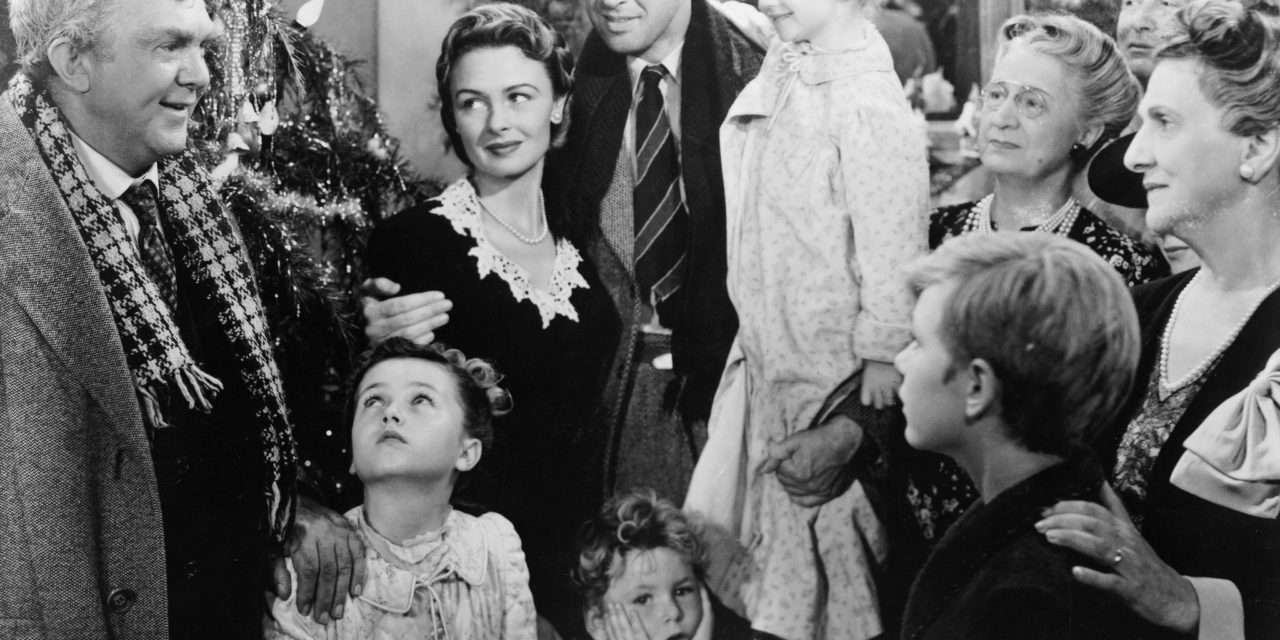
Jimmy Stewart’s Wonderful Life


By Rev. Dr. Ed & Janice Hird

-previously published in the Light Magazine


One of our favorite Christmas movies is It’s a Wonderful Life where Jimmy Stewart plays the part of a generous but discouraged businessman who discovers that he really was making a positive impact. You will remember how the Christmas angel Clarence had to earn his wings by helping out Jimmy Stewart (aka George Bailey). George was so distraught at Christmas that he was about to jump off a bridge.  Clarence, the delightful angel shows George what an amazing impact his generosity is making, and how much poorer his town would be without him.

The movie was based on a short story and booklet The Greatest Gift, written by Philip Van Doren Stern in 1943. Stern wrote a Charles Dickens ‘Christmas Carol’ spinoff for the North American audience. In 1946, Frank Capra wrote the movie version.  It was initially seen as a box-office flop, falling three million dollars short of breaking even, and not even winning one Academy Award Oscar.  In 1947, the FBI and Senator Joseph McCarthy’s House Un-American Activities Committee (HUAC) secretly investigated It's a Wonderful Life, fearing it was "communist propaganda”, stirring up class warfare, because it portrayed the villain as being a "scrooge-type" banker.

Since It’s a Wonderful Life was seen as a failure, the producers didn’t even bother to renew the copyright license in the late 1970s. This meant that television studios could show the movie for free at Christmas. After a few years   It’s a Wonderful Life became a cult classic.   It later went on to become the number one inspirational North American movie ever made.

Who can forget the conflict around the Christmas tree as George Bailey was close to committing suicide? We loved his honest prayer: “Dear Father in Heaven, I’m not a praying man, but if you’re up there and you can hear me, show me the way. I’m at the end of my rope. Show me the way, God.” His unscripted tears were genuine. Stewart commented in a 1987 interview, “As I said those words, I felt the loneliness, the hopelessness of people who had nowhere to turn, and my eyes filled with tears. I broke down sobbing.” Actress Carol Burnett called this one of the finest pieces of acting ever seen. Because Jimmy Stewart was suffering from post-World War II PTSD, he was able to connect with George Bailey’s trauma with unusual depth.  On his twentieth combat mission flying over the city of Gotha, the floor of Stewart’s plane was hit, blowing a hole right below his feet.  It was one mission too many for Stewart.  He was grounded because of his paralyzing fear of making a mistake and causing someone to die. Friends observed that he had aged ten to twenty years. He began suffering from shakes, sweats, a short temper, mood swings, and nightmares.  He couldn’t keep food down, and had to live on just ice cream and peanut butter.

Christmas 1946 was surprisingly healing for both George Bailey and Jimmy Stewart himself. Who can fail to recall the final scene around the Christmas tree when all his friends come together and unite in support? Who can forget the joyful Christmas carols sung by Jimmy Stewart, friends and family as they thanked the baby Jesus for the true meaning of Christmas?

This Christmas, let not forget to unwrap the true gift of Christmas, the Christ Child come to earth to save us.

Rev. Dr. Ed & Janice Hird

Co-authors of God’s Firestarters

Tuesday, November 01, 2022

Reflection on November 1 – All Saints’ Day by Eleanor Shepherd


  On Sunday morning as I was getting ready to go to church, I was listening to the radio. All the discussion was about Hallowe’en, that seems to have become an event that stirs the imagination of everyone. Yet I find that much of the focus is on death, darkness, fear and what I consider a negative world view. It seems a travesty of what I have understood Hallowe’en to be originally. 


              It is the Eve of All Hallows’ Day, a time when evil is recognized as reaching its limitation. You see All Hallows’ Day is a celebration of the unity that exists among all those who have sought to follow God in the centuries before they existed and all those who are currently trusting in God and all those who in the future will respond to the call to follow Him as well. This celebrates valuing of one another as we travel the same journey following the path of faith.


As I further reflected, I saw a unique parallel between Hallowe’en and All Saints Day and Good Friday and Easter. Hallowe’en is a time when the focus is on darkness and evil and shadows and masks, even cruelty and death. Good Friday focuses on a time when evil seemed to dominate as One who showed love and kindness was made to suffer and die, a victim of the darkness that held sway at the time. 

             Then All Saints Day follows Hallowe’en and the focus shifts completely to those who have realized that their lives have been or are being or will be transformed by a love that conquered evil on Good Friday. 


            Love that creates this unique union of those who are accompanied by the great cloud of witnesses, who are believers. We read about them in the letter written to Hebrew followers of the way. It includes people like Abraham who trusted God, Moses who obediently led God’s people to trust Him, King David described as a man after God’s own heart, and many others. Then the disciples of Jesus found their lives transformed by this love and felt compelled to go, strengthened by God to share the news of this transforming love to those who followed through the ensuing centuries, until it came to those of us who are alive and experiencing that same love today. The legacy we leave is the possibility for our children and grandchildren and great-grandchildren to know the transforming power of that love in their lives as well, as they offer their lives to God who is love. 

             It is love that finally triumphs over evil, by a reversal of values. Evil depends on the strength of force and might. Love is a surrender of these that opts for kindness and caring and life-building for others, giving of oneself for their sake. It is the message of the One who lay down His life for all of us. That is the message of Easter and it is the message of All Saints’ Day. 


Popular Posts