Wednesday, May 11, 2022

Comfort Around Us


This past month has served as a reminder where our comforts lay and who our supporters are. When we received news of a death in our family, we were in shock, as many would be at an unexpected passing of a younger sibling.

For myself, it was hard to believe that my brother had died. It was head knowledge only, at first. I could say the words to someone else, but the news had not yet reached my heart and thereby my emotions. For those first weeks — and there were weeks until the interment of his ashes — just because of distance and practical matters.

 I kept expecting he’d come on Messenger and write, “Hi, sis, how are you doing?” Because apart from his visits home, that’s how we communicated. For him, it was less expensive; and for me, practical because of work, family and time commitments. We could communicate as we were able. And he’d share the news there when he was coming to Ontario to visit.

Initially all I could do was share a few small stories about our adopted brother who came at 5 ½ years old, insecure, energetic and eager for a Mom and Dad to call his own. In the deal, he got five big sisters. He grew through childhood, expending much energy both in school and on the farm where he was growing up. Through teenage years, that growth continued with some of the typical teenage issues, though multiplied. At one point, he met his birth mom and several siblings from that family. Then as an adult, grew to 6 foot something. He’d lean on my shoulder and tease that I was now his little sister. We had a good relationship.

On sharing the fact of his death, friends, extended family, and members of my church family shared their condolences, and on the day of my brother’s celebration of life, we were surrounded physically by cousins on both sides of our family. Also in attendance were neighbours from the farm and town, as well as friends.

We were blessed with sunshine and fair weather, so we could gather outdoors a little longer after the graveside ceremony, and those who felt comfortable to go indoors for a lunch joined us there as well.

The comfort came not only in gifts of flowers, plants, and sympathy cards, but also the prayers of people around us. The minister who officiated shared words from the 23rd Psalm — read by one of my nieces — often used on such occasions. “Yeah though I walk through the valley of the shadow of death, ... for you are with me.”

We often have to hold onto those promises when we are in that place. God loved my brother as he loves us all. My reading from 1 Corinthians 13, about love in action, reminded me of him too. He may not have often said, “I love you,” but he acted instead, most notably by calling Mom and Dad whenever he could on their birthdays, anniversary and Christmas when he could not be home. And he was home for their celebrations of life too.

I hope that your comfort lay there, and that you too will be surrounded by the company of friends and family who care about you and how you’re doing in tough times. Paul’s words in 2 Corinthians 1:4 reads: that God “… consoles us in all our affliction, so that we may be able to console those who are in affliction with the consolation we ourselves are consoled by God.”  

May you share that consolation with others.

 Carolyn R. Wilker

https://www.carolynwilker.ca/


Monday, May 09, 2022

Sang Sun Lee; Faithful Kingdom Sowing & Reaping

-an article published in the Engage Light Magazine

By Rev. Dr. Ed & Janice Hird


One of the greatest missions miracles in the last hundred years has been the millions of Koreans that have been swept into the Kingdom in Korea, Canada, and around the world.  Korea, along with Brazil and USA, now have the highest percentage ofmissionaries sent around the world.  


The earliest missionaries to Korea died faithfully as they were being decapitated. Often the people killing them turned to Christ, and shared the gospel of forgiveness with their fellow Koreans.  Pyongyang, North Korea, before the communist takeover, was known as the Jerusalem of Asia. Billy Graham’s wife Ruth attended one of the well-respected Christian schools in the capital city of Pyongyang.

Sang Sun Lee was one of many North Koreans who were forced to flee to South Korea during the Korean War.  Sang Sun prayed, “Please let me escape to the South, and if you let me live, I will build churches.”  During the war, he was lined up with four others to be shot, one by one. Just as he was to be shot, someone cried out, ‘Turn his pockets inside out and see what’s in there.’ Miraculously his life was spared. 

The North Koreans, who had to leave everything behind, brought the gospel to many South Koreans. Sang Sun had no money for food, and no place to stay.  He became a street vendor and then shop owner in Suwon City, South Korea.  With the help of nine other North Korean refugees, they planted the first church in Suwon.

Often families became painfully separated during this exodus.  Sang Sun Lee did not even recognize his wife and three children when they were finally smuggled across the border. In Dr. Stephanie Chung’s new book My Father’s Amazing Journey of FaithSang Sun stated:

One day, I caught sight of a homeless-looking woman wandering near my store.  She was carrying her belongings on her head, had a baby on her back, and her two hands held one child each…As she approached me, my heart stopped.

In order to pay for smuggling his daughter-in-law and grandchildren to the south, Sang Sung’s father had sold his entire apple orchard. Sadly, Sang Sun’s wife died within the first year of her liberation. He falsely blamed himself for his wife’ death.  One day, a Christian woman from Pyeongtaek turned up at his home, and said to his three children, “Starting today, I will be married into this house and become your mother!” As a strong Christian from a non-christian home, she was determined to only marry a Christian man.  She had heard the voice of God telling her: “Get married into that household (of the widower) and become a mother to those three children.” Because Sang Sun could not get rid of her, he finally said: “If your parents give you permission, I will think about it.” The woman’s father turned up, saying that he hated Christians, but in a dream, his older brother told him to give his daughter in marriage to the widower. So they got married, having another three children.

God gave Sang Sun unusual favour in first manufacturing long johns.  This enabled him to sow a lot of finances into the North Korean refugees and help start many new churches.  He gave his workers Sundays off, many of whom started attending church: “I vowed to treat (my workers) as I would like to treat God, for the workers were sent from God.”

Even after being forced to declare bankruptcy because of his radical generosity to creditors, God opened new doors and favour.  After his factory closed, he turned this apparent defeat over to the Lord:  

All I did was empty my heart and ‘lay it down.’…I felt my spiritual eyes open. The joy that came to me was overwhelming, and I could hardly contain that joy.

Unexpectedly, he was asked to produce the inside fabric forrubber boots, something that was invaluable in those muddy, wet Korean days before asphalt roads.  Sang Sun never let success and wealth go to his head. Instead, he increased his relentless generosity, by helping many North Korean refugees and planting many more churches.  The key for him was surrender to the Lord: 

I said to myself that there was nothing I could do by myself.  Everything is done by the Lord, whom I love. Everything…I had to die completely, let God live within me, and let him do his thing.

Despite the attacks on his life and many struggles, Sang Sun lived until age 108. His daughter Dr. Stephanie Chung remembers her dad as warm, faithful, and sincere, her role model, and the root of her growing faith in God.  Sang Sun was “a true witness to God’s control of our lives”.  He never forgot his pledges to God, even through great hardship. Sang Sun sowed faithfully into God’s Kingdom, reaping countless changed lives in Korea, Canada, and throughout the world.

Rev. Dr. Ed and Janice Hird

-co-authors of God’s Firestarters

Monday, April 18, 2022

Being Thankful and Rejoicing


We read in Philippians 4 to always be thankful. Actually, it says to rejoice. Rejoice in the Lord always.” That’s tough sometimes. Hard in COVID when we’re separated from family, when a family member is ill and we can’t be at their bedside as we usually would, and even harder when someone we love dies and end of life traditions have to be severely modified.

It’s easy to be thankful when your job is enjoyable, your family is well, your children are progressing and healthy — those times when the world is bumping along nicely in your corner.

But what if it isn’t? If you’re experiencing troubles such as a break-up in relationships, a strain on finances, or a health issue. Then the stress and worry of the situation may cause lack of sleep, cross words, or actions you regret later.

I’ve struggled with rejoicing always in difficult circumstances. Yet we’re told to rejoice.

The disciples were not rejoicing in their Lord’s death by crucifixion. They were scared witless, hiding behind locked doors, likely afraid that they’d be found and sent the same place next. The women who took the herbs and spices to the grave the morning after their Sabbath acted out of necessity. It was something they did in any death.

And then the tomb was empty. And two angels standing nearby freaked them out. The promise they’d heard about rebuilding the temple on the third day —  that they hadn’t understood — had happened. “Why do you look for the living among the dead? He is not here; he has risen! one said.

As we say in our "light bulb" moment, when things come together and become clear. Or clearer. I picture them feeling that way.

The disciples did not believe the women. They had to see it for themselves. The empty tomb, the stone rolled away, and then their Saviour showing up in their secret place, regardless of locked doors. I imagine slack jaws and mouths wide open. “What?” they might have said, in disbelief.  Later at the seashore when they thought they’d try fishing again, the livelihood they’d left to follow Jesus. They saw a man building a fire and heard an invitation to join him. Was this another dream?

That stranger turned out to be Jesus. Then Jesus asking Peter three times to “feed his sheep” and Peter saying, “I know, I know.”

I suppose now they could rejoice again, or give thanks, that their Lord was alive. The best miracle of them all. We don’t know; perhaps they wept from relief.

What do you make of this? Do you rejoice? Do you give thanks in such an all-powerful God who can bring his son back to life? Can you rejoice in the miracle of the seasons in this world that God created, that spring has come once again? Can you sense that certainty of grace for us? A hope that things will turn around or that our prayers will be answered?  I hope you can, because it certainly gives me hope.                                 


Carolyn Wilker is a writer, editor and storyteller from southwestern Ontario.

https://www.carolynwilker.ca/

Thursday, March 10, 2022


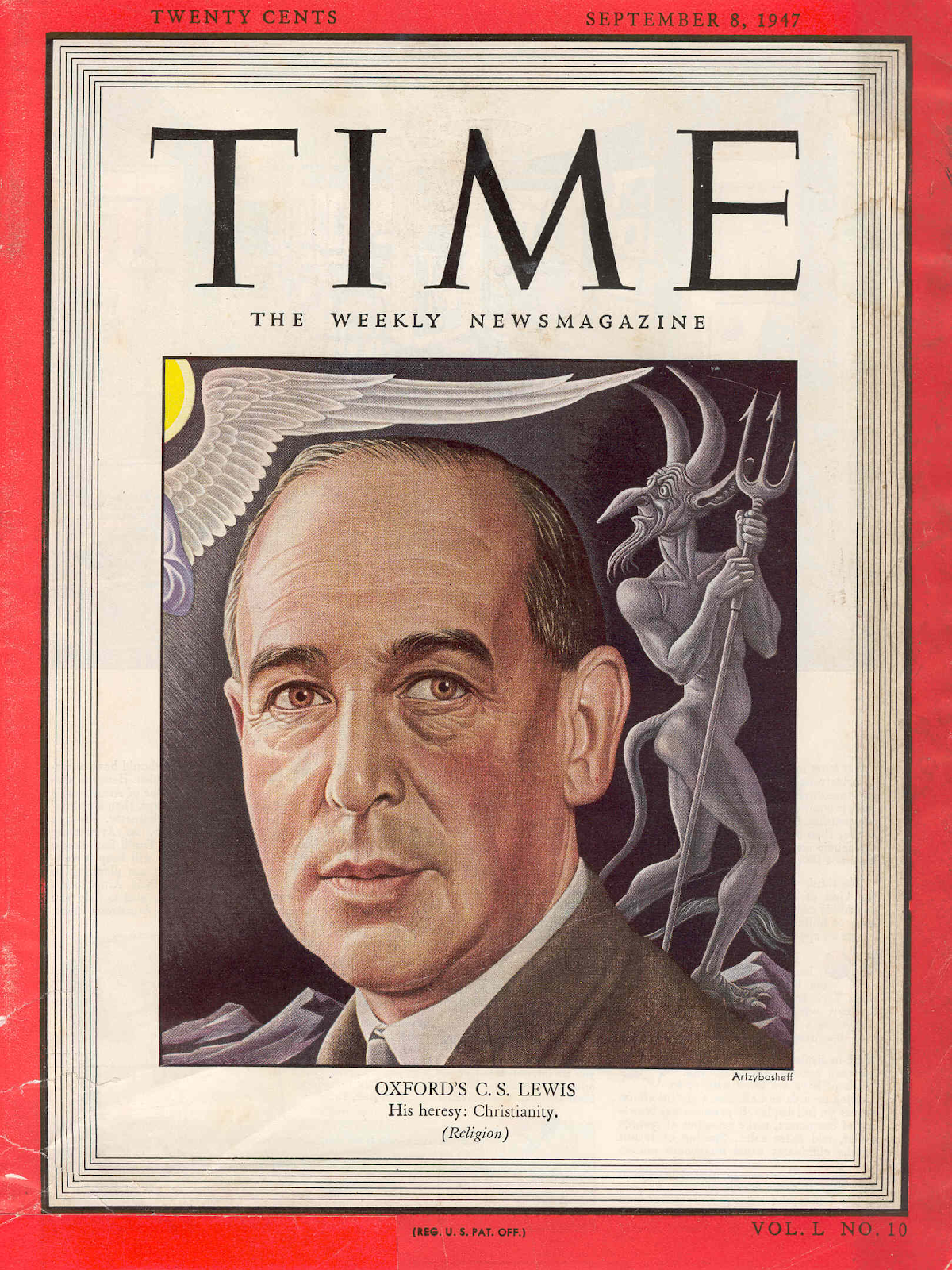
CS Lewis: Space Missionary for our COVID times

By Rev. Dr. Ed and Janice Hird

-an article for the Engage Light Magazine


Christians love CS Lewis for his best-selling Narnia Tales, which have sold over 100 million copies. The Narnia Tales movies have grossed over 1.5 billion dollars worldwide.

Many people however have not connected CS Lewis with science fiction. Before Aslan and the Narnia Tales (1950-1956), there was Elwin Ransom and CS Lewis’ Space Trilogy (1938-1945). Dr. Ransom, a professor of philology (language study) modelled on J.R.R. Tolkien, is the main character of C. S. Lewis’ Out of the Silent Planet, Perelandra and a significant character in That Hideous Strength.

Science fiction, thanks to CGI technological advances, has become the dominant genre of the 21st century.  Just think about the relentless blockbuster films like Starwars and Star Trek, produced by Marvel, Disney, Time Warner, DC, and others. 

JRR Tolkien and CS Lewis as close friends challenged each other to write a book on a favorite topic.  While Tolkien chose time travel, Lewis chose space travel. Lewis read 19th century science fiction pioneers like Jules Verne and HG Wells. The type of science fiction that most interested CS Lewis were strange encounters with the other which have moments of beauty, awe, or terror which our actual world does not supply. He called this fantastical literature. Lewis saw space not as a region of cold, terrifying vacuity, but rather as the heavens.

In the final book of the trilogy That Hideous Strength, Lewis poetically envisioned a modern-day tearing down of the Tower of Babel.  He chose the book title from a 1555 poem about the Tower of Babel which had a lengthy ‘shadow of that hyddeous strength’.  It was completed on Christmas Eve in 1943 during one of the darkest periods of WWII. George Orwell, author of 1984, wrote a book review of Hideous Strength, saying that “one could recommend this book unreservedly….Unfortunately, the supernatural keeps breaking in.”

In the final novel, the dark forces that were earlier repulsed by Dr. Ransom from Mars/Malacandra and Venus/Perelandra are gathered for a last assault on planet Earth itself.  It has been called ‘the true return of the Jedi’.  The Hideous Strength alerts us that science, technology, and education can sometimes dehumanize ourselves, our families, and even our marriages.  When we were younger, many of us were taught and believed that science and education would solve all the world’s problems.  Few realized the potential dehumanizing aspects of science and education when they become absolutes, replacing biblical morals.  A modern example of that is the native residential school tragedy, robbing children of family and language.

Lewis described Hideous Strength as a fairy-tale for grownups. He saw a close connection between this novel and his earlier book The Abolition of Man.  Dr Francis Schaeffer noted: ““I strongly urge Christians to read carefully this prophetic piece of science fiction. What Lewis casts as a warning in the form of fantasy and science fiction is much closer today.”

 Lewis distinguished between science and the ideology of scientism, what he called scientocracy, the unchecked belief in progress which allows for no ‘wholesome doubt’. Covid anxiety makes us more vulnerable to trusting in technocrats who think that they know best.  Lewis commented: “I dread government in the name of science.  This is how tyrannies come.” Overreach by governments is a prevailing temptation, particularly during pandemics.

The technocrats in Hideous Strength work for a governmental agency entitled N.I.C.E. (National Institute for Controlled Experiments).  When power becomes absolute and totalitarian, then even goodness is sacrificed on the altar of ideology. N.I.C.E. powerfully swallows the sleepy university town of Edgestow, gaining total political and military control of the area. This is the first step into turning England into a police state and eventually world domination. Totalitarianism always hates democracy, freedom of speech and religion.  One wonders to what degree the Big Brother organization of Orwell’s 1984 was influenced by Lewis’ earlier N.I.C.E. concept.

Mark and Jane Studdock, as the protagonists in Hideous Strength, become swallowed by the secular agenda of N.I.C.E.  As a sociologist, Mark is forced to write media propaganda about riots that have not even taken place yet. Mark’s idol is group acceptance at the cost of giving up self.  Jane’s idol is independence at the cost of relationship.  While he feared exclusion, she feared intrusion.  Their marriage is being sacrificed on the altar of work success.  C.S. Lewis also saw independence as the primary obstacle to his eventual conversion: “I had always wanted, above all things, not to be ‘interfered with.’ I had wanted (mad wish) ‘to call my soul my own.’”

The only opposition to this take-over bid is an unlikely tiny group led by Ransom at St. Anne’s manor house. After having remarkable accurate disturbing dreams about a decapitated scientist Alcasan, Jane ends up visiting Dr. Ransom’ group at St. Anne’s. Having discovered a way to keep Alcasan’s head alive, N.I.C.E. sees this as a true resurrection and the scientific way to have eternal life. Its ultimate aim is to free humanity from nature itself. Organic matter is seen as dirty and unnecessary. N.I.C.E. aims to transform humanity into ‘the most efficient animal’, by ridding us of all ‘our rivals on this planet’: insects, bacteria, animals, and plants.  Everything else is to be scientifically sterilized. NICE’s real agenda was a war on nature. They had a particular hatred for trees as unhygienic:

At present, I allow, we must have forests, for the atmosphere. Presently we find a chemical substitute. And then, why any natural trees? I foresee nothing but the art tree all over the earth. In fact, we clean the planet … And why not? It is simple hygiene.

Absolute power in the hand of the elites easily becomes deified and systemically entrenched.  The Kingdom of God, according to N.I.C.E, is to be realized through technology, turning humans into supermen and superwomen: “The Son of Man -that is, Man himself, full grown -has power to judge the world – to distribute life without end, and punishment without end.”

The wild card in this story is the reappearance of Merlin from King Arthur days.  N.I.C.E. tries to capture Merlin in order to harness his supernatural abilities, but instead kidnap an unsuspecting homeless tramp. The real Merlin joins force with Dr. Ransom’s team, seeking to rescue and rehumanize Mark Studdock.

Covid anxiety can dehumanize us. The Kingdom of God makes us more human, more Christ-like.  Lewis knew that we all long, perhaps unknowingly, for the Kingdom of God, for what he later called Narnia.  Imagine the missionary impact if just like the Narnia Tales, the Space Trilogy made it into film.  Will you pray with us for that future miracle?


Ed and Janice Hird, co-authors of God's Firestarters: Preparing our Families for Coming Revivals 


Monday, March 07, 2022

A Dot on the Horizon by Rose McCormick Brandon

               Cast your bread upon the waters and you will find it after many days. Ecclesiastes 11:1

A woman raised her children to love the Lord. She taught them the scriptures, prayed with them and for them each day. Every Sunday she took them to church. One of the children decided Mom’s religion wasn’t for her. She wasn’t going to spend her life reading the Bible and praying to a God who may or may not be listening. She wanted freedom. When she left home, the daughter made a new life that didn’t include church or her mother’ faith.

Years after the mother passed away the daughter quietly turned her life over to Jesus. She opened her Bible again and began to pray. She experienced the love of Jesus in a way she never had as a child.

Our work for Christ, including the raising of children, is like bread cast into a river. Like ships our works sail away from us. And disappear. We watch for signs of their return. Time passes. One day a dot appears on the horizon. Our little ship returns to port.

Children may sail away; God’s promises remain.

The Passion Translation of Proverbs 22:6 reads: “Dedicate your children to God and point them in the way that they should go and the values they’ve learned from you will be with them for life.” The emphasis is not on the children sticking with godly teaching but on the godly teaching sticking with them. A subtle but profound difference.

“He is the faithful God, keeping his covenant of love to a thousand generations of those who love him and keep his commandments” (Deuteronomy 7:9).

After death, the influence of the godly remains intact and undiminished. The power of their lives is as fresh and fruitful as the trees and palms which shadow their graves. Lawrence Ramsay

Cast your bread upon God's waters. In His time it shall return to you with joy.  

Popular Posts