Monday, April 18, 2022

Being Thankful and Rejoicing


We read in Philippians 4 to always be thankful. Actually, it says to rejoice. Rejoice in the Lord always.” That’s tough sometimes. Hard in COVID when we’re separated from family, when a family member is ill and we can’t be at their bedside as we usually would, and even harder when someone we love dies and end of life traditions have to be severely modified.

It’s easy to be thankful when your job is enjoyable, your family is well, your children are progressing and healthy — those times when the world is bumping along nicely in your corner.

But what if it isn’t? If you’re experiencing troubles such as a break-up in relationships, a strain on finances, or a health issue. Then the stress and worry of the situation may cause lack of sleep, cross words, or actions you regret later.

I’ve struggled with rejoicing always in difficult circumstances. Yet we’re told to rejoice.

The disciples were not rejoicing in their Lord’s death by crucifixion. They were scared witless, hiding behind locked doors, likely afraid that they’d be found and sent the same place next. The women who took the herbs and spices to the grave the morning after their Sabbath acted out of necessity. It was something they did in any death.

And then the tomb was empty. And two angels standing nearby freaked them out. The promise they’d heard about rebuilding the temple on the third day —  that they hadn’t understood — had happened. “Why do you look for the living among the dead? He is not here; he has risen! one said.

As we say in our "light bulb" moment, when things come together and become clear. Or clearer. I picture them feeling that way.

The disciples did not believe the women. They had to see it for themselves. The empty tomb, the stone rolled away, and then their Saviour showing up in their secret place, regardless of locked doors. I imagine slack jaws and mouths wide open. “What?” they might have said, in disbelief.  Later at the seashore when they thought they’d try fishing again, the livelihood they’d left to follow Jesus. They saw a man building a fire and heard an invitation to join him. Was this another dream?

That stranger turned out to be Jesus. Then Jesus asking Peter three times to “feed his sheep” and Peter saying, “I know, I know.”

I suppose now they could rejoice again, or give thanks, that their Lord was alive. The best miracle of them all. We don’t know; perhaps they wept from relief.

What do you make of this? Do you rejoice? Do you give thanks in such an all-powerful God who can bring his son back to life? Can you rejoice in the miracle of the seasons in this world that God created, that spring has come once again? Can you sense that certainty of grace for us? A hope that things will turn around or that our prayers will be answered?  I hope you can, because it certainly gives me hope.                                 


Carolyn Wilker is a writer, editor and storyteller from southwestern Ontario.

https://www.carolynwilker.ca/

Thursday, March 10, 2022


CS Lewis: Space Missionary for our COVID times

By Rev. Dr. Ed and Janice Hird

-an article for the Engage Light Magazine


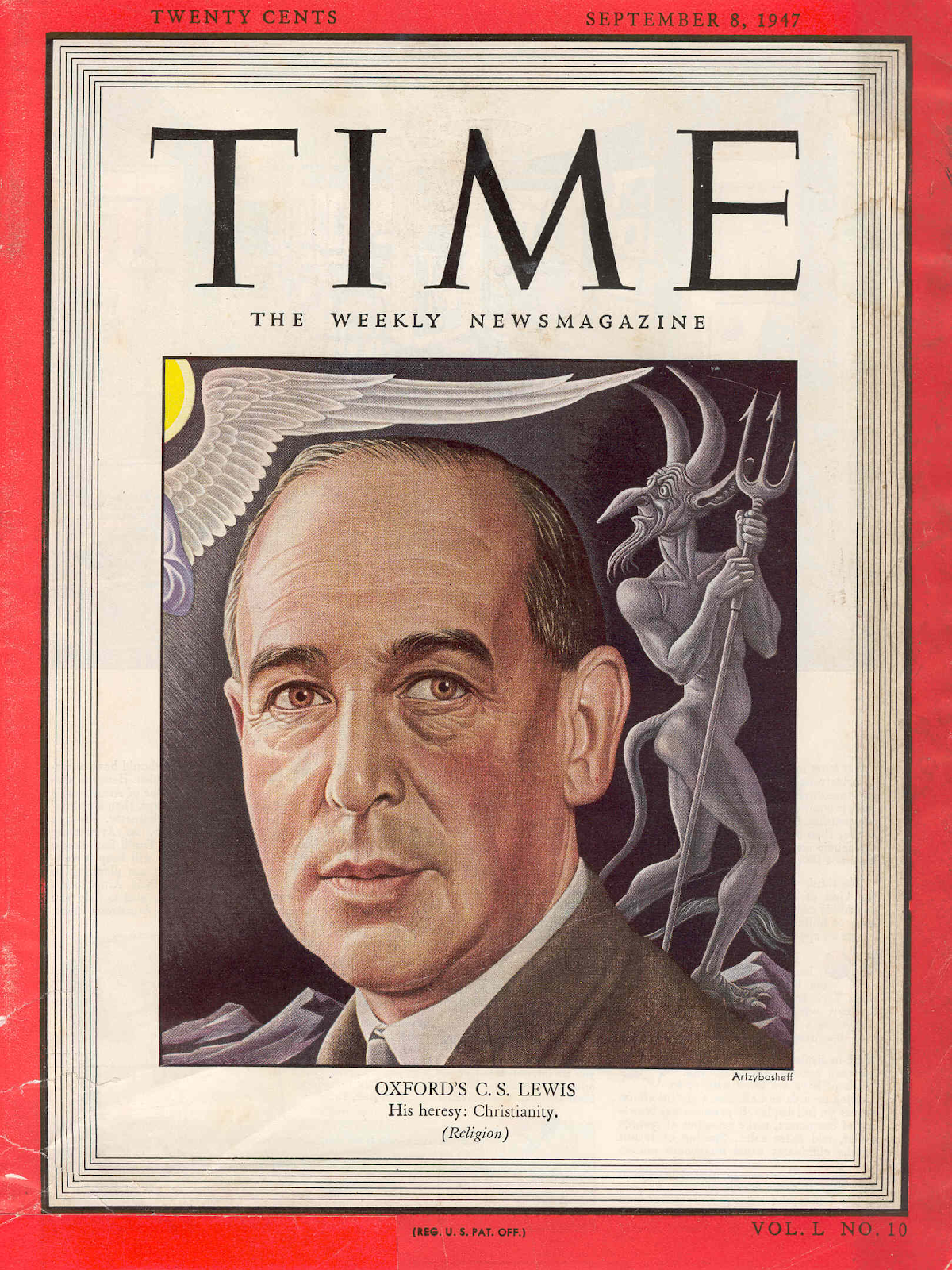
Christians love CS Lewis for his best-selling Narnia Tales, which have sold over 100 million copies. The Narnia Tales movies have grossed over 1.5 billion dollars worldwide.

Many people however have not connected CS Lewis with science fiction. Before Aslan and the Narnia Tales (1950-1956), there was Elwin Ransom and CS Lewis’ Space Trilogy (1938-1945). Dr. Ransom, a professor of philology (language study) modelled on J.R.R. Tolkien, is the main character of C. S. Lewis’ Out of the Silent Planet, Perelandra and a significant character in That Hideous Strength.

Science fiction, thanks to CGI technological advances, has become the dominant genre of the 21st century.  Just think about the relentless blockbuster films like Starwars and Star Trek, produced by Marvel, Disney, Time Warner, DC, and others. 

JRR Tolkien and CS Lewis as close friends challenged each other to write a book on a favorite topic.  While Tolkien chose time travel, Lewis chose space travel. Lewis read 19th century science fiction pioneers like Jules Verne and HG Wells. The type of science fiction that most interested CS Lewis were strange encounters with the other which have moments of beauty, awe, or terror which our actual world does not supply. He called this fantastical literature. Lewis saw space not as a region of cold, terrifying vacuity, but rather as the heavens.

In the final book of the trilogy That Hideous Strength, Lewis poetically envisioned a modern-day tearing down of the Tower of Babel.  He chose the book title from a 1555 poem about the Tower of Babel which had a lengthy ‘shadow of that hyddeous strength’.  It was completed on Christmas Eve in 1943 during one of the darkest periods of WWII. George Orwell, author of 1984, wrote a book review of Hideous Strength, saying that “one could recommend this book unreservedly….Unfortunately, the supernatural keeps breaking in.”

In the final novel, the dark forces that were earlier repulsed by Dr. Ransom from Mars/Malacandra and Venus/Perelandra are gathered for a last assault on planet Earth itself.  It has been called ‘the true return of the Jedi’.  The Hideous Strength alerts us that science, technology, and education can sometimes dehumanize ourselves, our families, and even our marriages.  When we were younger, many of us were taught and believed that science and education would solve all the world’s problems.  Few realized the potential dehumanizing aspects of science and education when they become absolutes, replacing biblical morals.  A modern example of that is the native residential school tragedy, robbing children of family and language.

Lewis described Hideous Strength as a fairy-tale for grownups. He saw a close connection between this novel and his earlier book The Abolition of Man.  Dr Francis Schaeffer noted: ““I strongly urge Christians to read carefully this prophetic piece of science fiction. What Lewis casts as a warning in the form of fantasy and science fiction is much closer today.”

 Lewis distinguished between science and the ideology of scientism, what he called scientocracy, the unchecked belief in progress which allows for no ‘wholesome doubt’. Covid anxiety makes us more vulnerable to trusting in technocrats who think that they know best.  Lewis commented: “I dread government in the name of science.  This is how tyrannies come.” Overreach by governments is a prevailing temptation, particularly during pandemics.

The technocrats in Hideous Strength work for a governmental agency entitled N.I.C.E. (National Institute for Controlled Experiments).  When power becomes absolute and totalitarian, then even goodness is sacrificed on the altar of ideology. N.I.C.E. powerfully swallows the sleepy university town of Edgestow, gaining total political and military control of the area. This is the first step into turning England into a police state and eventually world domination. Totalitarianism always hates democracy, freedom of speech and religion.  One wonders to what degree the Big Brother organization of Orwell’s 1984 was influenced by Lewis’ earlier N.I.C.E. concept.

Mark and Jane Studdock, as the protagonists in Hideous Strength, become swallowed by the secular agenda of N.I.C.E.  As a sociologist, Mark is forced to write media propaganda about riots that have not even taken place yet. Mark’s idol is group acceptance at the cost of giving up self.  Jane’s idol is independence at the cost of relationship.  While he feared exclusion, she feared intrusion.  Their marriage is being sacrificed on the altar of work success.  C.S. Lewis also saw independence as the primary obstacle to his eventual conversion: “I had always wanted, above all things, not to be ‘interfered with.’ I had wanted (mad wish) ‘to call my soul my own.’”

The only opposition to this take-over bid is an unlikely tiny group led by Ransom at St. Anne’s manor house. After having remarkable accurate disturbing dreams about a decapitated scientist Alcasan, Jane ends up visiting Dr. Ransom’ group at St. Anne’s. Having discovered a way to keep Alcasan’s head alive, N.I.C.E. sees this as a true resurrection and the scientific way to have eternal life. Its ultimate aim is to free humanity from nature itself. Organic matter is seen as dirty and unnecessary. N.I.C.E. aims to transform humanity into ‘the most efficient animal’, by ridding us of all ‘our rivals on this planet’: insects, bacteria, animals, and plants.  Everything else is to be scientifically sterilized. NICE’s real agenda was a war on nature. They had a particular hatred for trees as unhygienic:

At present, I allow, we must have forests, for the atmosphere. Presently we find a chemical substitute. And then, why any natural trees? I foresee nothing but the art tree all over the earth. In fact, we clean the planet … And why not? It is simple hygiene.

Absolute power in the hand of the elites easily becomes deified and systemically entrenched.  The Kingdom of God, according to N.I.C.E, is to be realized through technology, turning humans into supermen and superwomen: “The Son of Man -that is, Man himself, full grown -has power to judge the world – to distribute life without end, and punishment without end.”

The wild card in this story is the reappearance of Merlin from King Arthur days.  N.I.C.E. tries to capture Merlin in order to harness his supernatural abilities, but instead kidnap an unsuspecting homeless tramp. The real Merlin joins force with Dr. Ransom’s team, seeking to rescue and rehumanize Mark Studdock.

Covid anxiety can dehumanize us. The Kingdom of God makes us more human, more Christ-like.  Lewis knew that we all long, perhaps unknowingly, for the Kingdom of God, for what he later called Narnia.  Imagine the missionary impact if just like the Narnia Tales, the Space Trilogy made it into film.  Will you pray with us for that future miracle?


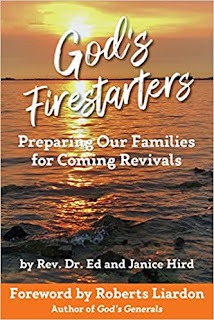
Ed and Janice Hird, co-authors of God's Firestarters: Preparing our Families for Coming Revivals 


Monday, March 07, 2022

A Dot on the Horizon by Rose McCormick Brandon

               Cast your bread upon the waters and you will find it after many days. Ecclesiastes 11:1

A woman raised her children to love the Lord. She taught them the scriptures, prayed with them and for them each day. Every Sunday she took them to church. One of the children decided Mom’s religion wasn’t for her. She wasn’t going to spend her life reading the Bible and praying to a God who may or may not be listening. She wanted freedom. When she left home, the daughter made a new life that didn’t include church or her mother’ faith.

Years after the mother passed away the daughter quietly turned her life over to Jesus. She opened her Bible again and began to pray. She experienced the love of Jesus in a way she never had as a child.

Our work for Christ, including the raising of children, is like bread cast into a river. Like ships our works sail away from us. And disappear. We watch for signs of their return. Time passes. One day a dot appears on the horizon. Our little ship returns to port.

Children may sail away; God’s promises remain.

The Passion Translation of Proverbs 22:6 reads: “Dedicate your children to God and point them in the way that they should go and the values they’ve learned from you will be with them for life.” The emphasis is not on the children sticking with godly teaching but on the godly teaching sticking with them. A subtle but profound difference.

“He is the faithful God, keeping his covenant of love to a thousand generations of those who love him and keep his commandments” (Deuteronomy 7:9).

After death, the influence of the godly remains intact and undiminished. The power of their lives is as fresh and fruitful as the trees and palms which shadow their graves. Lawrence Ramsay

Cast your bread upon God's waters. In His time it shall return to you with joy.  

Monday, February 14, 2022

Radical Love

 Some people are easy to love. Others are more of a challenge.

With Ottawa snarled for a third week of occupation by protesters, tempers on both sides of this issue have grown very short. Yes, I live in Ottawa, so this is not some far off difficulty that can be easily shuffled to the backburner of my mind. My son has had to leave his apartment to escape the constant din of blaring horns. Yesterday, I was delayed in traffic on my way to church due protesters and police blockades. The airwaves are filled with anger and frustration.

But it's not just a local issue, our country, and our churches and families are deeply divided over vaccines and pandemic measures.

In times such as this, I feel Jesus' words from the Sermon on the Mount have a great deal of relevance. 

“You have heard that it was said, ‘Love your neighbor and hate your enemy.’ But I tell you, love your enemies and pray for those who persecute you, that you may be children of your Father in heaven. He causes his sun to rise on the evil and the good, and sends rain on the righteous and the unrighteous. If you love those who love you, what reward will you get? Are not even the tax collectors doing that? And if you greet only your own people, what are you doing more than others? Do not even pagans do that? Be perfect, therefore, as your heavenly Father is perfect" (Matthew 5:43-48). 

Well, Jesus, you certainly are calling us to a higher level of love. At times, all I want to do is hunker down and take pot shots at those who disagree with my position. But how much will that accomplish? It only tends to harden the opposition while I stew in anger.

Can I be a bridge builder? Can I keep communication open between opposing factions? That's a far bigger challenge. Jesus also said, "Blessed are the peacemakers, for they will be called children of God" (Matthew 5:9, NIV).

This past Saturday evening, I officiated at the wedding of a beautiful young couple. Joy was on their faces. Love was in their hearts. I left the wedding celebration with my faith and hope renewed.

As for those whom we find hard to love, let's take up Jesus' call to radical love. Despite pandemics, protests and vaccine mandates, “these three remain: faith, hope and love. But the greatest of these is love” (1 Corinthians 13:13).

Let's all try some radical love. On this Valentine's Day, it's far better than the alternatives.


David Kitz is the chair of the board of The Word Guild.
His most recent book series is "Psalms Alive: Develop a Life of Worship and Prayer". 

Thursday, February 03, 2022

Boots Squeaking on Snow by Rose McCormick Brandon


Have you entered into the treasures of the snow? Job 38:22

When it's many degrees below zero, boots squeak on snow. Breath hangs in the air like little clouds. Noses turn red, frost clings to lashes. Tree branches become as stiff and as dangerous as swords.

Alone in the cold tramping along a path we feel our humanity. Frost numbs the legs and nibbles at fingers and toes. Most days we don't sense our fragility; we don't realize how dependent we are on something as basic as warmth. Cold draws out our primitive nature. It bites and stings. And invigorates.

As a toddler, our son had croup many times. Croup is an infection that causes swelling in the airway and makes it difficult to breath. In the middle of the night we would awake to loud wheezing sounds which meant he was gasping for air. This sickness is more common in winter and winter air is a remedy for it. The doctor recommended bundling him into a snow suit and carrying him outside. The cold air reduced the swelling and made it easier for him to breath. While the rest of the street slept, we took turns pacing back and forth, our steps squeaking on the snowy front porch. Each minute in the frozen air improved his breathing.

Prayer comes easily when accompanied by the sound of boots squeaking on snow. Especially in the darkness. The sound makes God seem nearer. Humanity sleeps but He remains awake, listening to our prayers.

For He says to the snow, fall on the earth . . . Job 37:6

Father, in the cold and dark of night, you hear my prayers. 

Saturday, January 15, 2022

The Dead of Winter and the Spirit's Fire

It's the dead of winter, the coldest time of the year. My back is aching. A pandemic is raging. Nerves are frayed. Patience has collapsed in a heap of ruin. And it's the best time to praise God. Yes, you read that correctly. It's the best time to lay aside our troubles and worries, and praise our Creator. Praising God in good times, for good times, is easy. Praising God in hard times requires more afore thought—more raw determination. Perhaps it's the best measure of our faith.

Stone arch bridge, Perth, ON

The apostle Paul challenges us with this admonition: "Rejoice always, pray continually, give thanks in all circumstances; for this is God’s will for you in Christ Jesus. Do not quench the Spirit" (1 Thessalonians 5:16-19, NIV). My Bible breaks the statement above into four separate verses and then tosses "Do not quench the Spirit" into an entirely new paragraph. But in the original Greek, there are no verse numbers, or indented paragraphs. These four statements all flowed together as one.

The Spirit's fire is stoked or quenched by our rejoicing, our prayer and our thanksgiving. None of these responses—our rejoicing, prayer and thanksgiving—should be driven by the circumstances we find ourselves in. Our circumstances may vary, but God's love for us is constant.

Paul and Silas perfectly illustrated the presence of God's Spirit in their lives as they prayed and sang hymns after being severely flogged and imprisoned in Philippi. See Acts 16:16-40. Did their physical pain and circumstances inhibit their rejoicing? Apparently not. They refused to quench the Spirit's fire. Instead, they stoked it.

Do not quench the Spirit (1 Thess. 5:19).

Is your fire going out? Can you still find some glowing embers among the ashes? Then take some action. Add some fuel. Throw on a few splinters of rejoicing. Log on some prayer time. Top it all with some heartfelt thanksgiving. In the dead of winter, at the coldest time of year, in defiance of a pandemic, let's build the warmest fire.


David Kitz is the chair of The Word Guild. His most recent book series is Psalms 365: Develop a Life of Worship and Prayer.


Tuesday, January 11, 2022

In Our Time

  It's cold in our part of the world today, mind you not as cold as Calgary last week at -44, but still colder than we've had for a bit. We've had a lot of mild weather for early January in southwestern Ontario, so perhaps we're not ready for it.

 It seemed appropriate to refresh a post I put up early in our pandemic, because even if we're not exactly sheltering in place, many of us are staying close to home— except for those who have chosen this time to travel again, once the borders opened up again. 

We're getting tired of this world-wide spread of a virus that's changed our lives. I offer this message in hope.


May 2020

In a Sunday message recently, I heard a quote from J.R.R. Tolkien and The Fellowship of the Ring that expresses what many of us are thinking about now as we “shelter in place.”


“I wish it need not have happened in my time,” said Frodo.


“So do I," said Gandalf, “and so do all who live to see such times.”


To be clear, I have not seen the whole Lord of the Ring series. I’ve only read the first Tolkien book, so I can only imagine the trouble they face. Frodo and Gandalf are perplexed about what they ought to do next, just as we are. And perhaps they are also afraid. Already they have faced the unfamiliar and terrifying and now there’s more.


            While heeding best medical and leader’s advice, we wish this would be over, and that we didn’t need to contemplate further news of the Covid-19 pandemic. Experts have compared it to other times in history, perhaps trying to give us historical evidence and hope that one day this difficulty too will pass. 


Tolkien continues, “But that is not for them to decide. All we have to decide is what to do with the time that is given us.”


And that’s where we find ourselves too. Yet we know, as Christians, “who” we have in our corner, as our hope. We know who sees all, understands all and knows all. 


We can be honest about where this situation leads our thoughts and emotions, especially when people are out of work and perhaps with a limited budget, and teaching their children at home. 


I’ve been hearing stories not just about our front-line workers in health care and food services, but also of others striving to make the best of a difficult time. A fellow author shops for groceries for frail seniors in her community; children tape their artwork in the windows of their home to bring cheer to those who pass by; people have porch-to-sidewalk conversations with neighbours, family, and friends. Other individuals are sending positive messages on Twitter and Facebook. 


Maybe this is the best we can do for now. That and offering hope to those who have none, and praying for those who need our prayers, as we stay safe and strive to remain healthy. Until we gather again, take care of yourselves.   


---  

Back to today: 


What I say to you this day is to offer hope, to smile when you  go out, for you don't know how it might help one person today. My check-out girl at the grocery store today who smiled ( I could see her crinkled eyes around her mask) and smiled at me. And I smiled back and we chatted a couple of minutes as she passed my items past the scanner. It was good to see her after so long. 

 Maybe smiling at someone else I meet but have never spoken to before. Someone with a small antsy child to whom I might offer my place in line, because that child is tired and hungry and just wants to go home ( as does her mother or father, as the case may be). And imagine Jesus standing in line with you, helping you through the day. How would that feel?


Monday, January 03, 2022

Repairing Broken Doors: Setting the Tone for a New Year by Rose McCormick Brandon

 Young King Hezekiah, devout and earnest, ascended to Israel’s throne after the death of his wicked and idolatrous father, Ahaz. The citizens rejoiced because the new king had the heart of his ancestor, David, and not that of his father.

        The first thing Hezekiah did was open the temple and repair its doors. This act set the tone for his reign. God would have His rightful place. 


In the very first month of the first year of his reign, Hezekiah reopened the doors of the temple of the Lord and repaired them. 2 Chronicles 29:3 

Hezekiah led the citizens of Israel to repent of their sins and vow to follow the Lord. That meant tearing down all the idols his father had erected. It meant declaring they would love the Lord their God wholeheartedly, with all their soul and strength (Deut. 6:4).

What a beginning! Repairing the doors to the temple and opening them for worship brought healing to the nation. By this act the people said no to sin and all ungodliness and yes to living a holy life and giving God first place.

After Hezekiah repaired the temple doors, revival swept across Israel. Leaders who had followed the previous king into idol worship confessed their sins, rid their homes of false gods and committed to living in obedience to God.

        Are the doors of your life in disrepair? Has Bible reading and prayer lost first place in your schedule? It’s time to repair these doors, set them solidly on the hinges of your life. It’s time to get familiar with the squeak of the prayer closet door. That door determines the future.

My happiest moments are when I am worshipping God, really adoring the Lord Jesus Christ. In that worship I forget the cares of the church and everything else. To me it is the nearest approach to what it will be in Heaven. Charles Spurgeon

Response: Lord, today I commit to giving you first place in my life. I will make worshipping you my primary occupation. 

Saturday, January 01, 2022

A STRANGE TRANSITION by Eleanor Shepherd


 2021 is finally over. It was such a disappointment in so many ways. We hoped that it would herald the end of the pandemic and a return to normal life, but as the year wore on and wave after wave of Covid-19 variants arrived, despite the rapid development of a vaccination against the virus. Globally we seemed to be fighting a losing battle.

While the number of cases decreased and restrictions were lifted in some countries, at the same time they were spiraling in other countries. No matter what strategy was applied, the disease still managed to force people to surrender to the dictates it imposed.

The atmosphere of fear engendered by this stubborn enemy, was exacerbated by disastrous climatic events like raging wild fires and home and income destroying floods. In addition, there arose doubts about our ability to practice justice, highlighted in headlines about racial profiling and inhumane treatment of minorities, revelations of the manner in which we failed to provide adequately for the needs of our aging population and the heartbreaking discovery of unmarked graves of children who had lost their lives in the attempts to alter their identities through cruel indoctrination called education. The world of social justice and freedom for all seemed to dissipate before our eyes and we began to have serious questions about the meaning of our lives.
Acts of kindness gave us courage to not totally lose heart in the midst of this maelstrom of misery. In spite of all that was happening there were people who were taking seriously their responsibilities, particularly in the health care field and they became the heroes. I saw evidence of their steady and heartwarming dedication to duty as I personally had occasion to visit hospital emergency rooms in both Winnipeg and Montreal.


When at the height of the pandemic, I found myself alone in the waiting room of an Emergency unit in a Winnipeg hospital, I watched in amazement as at least once every hour a nurse (often male) would walk through the waiting room, stopping to talk to each person. He would ask if their condition had become any worse in the last hour. If necessary, he would take vital signs. If the patient was thirsty, he offered them water and if they were hungry would provide a snack. If they were cold, he would bring a blanket for them.

These nurses reminded me of the folks that Jesus spoke of in Matthew 25 who cared for those in need, without realizing that in so doing, they were serving Jesus. I realized that evening that in all that was going on in our world, God was right in the centre of it all.
My hunch was confirmed when in late autumn and early winter, I had further occasions to visit the Emergency Unit at a large Montreal hospital. On one of the visits as my husband, Glen and I sat waiting for my turn to see the doctor, Glen noticed that one of the people who was at the triage desk was speaking to a woman who had been treated and was ready to go home. She was alone and elderly and seemed a little confused by the environment. It was late in the evening and she had no idea where to find a taxi or a bus to get home. The employee asked his colleague to look after things for a few minutes, then he accompanied the woman to the place where the taxis were available outside the hospital. It took five or ten minutes for him to be able to get the lady into a taxi and safely on her way home. When he returned, Glen went over to his desk and he expressed his appreciation for the way that this employee had gone above and beyond duty to care for the lady in this way. Again, we observed the kindness in the midst of chaos and confusion provided by someone who cared.
Google Images

On another visit to the same Emergency Room, I watched as one of the nurses caring for the patients attended to a woman who was brought in by ambulance. Her distraught cries revealed loneliness and fear of her unknown fate. A nurse quietly stood by her stretcher, listening. Then, in a gentle voice, he assured her she would be cared for and he was there for her. She seemed to sense a peace coming from him and settled down, quietly awaiting the treatment she needed. I had seen this same nurse use that same gentle tone with other patients. It was a gift to have someone like that in such a place.

These folks reminded me that although 2021 was a difficult year in so many ways, we were not forsaken. God was present and acting through the lives of kind people and He will not desert us. We can enter 2022 confident He will be with us. 
  
    I would like to offer you a Happy New Year and with it give you a song sung by our daughter, a five times Juno nominated jazz singer. Enjoy! Here is the link:  The Blessing


Word Guild Award
2009
 Word Guild Award
2011
Word Guild Award
2018


Popular Posts